China Manufacture License
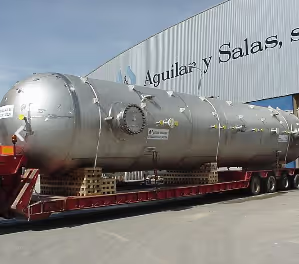
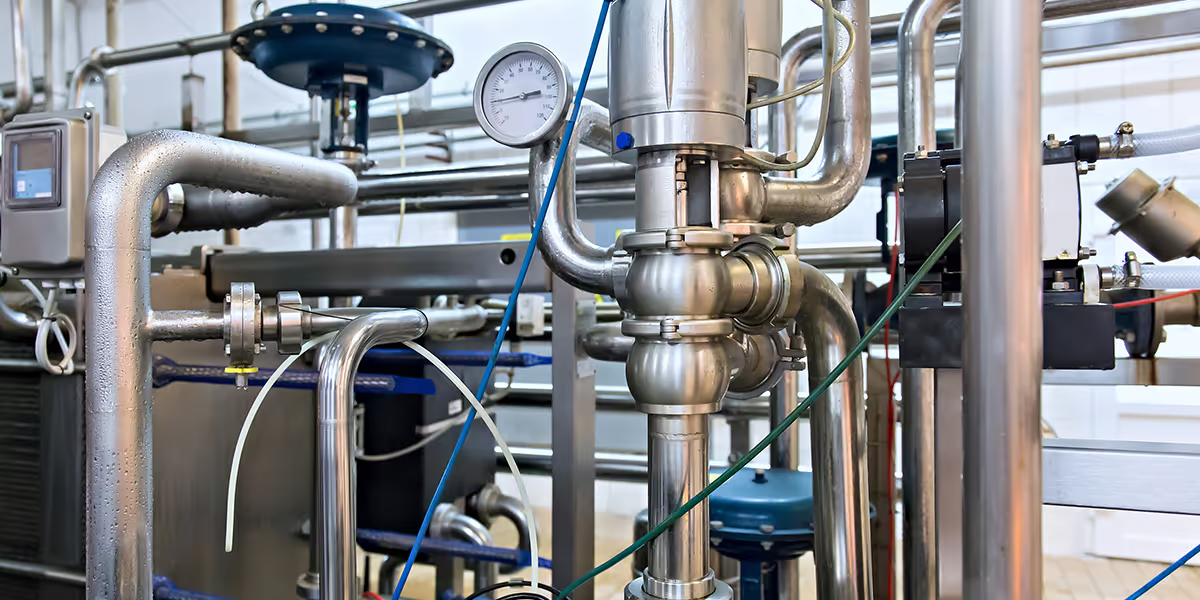
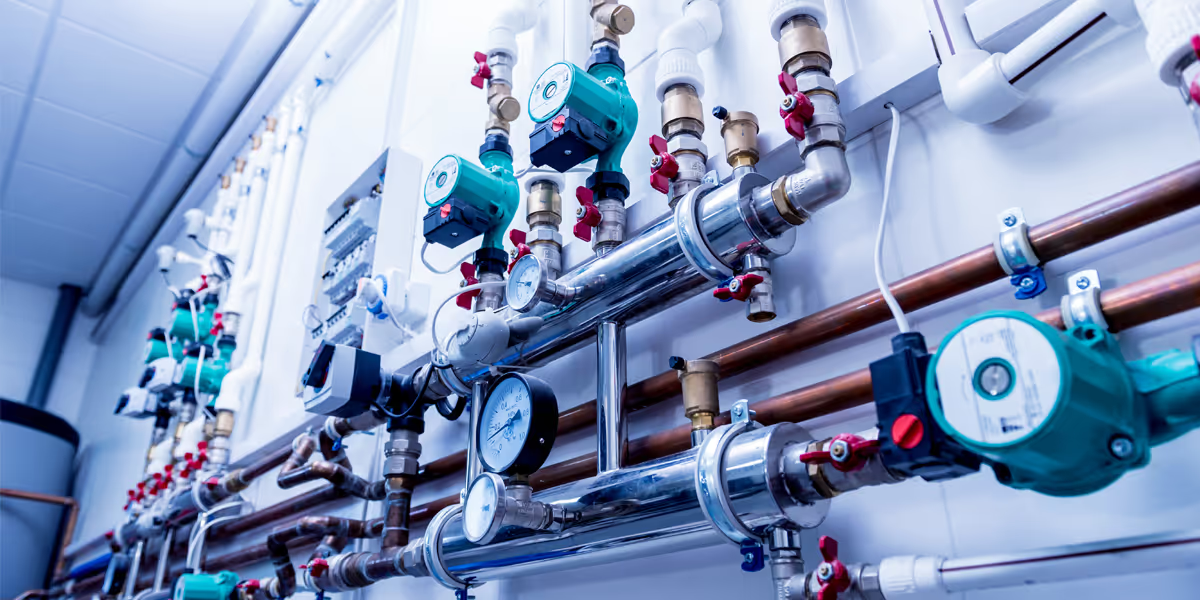
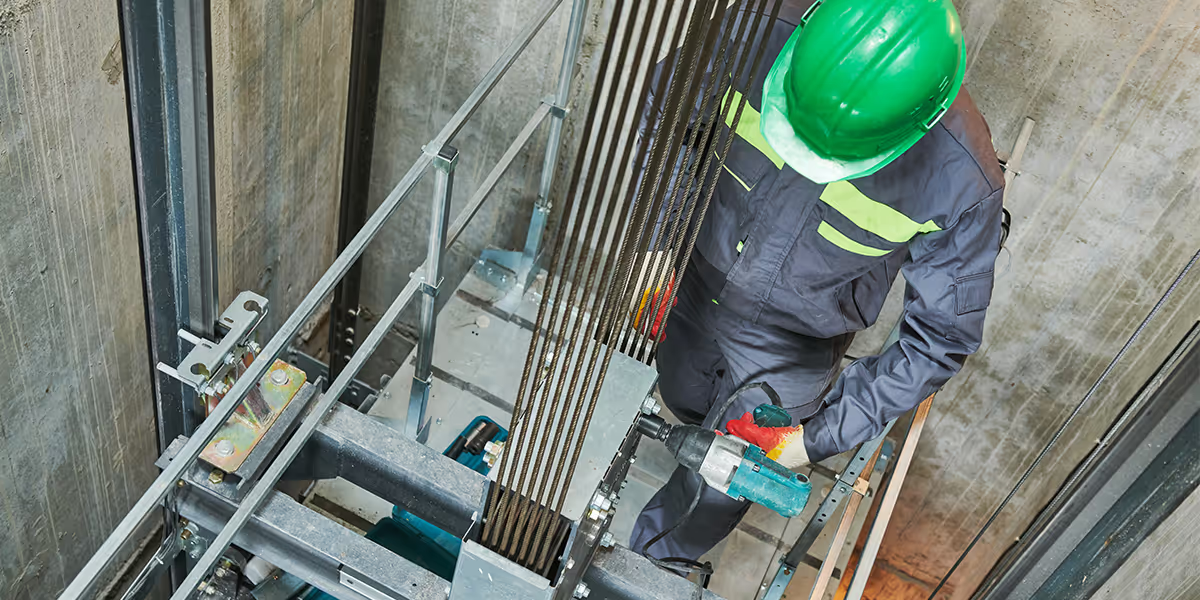
The China Manufacture License (CML) or SELO License is mandatory for manufacturers to design and produce special equipment and components according to Chinese standards. It covers items such as pressure vessels and boilers and is sometimes referred to as the Pressure Vessel License or China Stamp. It also covers other items such as elevators and amusement rides as these products are subject to strict regulation because they present a significant risk to human safety in the event of a failure or accident.
It was first introduced in 1980 and later restructured under the supervision of the State Administration for Market Regulation (SAMR). It ensures that manufacturers meet China’s safety and technical standards before domestic manufacturing and distribution can begin.

What is a China Manufacture License?
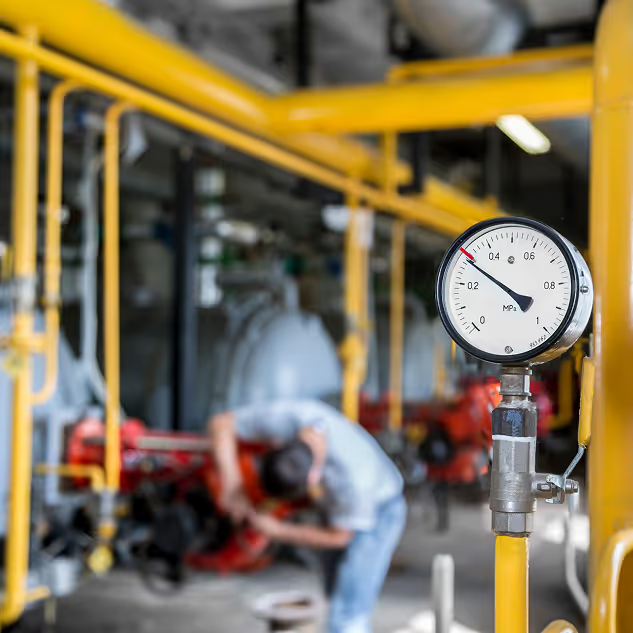
The CML is a compulsory permit for domestic or overseas manufacturers of “special equipment” who intend to sell or operate in China. “Special equipment” includes items such as boilers, pressure vessels, elevators, cranes, and certain safety-critical components. The license is issued following an in-depth review of the design, quality control systems, and manufacturing processes.
Manufacturers must submit an application to the Special Equipment Licensing Office (SELO). The products associated with the application may have to undergo design appraisal and will have to pass on-site manufacturing audits conducted by Chinese inspectors. A successful inspection leads to the issuance of the China Manufacture License of Special Equipment, also known as the China stamp or SELO License.
Equipment Subject to the CML
The license applies to both complete equipment and key components falling under the scope of “special equipment” regulations. Examples include:
Manufacturers must verify if their equipment or components are classified as “special equipment” under TSG (Special Equipment Safety Technical) standards.
The CML Regulatory Framework
Several national organizations play a role in the CML process:
These bodies coordinate to maintain the integrity of China’s special equipment safety regime, ensuring only approved manufacturers may operate legally in the market.

Discover Our SELO License Process Services
Obtaining a CML or SELO License involves multiple steps, each requiring detailed technical and procedural documentation. The process typically includes:
1
Pre-assessment
Confirming product falls under the “special equipment” category.
2
Application
Filing a formal application with the Special Equipment Licensing Office.
3
Design Appraisal (if applicable)
Evaluation of technical drawings and specifications.
4
On-site Inspection
Inspection of manufacturing site, QMS, design and testing capabilities.
5
Issuance of License
The China Manufacture License is granted following a successful audit and final review.
6
Regular Renewals
Required every 4 years, a surveillance inspection must be passed. If applicable for the product group, a new type test must be conducted if the Chinese technical requirements have changed in the meantime.
Foreign manufacturers must also appoint a legal representative in China and ensure close cooperation with their local agents during audit preparation and follow-up.
The China Manufacture License approval process follows a strict step-by-step sequence, no phases can run in parallel. If type testing is required, factory inspection cannot be scheduled until the test results have been reviewed and accepted by the licensing authority.
Due to mandatory on-site audits and, in some cases, additional requirements such as design dossier evaluations or laboratory testing in China, it can become a lengthy project. Based on our industry experience, obtaining the official China Stamp typically takes between 8 to 12 months. Where type testing is involved, companies should plan for additional lead time.
Initial Application
To apply for the China Manufacture License, manufacturers must submit a complete dossier that includes product descriptions, technical data sheets, drawings, design documents if applicable, a quality management manual, business registration, company profile, and any required letters of authorization. This package is submitted along with the official application form for review by the Chinese authorities.
During the review, SELO may determine that additional steps such as type testing or design evaluation are necessary. These steps must be completed in sequence, often requiring type testing to be finished before a factory inspection can be arranged. Once the application is accepted, the authority will issue an invoice, confirm the submission, and authorize the scheduling of the factory inspection with the CSEI. If type testing is required, applicants will be notified and must organize the testing before moving forward.
Factory Inspection
Following acceptance of the application, it may take up to six months or longer before the factory inspection can be scheduled. The inspection itself is conducted by three inspectors from the CSEI and usually lasts three to four days. The process focuses on two main areas:
Once the inspection date is confirmed, the inspection team will provide a preliminary agenda detailing their areas of focus. These typically include resource management, implementation of quality control systems, adherence to product safety design requirements, and demonstration of compliance using production samples. The inspection begins with an opening meeting between the inspectors and the manufacturer's management team.
Over the course of the inspection, the team will review documents, observe processes, and ask targeted questions based on their prepared checklist. If issues are identified, manufacturers are generally given the opportunity to address them during the inspection. All findings are documented, and any corrective actions must be implemented within the specified timeline, supported by evidence and signed off by both parties.
Final Approval & SELO License Issuance
Once the factory inspection is completed, the inspectors return to China and finalize their report based on the findings from the visit. The inspection report is written in Chinese and is generally not shared with the applicant.
Supporting documents such as the inspection report, type test report, and design appraisal, if applicable, are compiled and submitted by CSEI to SELO. After all documentation has been submitted and outstanding invoices are settled, SELO typically reviews the reports within four weeks. If no issues are identified, the authority forwards the case to SAMR for final approval.
The China Manufacture License is usually issued within two months following a successful inspection. If no factory inspection is required, the process may be shorter, but a minimum of one month should still be expected. The license is generally valid for four years.
The final approval and issuance of the manufacturing license mark the end of the licensing process. This step confirms that the company meets all regulatory requirements and can legally manufacture and sell its respective products to China.
SELO License Renewals
A China Manufacture License is valid for four years and can be renewed without limitation. However, the renewal process follows the same steps as the initial application, including a mandatory on-site inspection. To avoid any lapse in validity, the renewal application should be submitted at least eight months before the current license expires. In some cases, type testing or design appraisal may need to be repeated, especially if regulatory standards or product specifications have changed. While waivers may be possible if no modifications have occurred, early preparation is essential to ensure timely renewal.

Discover Our China Manufacture License Services
Whether you’re just starting out or are a blue-chip, access our wide range of CML services
1
Applicability Assessment
2
Clearance Certificates
3
Exemption Handling
4
New SELO Licenses
Full project management for first-time CML applicants:
5
License Changes
Management of modifications to existing certificates, such as:
6
License Maintenance
7
Self-Declaration
8
Friendly Audits & Consulting
9
Regulatory Translations
Request a Proposal for Approval of your Special Equipment in China
Frequently Asked Questions
A China Manufacturing License, also known as the SELO license or Pressure Vessel License or China Stamp, is mandatory for manufacturers to design and produce special equipment and components according to Chinese standards. It certifies compliance with local safety and regulatory standards, ensuring product quality and legality.
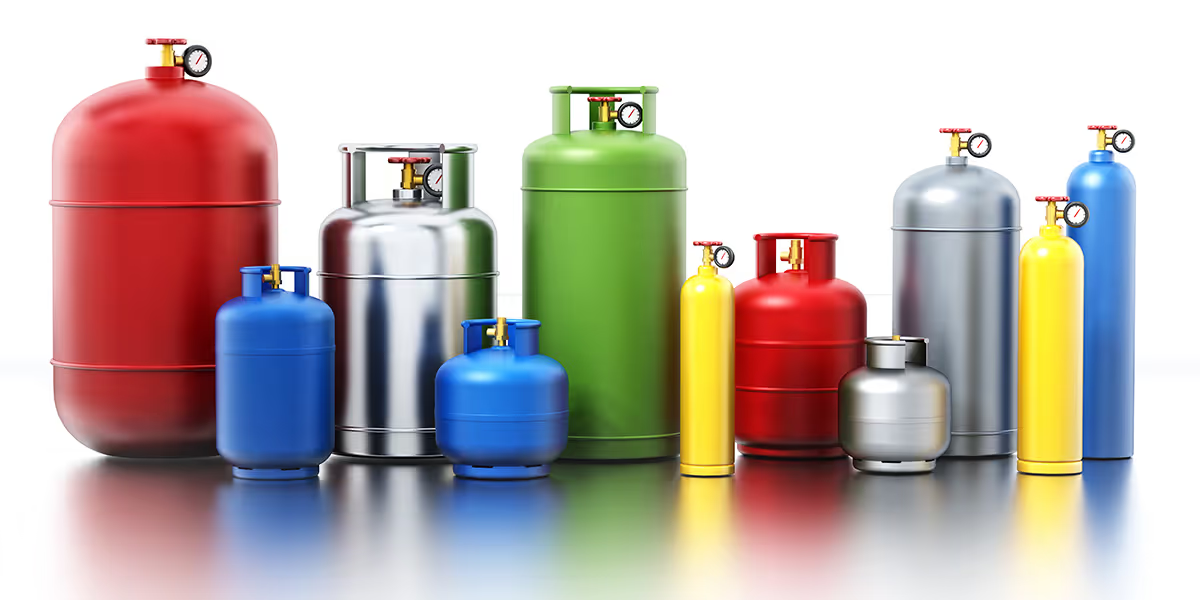
Products such as pressure vessels, boilers, safety equipment, and gas cylinders require a China Manufacturing License. Please contact us to check if your product is concerned by China stamp requirements.
The licensing process typically takes eight to twelve months from application submission to certificate issuance, with the review period lasting around 20 working days.
Cost is an important consideration when evaluating SELO approval. Expenses vary depending on the product type and the level of external support required, but generally fall into three main categories. First, CSEI inspection fees can be significant, particularly when a factory audit is involved, typically requiring a team of three inspectors over several days, with additional costs for travel, accommodation, and interpretation. Second, type testing may be necessary and can range from a few thousand to several tens of thousands of euros or dollars, depending on the complexity of the product and required sample shipments. Finally, the engagement of any external consultants to ensure compliance of the application and audits.