China Health Food Registration
Health food registration in China is overseen by the State Administration for Market Regulation (SAMR), with technical review carried out by the Center for Food Evaluation (CFE). Products classified as “health food” include both nutritional supplements (e.g., vitamins and minerals) and foods with specific health functions (e.g., immunity or digestion support).
To market health food products, foreign companies must obtain either a filing certificate or a full registration certificate from the SAMR, depending on the product type and ingredients. This approval is mandatory for all health food products before importation, distribution, or sale.
The process is detailed and tightly regulated, requiring careful preparation of documentation, product testing, and compliance with China’s food safety and labeling standards.


China Health Food Classification
Chinese regulations divide health food into two main categories:
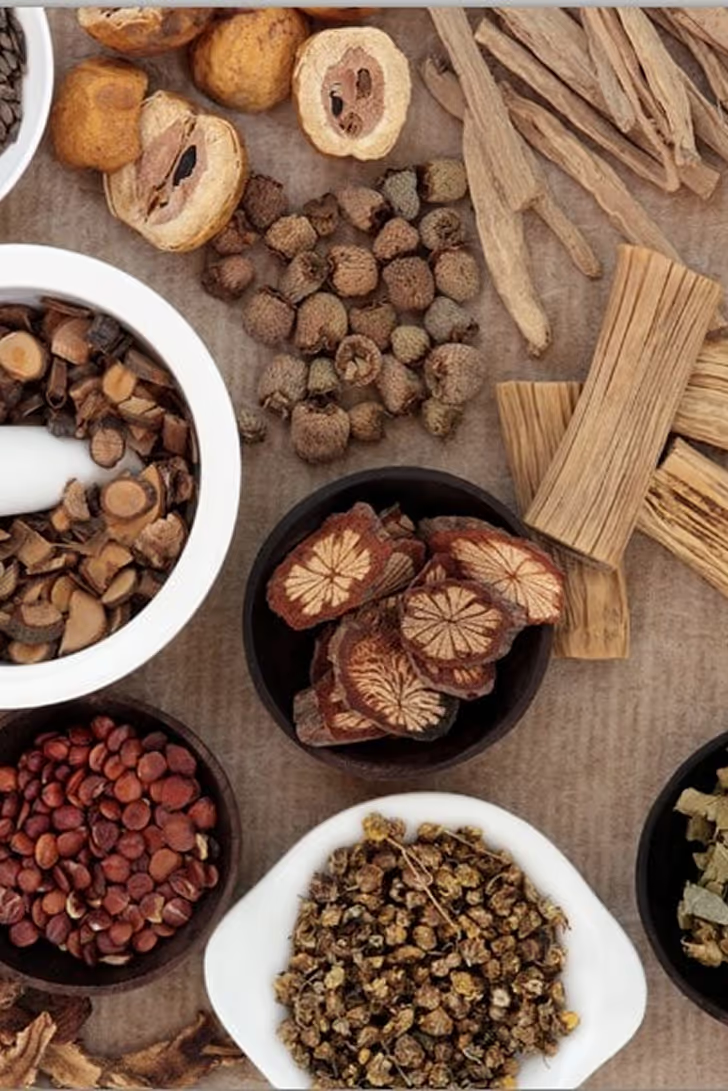
Health foods can come in various forms, including beverages and tea, and are subject to specific regulations regarding their ingredients and health claims.
Note: Only claims listed in official guidelines may be used—therapeutic or disease-related claims are strictly prohibited.
Regulatory Background
The regulatory background for health food registration is governed by the Food Safety Law of the People’s Republic of China and the Administrative Measure on Health Food Registration and Filing. They outline the requirements for health food registration, including the need for domestic health food manufacturers to obtain a production certificate and for overseas manufacturers to appoint a local agent. In 2023, the SAMR announced new strategies for regulating health food products, including stricter requirements for labeling and packaging.
How to Register Health Food in China
To import and sell health food in China, foreign manufacturers must first appoint a Domestic Responsible Agent and submit a registration or filing application to the SAMR. The pathway depends on the product type:
An applicant must meet specific qualifications and requirements to successfully apply for a health food filing system login account. This includes having legal person status and obtaining the necessary certification for both domestic and overseas applicants.
Filing Requirements
Health foods that qualify for filing must:
Filing certificates are issued indefinitely and are generally faster to obtain.
Registration Requirements
Health foods requiring registration include:
Registration is more complex and includes human and/or animal functional evaluation trials, toxicology data, and safety assessments. Certificates are valid for five years and must be renewed before expiration.
Our Health Food Registration Services:
We offer comprehensive support for health food and supplements filing and registration in China:
- SAMR filing or registration dossiers
- Supplementary notices
- Change applications and renewals
- Certificate transfer and replacement requests
Why Register Your Health Food in China?

Our China Domestic Responsible Agent Services
As your Domestic Responsible Agent (DRA), we are your single point of contact for all State Administration for Market Regulation (SAMR) matters related to health food. Independent from any distributor, we ensure you maintain full control over your registrations and retain complete flexibility when choosing or changing your distribution partners in country. Our services include:
Strategic & Regulatory Advice
Pre-Market Support
Testing & Technical Support
Post-Market Surveillance (PMS)
Support with on-site inspections and regulatory audits - see here for our services on health food quality compliance
Request a Proposal for Health Food Services





Other Industries We Support
In addition to health foods, we offer consulting services across regulated industries including pharmaceuticals, biopharma, cosmetics, veterinary products, medical devices, IVDs and other industrial and consumer goods. Our team ensures tailored regulatory compliance strategies, regardless of product category or manufacturing model.