
Published on
Last updated on
China Issues GACC Order 280 Implementation Rules for Imported Food Registration
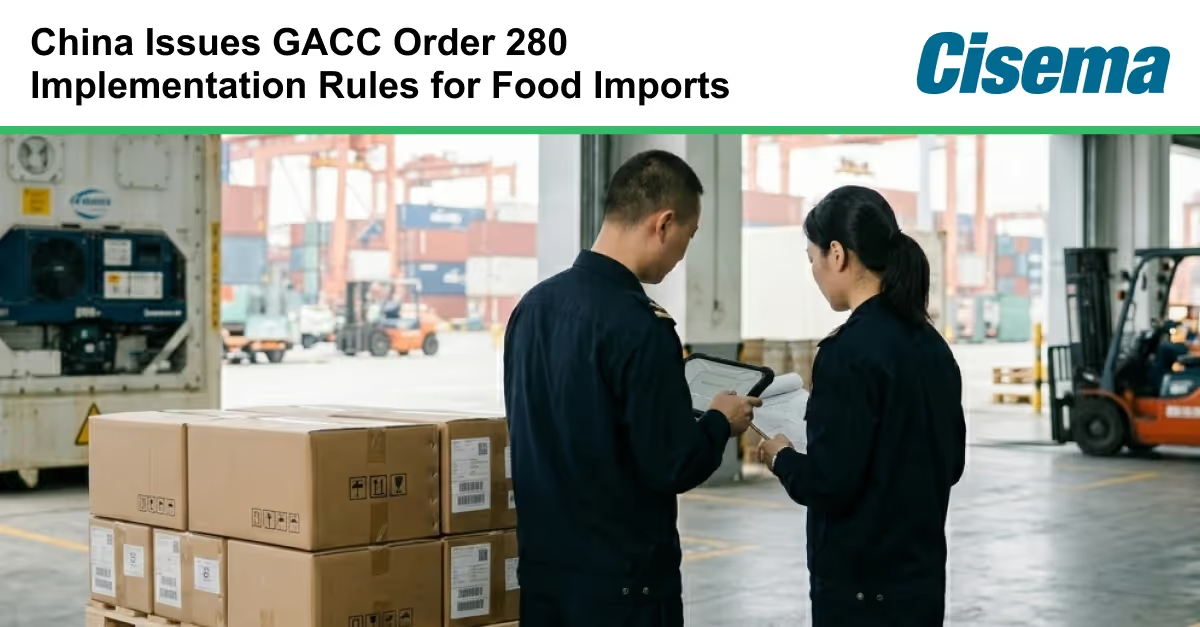
On March 18, 2026, the General Administration of Customs of China issued “Announcement No. 27 of 2026,” outlining implementation measures for the “Regulations of the People’s Republic of China on the Administration of Registration of Overseas Manufacturers of Imported Food” — also known as GACC Order 280, hereinafter referred to as the "Registration Regulations”.
The regulation will take effect on June 1, 2026, introducing clearer but more stringent compliance requirements for overseas food manufacturers exporting to China.
Defined Scope of Imported Food Registration Under GACC Order 280
The announcement clarifies how China will apply registration controls across different imported food categories, based on risk factors such as raw materials, processing methods, and food safety data. These classifications directly affect whether overseas manufacturers must obtain official recommendation or can proceed through self-registration under GACC Order 280.
Food Categories Requiring Official Recommendation
Under Article 6 of the “Registration Regulations,” certain higher-risk food categories must be recommended by competent authorities in the exporting country before registration with Chinese customs.
These include:
- Meat and meat products
- Casings
- Bird’s nest and related products
- Bee products
- Eggs and egg products
- Edible oils and fats
- Stuffed pasta products
- Edible grains
- Grain milling products and malt
- Dried vegetables
- Seasoning powders
- Nuts and seeds
- Dried fruits
- Foods for special dietary uses
- Health foods
- Dairy products
- Aquatic products
For overseas food manufacturers, this requirement adds a critical compliance step within the China imported food registration process, requiring coordination with local regulators before market entry. In practice, companies often need to align documentation and regulatory positioning early — an area where external regulatory support can help.
Categories Excluded from Automatic Renewal
The announcement removes automatic renewal eligibility for certain high-risk categories — meat and meat products, bird’s nest and related products — under Article 21 of the Registration Regulations.
Exporters must now actively manage renewal timelines to maintain valid China imported food registration status and avoid disruption to ongoing shipments.
Registration Scope for Overseas Storage Facilities
The regulation expands oversight to include certain overseas storage facilities. Specifically, cold storage warehouses handling terrestrial food and aquatic products must also undergo registration. This reflects increased scrutiny of the full supply chain, not only production sites.
Updated China Imported Food Customs Declaration Requirements
The announcement introduces detailed customs declaration rules that directly affect how imported food shipments are processed at entry points in China.
Mandatory Registration Number Reporting for Imported Food
For imported food in the form of goods intended for human consumption or food processing, importers must declare the overseas manufacturer’s registration number under the “Product Qualification” section of the customs declaration form (license category code “519”).
The “Use” field must also be completed with “edible.” Customs authorities will reject declarations that do not meet these requirements, and false reporting may result in administrative penalties.
Import Eligibility Linked to Registration Status
GACC Order 280 Implementation Rules clarifies that import eligibility is tied to the registration status of the overseas manufacturer:
- For enterprises that require official recommendation for registration, products manufactured during a valid registration period remain eligible for import, even if registration is not renewed, provided shelf life remains valid
- For self-registered enterprises, registration must be valid at the time of import declaration
- Products declared before a manufacturer’s suspension, cancellation, or revocation will not be affected
These provisions require close coordination between regulatory, logistics, and commercial teams. Companies with high shipment volumes or multiple SKUs may benefit from structured compliance processes to ensure alignment at the point of declaration.
Digital System for Overseas Manufacturer Registration in China
To support the implementation of GACC Order 280, the GACC has strengthened its centralized digital registration platform, positioning it as the primary interface for overseas manufacturers managing China imported food registration.
Overseas manufacturers can use the official registration system to:
- Submit new applications
- Manage changes, extensions, and renewals
- Handle suspension or resumption requests
A built-in product category query tool further supports compliance by enabling users to identify applicable customs commodity codes and regulatory identifiers, improving the accuracy of product classification and declaration.
Beyond application management, the system functions as a key verification and compliance tool. Registration data, including registration numbers and validity periods, can be accessed through official channels, supporting due diligence and partner verification. The platform also hosts supporting resources such as registration guidelines, system manuals, and consultation services.
The GACC emphasizes that companies should access only verified platforms to avoid fraudulent websites and potential data risks. It also confirms that no fees will be charged for the registration of overseas food manufacturers or primary agricultural producers.
Compliance Implications for Overseas Food Manufacturers Exporting to China
The implementation of GACC Order 280 creates a more structured and transparent — yet more tightly controlled — China imported food regulatory framework, with expanded oversight across both product categories and supply chains.
Against this backdrop, overseas manufacturers should take immediate action to:
- Confirm whether their products fall under official recommendation requirements
- Ensure timely registration and renewal, particularly for non-auto-renew categories
- Align internal documentation with updated customs declaration rules
- Register in-scope storage facilities where applicable
With enforcement set for June 1, 2026, early preparation is critical to avoid shipment delays, rejected declarations, or loss of market access. Companies navigating China imported food registration under GACC Order 280 are recommended to consult experienced regulatory partners such as Cisema to support efficient and compliant market entry.
Further Information
Explore Cisema’s health food registration services in China to support ongoing compliance with China imported food regulations and GACC Order 280 requirements.
For additional regulatory context, read China Issues Revised Rules for Overseas Food Manufacturer Registration, which outlines the original publication of “GACC Order No. 280” on October 14, 2025, and its June 1, 2026 enforcement timeline.
References
Refer to the official “Announcement on Matters Related to the Implementation of the ‘Regulations of the People’s Republic of China on the Administration of Registration of Overseas Manufacturers of Imported Food’” published by the General Administration of Customs.
Connect with Cisema
With more than 20 years of experience and a team of over 100 specialists, Cisema helps global companies achieve compliance across Asia Pacific with confidence and accelerate market entry.
Stay Informed with Monthly News and Analysis
Stay informed with the latest regulatory changes, expert insights, and market opportunities across APAC, delivered straight to your inbox.
Related News

Hong Kong Requires MDACS Listing for Injectable Dermal Fillers by March 1, 2027
New requirements could affect how injectable devices, including dermal fillers, are supplied in Hong Kong’s private healthcare sector.

China Enacts First Healthcare Security Law: Impact on Global Medtech
China’s new Healthcare Security Law affects medical device reimbursement, health economic evidence, payment models, and digital traceability from 2027.
Indonesia Mandates Pre-Shipment Halal Verification for Imported Products
BPJPH Regulation No. 4 of 2026 introduces pre-shipment halal verification and LPPH reports for imported goods starting September 2026.