
Published on
Last updated on
China Expands MRI Registration Requirements Under New 2026 Review Guideline
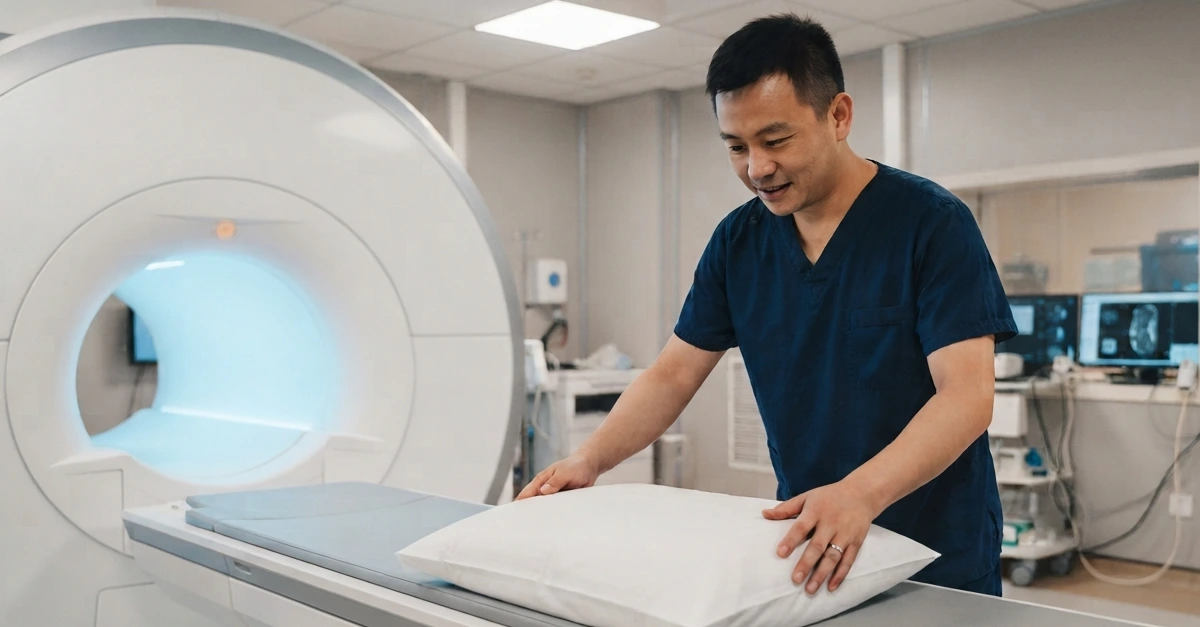
On June 23, 2026, the Center for Medical Device Evaluation (CMDE) of China's National Medical Products Administration (NMPA) released the Registration Review Guideline for Medical Magnetic Resonance Imaging Systems (2026 Revision) under Announcement No. 21 of 2026.
This guideline serves as the primary technical blueprint for registering permanent magnet, superconducting, and resistive MRI systems with field strengths up to 3 Tesla in China. Far from a routine update, the 2026 revision fundamentally expands the scope of MRI regulatory reviews. Shifting away from a narrow focus on equivalent device clinical evaluations, it establishes a comprehensive framework for the entire registration dossier while introducing rigorous technical benchmarks for zero-helium systems, AI-driven imaging, and advanced RF coils.
For overseas manufacturers, this means medical device registration in China will require broader planning, more detailed technical evidence, and closer alignment between engineering, clinical, and regulatory teams.
Registration Review Now Extends Beyond Clinical Evaluation
Perhaps the most fundamental change is the expansion of the review itself. Rather than concentrating primarily on clinical evaluation, the revised guideline now assesses the complete medical device registration dossier, including:
- Regulatory submission information
- Product summary documentation
- Non-clinical studies
- Clinical evaluation
- Instructions for use
- Product labeling
This holistic approach means MRI manufacturers can no longer address submission components as isolated variables. Instead, they must ensure their documentation strategy provides a unified, cohesive justification for the medical device's safety and efficacy.
Stricter Registration Unit Requirements
Another significant change affects how MRI systems are grouped into registration units. Under the revised guideline, medical device registration units must now be determined according to:
- Technical principles
- Product design
- Performance characteristics
- Intended use
Consequently, systems with different magnet technologies, varying field strengths (e.g., 1.5T vs. 3T), distinct configurations (fixed vs. mobile), or substantially different clinical applications will generally require separate applications. Product families previously bundled under a single submission must now be unbundled, shifting testing workloads and commercial launch timelines.
New Technical Requirements for Zero Helium MRI Systems
For the first time, the guideline includes dedicated technical requirements for zero helium superconducting MRI systems.
Appendix I mandates specific technical evidence detailing:
- Cooling system design
- Superconducting magnet construction
- Thermal field analysis
- Temperature stability
- Safety thresholds
- Performance following repeated magnet ramping
- Power failure tolerance
Reflecting their distinct technical profiles, zero-helium MRI systems must now be registered separately from conventional liquid-helium systems. Manufacturers developing next-generation, helium-free platforms should integrate these evidence requirements directly into their R&D pipelines to ensure safety and long-term reliability are validated early.
AI Software Faces Greater Regulatory Scrutiny
AI-enabled imaging is another area receiving considerably greater regulatory attention. Applicants using AI technologies, including deep learning algorithms, must comply with current software registration requirements and applicable AI medical device guidance.
Documentation should clearly describe:
- Imaging technologies and algorithms
- Intended use
- Clinical workflow
- Target patient populations
- Compatible hardware
- Software validation studies
Notably, for accelerated imaging technologies like compressed sensing, the CMDE now expects rigorous validation across the entire spectrum of supported acceleration factors.
Expanded Documentation for RF Coils
Hardware innovation is also under the microscope. Documentation requirements have expanded significantly for radiofrequency (RF) coils and innovative hardware components.
Manufacturers must provide granular data covering:
- Coil design and geometry
- Channel configuration
- Circuit architecture
- Materials
- Intended clinical use
Dedicated validation studies are also expected for newer technologies such as:
- Flexible RF coils
- Respiratory sensor-integrated coils
- Breast biopsy coils
These additions reflect growing regulatory attention to hardware innovations that directly influence imaging performance and patient safety.
Broader Clinical and Performance Validation Expectations
Beyond hardware and software, the revised guideline broadens expectations for clinical and technical validation.
Additional evidence may now be required for:
- Pediatric imaging validation, including specific absorption rate (SAR) studies
- Systematic imaging sequence validation
- Verification of quantitative imaging accuracy
- Repeatability testing for quantitative imaging functions
- Coverage of magnetic resonance spectroscopy, where applicable
Validation programs must be meticulously designed to fully support every performance claim and clinical application listed in the registration submission.
Preparing for China's Evolving MRI Regulatory Framework
While the 2026 guideline brings welcome clarity, it also elevates the technical and engineering benchmarks required for market access in China. Early design decisions — including magnet selection, AI integration, and RF coil configuration — will now have a direct impact on registration pathways and supporting data requirements. Navigating this shifting landscape requires seamless, early-stage coordination between regulatory, engineering, clinical, and quality assurance teams to map out evidence gaps before they cause costly delays.
To help cross-functional teams manage these complex requirements, Cisema supports global medical device manufacturers throughout the entire NMPA registration process. From initial regulatory strategy and pathway assessments to dossier preparation, Legal Agent services, and post-market compliance, we provide the end-to-end expertise needed to align your technical data with China's evolving expectations.
If your company is planning to register new MRI systems or update existing registrations in China, contact Cisema to assess how the 2026 MRI Registration Review Guideline affects your products and develop a compliant, efficient registration strategy.
Further Information
References
Connect with Cisema
With more than 20 years of experience and a team of over 100 specialists, Cisema helps global companies achieve compliance across Asia Pacific with confidence and accelerate market entry.
Stay Informed with Monthly News and Analysis
Stay informed with the latest regulatory changes, expert insights, and market opportunities across APAC, delivered straight to your inbox.
Related News

Hong Kong Requires MDACS Listing for Injectable Dermal Fillers by March 1, 2027
New requirements could affect how injectable devices, including dermal fillers, are supplied in Hong Kong’s private healthcare sector.

China Enacts First Healthcare Security Law: Impact on Global Medtech
China’s new Healthcare Security Law affects medical device reimbursement, health economic evidence, payment models, and digital traceability from 2027.

Indonesia Mandates Pre-Shipment Halal Verification for Imported Products
BPJPH Regulation No. 4 of 2026 introduces pre-shipment halal verification and LPPH reports for imported goods starting September 2026.