
Published on
Last updated on
What Is Indonesia Halal Certification for Health Supplements? What Manufacturers & Importers Need to Know

Indonesia is moving into a critical new phase of halal enforcement — and for health supplement companies, the implications are significant.
By October 17, 2026, vitamins, nutraceuticals, herbal products, functional supplements, and dietary supplements sold in Indonesia must comply with mandatory halal requirements, directly affecting product registration, distribution continuity, and launch timelines.
Many companies assume existing halal certificates or GMP compliance will be sufficient. In practice, Indonesia’s system requires far deeper verification across ingredient sourcing, manufacturing controls, supplier traceability, labeling consistency, and internal halal assurance systems.
Even lower-risk products can face delays if technical files, supplier records, manufacturing documentation, or BPJPH submissions fail to align consistently.
Continue below to understand the key requirements, operational risks, and practical preparation steps — or contact Cisema for support with Indonesia halal compliance and health supplement market entry.
Which Health Supplement Products Require Halal Certification in Indonesia?
One of the first challenges for companies entering Indonesia is determining how broadly halal requirements apply across a supplement portfolio.
Indonesia’s halal framework, governed primarily by Law No. 33/2014 on Halal Product Assurance and Government Regulation No. 42/2024, requires products sold in Indonesia to obtain halal certification unless they contain prohibited materials and are clearly identified as non-halal.
For health supplements, the requirements apply to imported and domestically manufactured products distributed through pharmacies, retail stores, clinics, hospitals, direct sales channels, and e-commerce platforms.
Covered product categories include:
- Vitamins and minerals
- Botanical supplements
- Herbal supplements
- Nutraceutical products
- Functional supplements
- Dietary supplements
After October 17, 2026, supplement products marketed in Indonesia must either:
- Hold halal certification issued or recognized by Indonesian authorities, or
- Display a compliant “Non-Halal” or “Tidak Halal” label
Products failing to meet certification or labeling obligations may face administrative sanctions, product withdrawal measures, distribution restrictions, or other enforcement actions.
How Does Indonesia Assess Halal Compliance for Health Supplements?
Indonesia halal certification for health supplements is a lifecycle-based assessment, where compliance is evaluated across the full value chain rather than only ingredients or packaging.
The process is administered through BPJPH, an LPH (Halal Inspection Body), and religious determination procedures, making it a structured, multi-stage review rather than a single product assessment.
Within this framework, authorities assess whether halal integrity is maintained end-to-end, including:
- Raw material sourcing
- Manufacturing conditions
- Storage and warehousing
- Handling procedures
- Packaging operations
- Distribution practices
- Quality system documentation
- Internal halal assurance controls
Because this approach links product composition with operational execution, compliance depends on both documentation and process control. Even lower-risk formulations may face scrutiny if records, segregation measures, or production practices do not consistently demonstrate full lifecycle integrity.
This challenge is amplified in supplement portfolios spanning multiple manufacturing sites, contract manufacturers, and global supply chains. Delays commonly occur when specifications, labels, certificates, and production records fail to align into a single, consistent regulatory narrative.
Can Imported Health Supplements Use Existing Foreign Halal Certificates?
Many companies ask whether foreign halal certificates are accepted in Indonesia.
In practice, overseas halal certification does not automatically permit market entry.
Imported supplement products often still require BPJPH recognition, registration, or additional review before commercial distribution is permitted.
Manufacturers and importers should therefore verify:
- Whether the foreign halal certification body is recognized in Indonesia
- Whether the certificate covers the exact product and formulation submitted
- Whether the manufacturing site is included within certificate scope
- Whether additional audits or local registration procedures are required
- Whether the certificate remains valid during the planned import period
Foreign certificates can also create challenges where product names, formulation details, manufacturing sites, or supplier information do not match Indonesian submission records. Even minor discrepancies can trigger clarification requests or delay BPJPH approval.
And even where foreign certification exists, ingredient sourcing and manufacturing controls must still satisfy Indonesian halal requirements.
Ingredient Requirements for Indonesia Halal Supplement Certification
Ingredient traceability represents one of the most critical aspects of halal certification for health supplements in Indonesia.
Vitamins, herbal products, nutraceuticals, and functional supplements frequently contain materials sourced from multiple suppliers and countries, increasing traceability requirements during regulatory review.
Authorities often focus on ingredients associated with animal origins, alcohol processing, fermentation activities, and capsule materials.
Ingredients commonly requiring additional review include:
- Gelatin capsules
- Collagen
- Enzymes
- Probiotics
- Flavor systems
- Emulsifiers
- Omega oils
- Fermentation-derived ingredients
- Alcohol-containing extracts
- Coating agents
- Processing aids
- Multi-source excipients
To support ingredient compliance, companies should collect:
- Supplier declarations
- Halal certificates
- Technical specifications
- Ingredient origin statements
- Traceability records
- Manufacturing process statements
- Certificates of analysis
- Animal-origin declarations where applicable
Minor excipients, capsule shells, flavor carriers, and processing aids often create unexpected documentation gaps because materials may pass through several suppliers before reaching the finished product.
For example, a soft gel capsule may require assessment not only of the active ingredient, but also gelatin source, glycerin, colorants, coatings, and manufacturing aids. Botanical extracts may likewise require review of solvents, carriers, and processing methods.
Identifying higher-risk ingredients early can significantly reduce supplier remediation, reformulation discussions, and BPJPH clarification requests later in the process.
Manufacturing and Quality System Requirements for Halal Supplement Compliance
Ingredient compliance alone is not sufficient to determine certification outcomes. Authorities also assess whether manufacturing environments consistently maintain halal integrity throughout production, storage, and handling.
While Good Manufacturing Practice (GMP) systems can support readiness, they do not replace halal-specific requirements for contamination prevention and segregation.
Typical expectations include:
- Dedicated or properly sanitized equipment with traceable cleaning records
- Controlled material handling procedures
- Segregated storage systems
- Hygienic manufacturing practices
- Production traceability controls
- Internal halal assurance procedures
These requirements are particularly challenging for companies using shared production lines or outsourced manufacturing, especially across pharmaceutical, nutraceutical, and non-halal product portfolios, where additional documentation is often needed to demonstrate effective contamination control.
What Is SJPH and Why Does It Matter for Health Supplement Companies?
Companies applying for Indonesia halal certification must implement a Halal Product Assurance System known as Sistem Jaminan Produk Halal (SJPH).
SJPH provides the internal framework required to maintain halal compliance across sourcing, manufacturing, quality assurance, and distribution activities.
The system generally includes:
- Defined employee responsibilities
- Internal halal policies
- Documentation controls
- Employee training procedures
- Monitoring and corrective action systems
- Internal audit activities
SJPH implementation often requires coordination across multiple departments and countries — particularly where sourcing, manufacturing, and registration activities are decentralized.
How Health Supplement Companies Can Prepare for Indonesia Halal Compliance
Because supplement portfolios often contain dozens, or even hundreds, of formulations, preparation should begin well before the October 17, 2026 deadline.
Companies should approach halal certification as a structured regulatory project.
Step 1: Define Product Scope and Certification Strategy
Begin by identifying all health supplement products intended for the Indonesian market and determining which formulations require halal certification.
At this stage, companies should evaluate:
- Whether existing foreign halal certificates may be recognized in Indonesia
- Which products involve higher-risk ingredients
- Whether reformulation may become necessary
- Which manufacturing sites fall within certification scope
- Whether separate product groups require different compliance approaches
Step 2: Review Ingredient Compliance and Supplier Documentation
Next, companies should build a structured supplier documentation plan.
This typically involves:
- Prioritizing higher-risk or undocumented materials
- Confirming certificates match the exact ingredient grade and manufacturing site
- Tracking supplier responses and certificate validity
- Resolving documentation gaps before submission
A halal certificate covering a supplier or ingredient family may not be sufficient if it does not match the specific material or production process used within the supplement itself.
Step 3: Assess Manufacturing Controls and SJPH Readiness
Manufacturing review should evaluate whether facilities can consistently preserve halal integrity throughout production and storage activities.
Facilities should assess:
- Shared production lines
- Cleaning validation procedures
- Storage segregation systems
- Material flow controls
- Packaging line controls
- Outsourced manufacturing activities
Where halal and non-halal products are manufactured within the same facility, segregation and sanitation procedures should be clearly documented.
Contract manufacturers should also be included in the assessment process. Even when brand owners maintain strong internal systems, insufficient documentation from outsourced facilities can still delay certification.
Step 4: Prepare BPJPH Registration and Labeling Documentation
Indonesia halal registration requires both technical and administrative documentation.
Typical submission materials include:
- Ingredient lists
- Product formulations
- Manufacturing process flowcharts
- Supplier halal certificates
- Raw material specifications
- Business licenses
- SJPH documentation
- Manufacturing facility information
- Product labeling artwork
Labeling review should confirm:
- Halal logo placement
- Non-halal statement placement where applicable
- Indonesian language requirements
- Packaging consistency across SKUs
- Alignment with product registration information
Before submission, companies should verify consistency across formulations, supplier records, labels, and supporting documentation to reduce clarification requests during assessment.
Halal Certificate Validity and Ongoing BPJPH Compliance Obligations
Indonesia halal certificates remain valid for four years provided there are no changes affecting halal compliance.
However, compliance obligations continue after initial approval.
Post-certification responsibilities include:
- Maintaining halal-compliant production procedures
- Conducting internal halal audits
- Monitoring supplier changes
- Updating halal documentation when necessary
- Reporting formulation modifications to BPJPH
- Renewing certification before expiration
Formula changes deserve particular attention because supplement sourcing frequently changes due to ingredient availability, harvest variability, or supplier substitutions.
Companies should therefore implement internal change-control procedures capable of identifying regulatory impacts before modified products enter the Indonesian market.
5 Common Causes of Indonesia Halal Registration Delays
Even experienced supplement manufacturers can run into delays when supplier records, manufacturing controls, or product documentation fail to hold up during BPJPH review.
Final Thoughts: Preparing for Indonesia’s Mandatory Halal Transition
Indonesia’s halal transition creates a practical market-access challenge for supplement companies: products must be supported by evidence that remains consistent across suppliers, manufacturing sites, labeling, and local registration records.
When those gaps are addressed late, companies may face overlapping pressures across supplier remediation, packaging updates, BPJPH clarification requests, and launch timelines.
With an established presence in Indonesia, Cisema supports foreign manufacturers and importers with halal supplement compliance, BPJPH registration activities, and broader Indonesian market entry planning.
For support with Indonesia halal certification for health supplements and market access preparation, contact Cisema today.
About the Author: Elysabeth Septiani
Elysabeth Septiani is a Regulatory Affairs Manager at Cisema, Indonesia, overseeing regulatory strategy and compliance for medical devices, supplements, and cosmetic products. With eight years of experience in Regulatory Affairs and Quality Assurance, she specializes in regulatory submissions and intelligence, supporting efficient and compliant market access while ensuring alignment with evolving regulatory requirements.
Further Information
Learn more about halal requirements in Indonesia:
- Indonesia's Halal Requirements for Medical Devices: What Manufacturers and Importers Need to Know
- Understanding Indonesia Halal Cosmetic Certification Requirements
FAQ About Indonesia Halal Certification for Health Supplements
The following FAQ addresses several common questions manufacturers, importers, and supplement brands face when preparing for Indonesia halal compliance.
Is Halal Certification Mandatory for Imported Health Supplements?
Yes. Imported health supplements sold in Indonesia must comply with the same halal requirements applied to locally manufactured products.
By October 17, 2026, supplements distributed in Indonesia must either:
- Hold halal certification, or
- Display compliant non-halal labeling.
Can Non-Halal Health Supplements Still Be Sold in Indonesia?
Yes. Products that cannot satisfy halal requirements may still be marketed if they clearly display a compliant “Non-Halal” or “Tidak Halal” statement on the packaging.
However, incorrect labeling or non-compliance may lead to sanctions, distribution restrictions, or product withdrawal measures.
Which Supplement Ingredients Usually Require Additional Halal Review?
Authorities often focus on ingredients associated with animal origins, fermentation, or alcohol use.
Common examples include:
- Gelatin capsules
- Collagen
- Enzymes
- Probiotics
- Alcohol-containing extracts
- Emulsifiers
- Omega oils
- Fermentation-derived ingredients
Manufacturers are typically expected to provide traceability records and supplier documentation supporting halal compliance.
Are Foreign Halal Certificates Accepted in Indonesia?
Some foreign halal certificates may be recognized by Indonesian authorities. However, overseas certification alone does not automatically permit market entry.
Imported products often still require BPJPH recognition or registration before commercial distribution in Indonesia.
Companies should also confirm whether their halal certification body is officially recognized in Indonesia.
How Long Does Halal Certification Remain Valid?
Indonesia halal certificates generally remain valid for four years, provided formulations, ingredient sourcing, and manufacturing controls continue meeting halal requirements.
Companies must also maintain ongoing compliance activities, including internal audits and halal documentation management.
What Happens if a Supplement Formula Changes After Certification?
Changes involving ingredients, suppliers, manufacturing sites, or production processes may affect halal certification validity.
Companies should implement internal change-control procedures and report relevant modifications to BPJPH before updated products enter the Indonesian market.
References
Connect with Cisema
With more than 20 years of experience and a team of over 100 specialists, Cisema helps global companies achieve compliance across Asia Pacific with confidence and accelerate market entry.
Stay Informed with Monthly News and Analysis
Stay informed with the latest regulatory changes, expert insights, and market opportunities across APAC, delivered straight to your inbox.
Related Articles

Learn when medical device and IVD changes in Indonesia require a notification, variation, or new registration, and how to maintain ongoing regulatory compliance.

Avoid common China infant formula labeling mistakes involving registration, allergen statements, date marking, milk-source claims, production changes, and existing inventory.
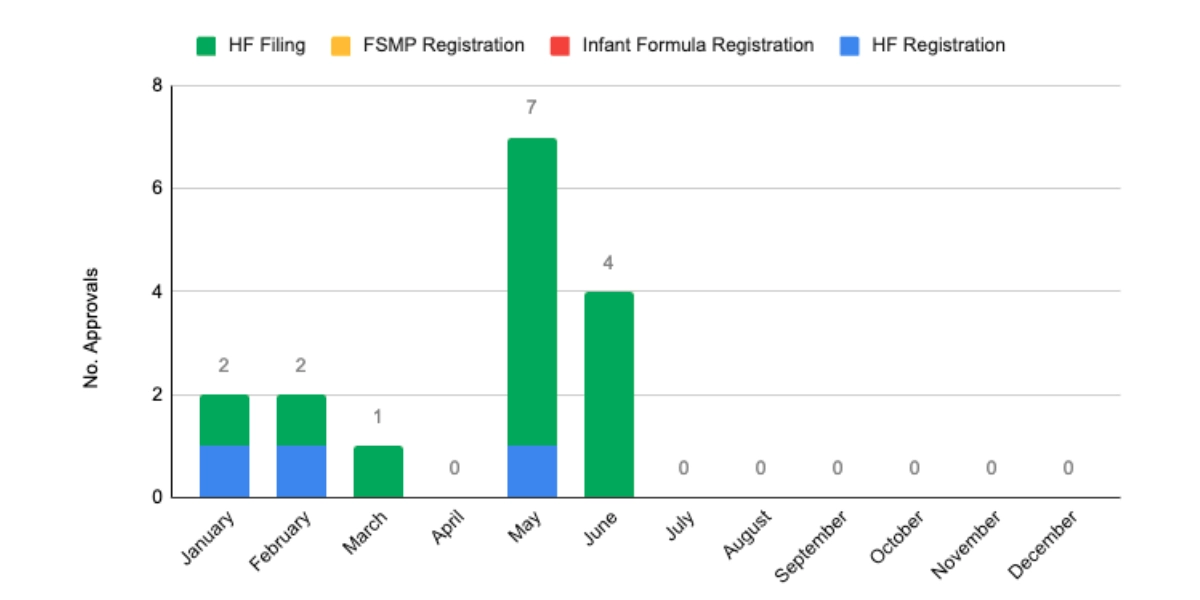
Track China’s 2026 imported health food approvals, monitor SAMR regulatory trends, and compare market activity by category and source with Cisema’s interactive tracker.