How to Enter the Malaysia Cosmetics Market
Malaysia is one of Southeast Asia's most attractive cosmetics markets for international beauty and personal care brands. With a young, digitally connected population, rising consumer spending, strong demand for halal-certified products, and a mature retail and eCommerce landscape, Malaysia offers significant opportunities for foreign manufacturers seeking growth in ASEAN.
The beauty and personal care market in Malaysia spans skincare, colour cosmetics, hair care, fragrances, toiletries, oral care, men's grooming, baby care, and personal hygiene products. Skin care products dominate the Malaysian cosmetic market, followed by hair care and colour cosmetics.
Malaysia is also one of the world's most important halal hubs. For beauty brands, this creates both a commercial opportunity and a compliance consideration. Halal-certified cosmetics are increasingly attractive not only to Muslim consumers but also to consumers who associate halal with safety, quality, ethical sourcing, and transparency.


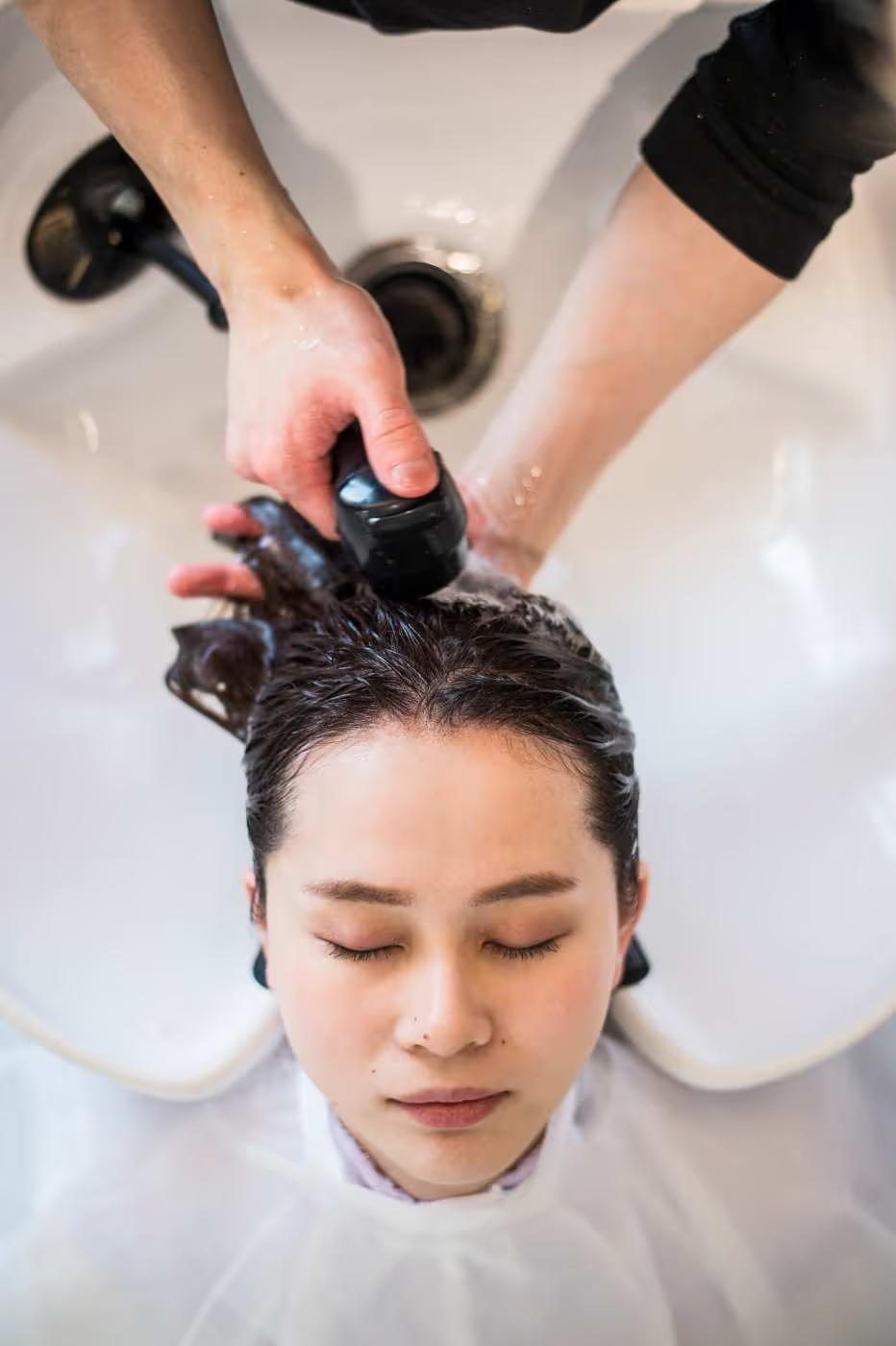
Why Malaysia Remains a Strategic Cosmetics Market
Malaysia's cosmetics and beauty and personal care sector continues to grow strongly, supported by higher disposable incomes, urbanisation, social media influence, and increasing awareness of skincare and personal grooming.
Key market drivers include:
How Cisema Helps Manufacturers Enter Malaysia's Cosmetics Market
Entering Malaysia requires expertise in cosmetic classification, NPRA notification, ingredient compliance, labelling requirements, Product Information File preparation, Cosmetic Notification Holder obligations, post-market surveillance, and ongoing regulatory monitoring.
Cisema provides comprehensive regulatory support covering every stage of the Malaysia market-entry process.
Independent Responsible Person & Cosmetic Notification Holder Services
Cisema (Malaysia) Sdn. Bhd. acts as an independent, neutral Responsible Person and Cosmetic Notification Holder for international manufacturers.
Unlike distributors or importers, Cisema does not import, distribute, or sell cosmetic products. This allows manufacturers to retain control over their commercial strategy while maintaining a clear and compliant regulatory structure.
Our services include:
Product Notification via QUEST3+
Before cosmetic products can be manufactured, imported, or sold in Malaysia, they must be notified to the National Pharmaceutical Regulatory Agency through the QUEST3+ system.
Cisema supports:
Product Information File (PIF) Support
Every Cosmetic Notification Holder must maintain a Product Information File in Malaysia.
Cisema assists with:
Labeling, Packaging & Claims Reviews
Cisema verifies product labels and marketing claims against Malaysian and ASEAN requirements.
Cisema reviews:
Ingredient Review & Safety Assessment
Cisema reviews formulations against the ASEAN Cosmetic Directive and Malaysia-specific regulatory expectations.
Services include:
Ongoing Compliance & Regulatory Maintenance
Services include:
Step-by-Step Guide to Entering Malaysia's Cosmetics Market
1
Step 1: Confirm Product Classification
Before beginning the notification process, manufacturers should confirm that the product qualifies as a cosmetic under Malaysian and ASEAN definitions.
A cosmetic product is generally a substance intended for external contact with the human body, such as skin, hair, nails, lips, or teeth, for purposes such as cleaning, perfuming, changing appearance, correcting body odours, protecting, or keeping them in good condition.
Examples of cosmetic products include:
Products making therapeutic or medicinal claims may be classified as drugs rather than cosmetics. For example, products claiming to cure acne, treat eczema, or prevent disease may require a different regulatory pathway.
2
Step 2: Appoint a Cosmetic Notification Holder
Foreign manufacturers must appoint a local Cosmetic Notification Holder before placing cosmetic products on the Malaysian market.
The Cosmetic Notification Holder must be a locally incorporated company and is responsible for:
Manufacturers should carefully consider who controls the notification and regulatory documentation. Using a distributor as the Cosmetic Notification Holder may seem convenient, but it can create commercial dependency if the distributor relationship changes.
An independent Responsible Person such as Cisema helps separate regulatory control from commercial distribution.
3
Step 3: Submit Product Notification via QUEST3+
Malaysia uses a notification system rather than a full pre-market registration system.
Cosmetic products must be notified to NPRA through QUEST3+ before manufacture, import, or sale.
The process generally includes:
A notification is generally valid for two years and should be renewed before expiry. Product amendments may be required when there are changes to formulation, manufacturer, Cosmetic Notification Holder, labelling, or product information.
4
Step 4: Ensure Ingredient, Labeling & Claims Compliance
Malaysia follows the ASEAN Cosmetic Directive framework and applies national NPRA requirements.
Natural and organic products should be reviewed carefully because botanical extracts and essential oils may still raise safety, allergen, or claims concerns.
Labels may be in Bahasa Malaysia or English, depending on product requirements and positioning. Halal logos should only be used where valid certification exists.
Cosmetic claims must remain non-therapeutic and must be supported by evidence. Claims such as "cures acne," "treats eczema," or "prevents disease" are not appropriate for cosmetic products. Claims relating to whitening, brightening, anti-aging, hydration, natural ingredients, organic status, halal certification, or sensitive skin should be substantiated with appropriate documentation.
5
Step 5: Localize Your Product Portfolio for Malaysian Consumers
Regulatory compliance alone does not guarantee commercial success.
Successful brands adapt products to Malaysian consumer expectations, climate conditions, religious considerations, and purchasing behavior.
Adapt Formulations to Tropical Conditions
Malaysia's tropical climate creates demand for:
Consumers increasingly prefer dewy and natural makeup finishes rather than heavy matte looks.
Why Work with Cisema?
Local expertise with global reach
Our bilingual teams bridge international quality standards with local regulations
Proven track record
Over 20 years supporting market approvals and compliance in China and Asia Pacific
End-to-end solutions
From system setup to post-market surveillance, we ensure quality management and regulatory compliance throughout the product lifecycle
Industry breadth
Cross-sector expertise in life sciences, food, veterinary, consumer and industrial goods