
Published on
Last updated on
5 Key Considerations for China Dental Medical Device Registration
.avif)
China’s dental MedTech market is one of the fastest-growing globally, with strong demand across dental implants, imaging systems, high-performance equipment, and advanced materials. International brands maintain a strong competitive position, particularly in premium and innovative product categories where quality, precision engineering, and brand reputation strongly influence purchasing decisions.
However, entering this market requires more than strong product performance. To succeed, foreign manufacturers must navigate China dental medical device registration requirements under the National Medical Products Administration (NMPA). What's more, companies must select the right partners to manage product registration, post-market compliance, and long-term regulatory strategy.
Continue below for 5 essential considerations for dental MedTech manufacturers entering the Chinese market, or get in touch with Cisema for assistance with China dental device registration and NMPA regulatory strategy.
1. Start Correctly: Classification, Feasibility, and Documentation Quality
Successful China dental medical device registration begins with accurate device classification and early regulatory planning. China applies a risk-based medical device classification system, which determines the entire regulatory pathway for product approval.
The system consists of three classes:
- Class I: Low-risk devices
- Class II: Moderate-risk devices
- Class III: High-risk devices requiring strict regulatory review
This classification directly determines the registration pathway, required testing, clinical evidence requirements, regulatory timelines, and total registration costs. Learn more about China medical device classification in our in-depth guide
Dental implants, biomaterials, and high-risk instruments typically fall under Class II or III, requiring clinical trial data from China or overseas unless exemptions apply or sufficient predicate device data is available.

Manufacturers — particularly those already holding EU MDR or US FDA approvals — should conduct a feasibility analysis. This early assessment evaluates whether existing clinical studies and real-world evidence suffice for NMPA clinical evaluation or whether a China-specific clinical trial will be required.
A complete Quality Management System (QMS) documentation package is also necessary for successful China dental device registration. This typically includes:
- ISO 13485 certification
- Detailed production quality control documentation
- China GMP evidence for high-risk devices
Preparing these materials early significantly improves the efficiency of the China dental medical device registration process and reduces the risk of application rejection.
2. Choose the Right NMPA Legal Representative in China
Another critical decision for foreign dental device manufacturers is selecting the right NMPA Legal Agent in China. This is the mandatory local entity responsible for all regulatory communication with Chinese authorities, as well as lifecycle management of the registered device.
Foreign manufacturers typically choose between three operational models when selecting their NMPA Legal Agent:
The Distributor Model
Some manufacturers initially appoint their distributor as the NMPA Legal Agent, particularly when the distributor offers to fund or manage the registration process.
However, this arrangement can create significant strategic risks. Distributors gain access to sensitive technical documentation and maintain full control over the registration certificates.
This can lead to several potential problems:
- Restricted certificate access
- Blocked sales channels
- Limited flexibility in switching partners
The Wholly Owned Subsidiary Model
Another option is establishing a Chinese subsidiary that acts as the Legal Agent. This approach provides maximum control over regulatory assets and market strategy.
However, it also requires significant investment. The subsidiary must operate China-compliant post-market surveillance (PMS) systems and employ qualified regulatory professionals, which presents a significant barrier for SMEs or manufacturers with limited Chinese market exposure.
The Independent Regulatory Consultancy Model
For many foreign manufacturers, appointing an independent regulatory consultancy as the NMPA Legal Agent provides the most balanced solution.
This model allows companies to:
- Retain full ownership of NMPA registration certificates
- Work with multiple distributors simultaneously
- Maintain strategic control over their market presence
- Access expert support for both pre-market registration and post-market regulatory obligations

Manufacturers can change their NMPA Legal Agent if needed, typically within 7 weeks, provided they have access to key documents such as:
- The NMPA registration certificate
- The Product Technical Requirements (PTR)
Unfortunately, many manufacturers find that distributors have withheld these documents, which can significantly delay regulatory transitions.
3. Assess China’s Biocompatibility and Biological Safety Requirements
Biocompatibility requirements present one of the most significant obstacles for foreign manufacturers, as China is known for having stricter and more prescriptive requirements than many other regions — especially for Class III devices in prolonged contact with oral tissues.
ISO 10993 tests from foreign labs, even reputable ones, are rarely accepted by NMPA. Local testing in NMPA-accredited laboratories is therefore almost always required for Class II and III dental devices.
Dental devices must comply with several regulatory standards, including:
- GB/T 16886 (China’s adoption of ISO 10993) for biological safety evaluation
- Dental-specific YY/T technical standards
Additionally, devices with mucosal or long-term tissue contact, such as dental implants and biomaterials, face increased test complexity and a high number of required endpoints.
Successfully managing this stage requires careful coordination of testing protocols, laboratory selection, and regulatory documentation. Working with an experienced partner who can navigate the Chinese testing landscape, choose the right laboratory, coordinate every step, and secure a smooth issuance of the biocompatibility test report is critical for successful NMPA registration of dental devices.
4. Understand China’s Increasingly Strict Post-Market Requirements
China has shifted its regulatory emphasis from pre-market approval to a whole-lifecycle supervision model. As a result, post-market surveillance (PMS) obligations for medical devices in China have become increasingly comprehensive and strictly enforced.
Companies selling dental medical devices in China must comply with several ongoing regulatory responsibilities, including:
- Adverse event reporting and continuous monitoring
- Compliance with China’s current Good Manufacturing Practices (GMP)
- NMPA-initiated sampling inspections
- Overseas factory audits for high-risk devices
- Strict enforcement of updated mandatory standards (GB/YY)
International dental device manufacturers, often recognized for strong engineering and product innovation, typically perform well during the pre-market registration stage. However, they must ensure equal rigor in PMS, documentation updates, and QMS adaptation to Chinese standards.
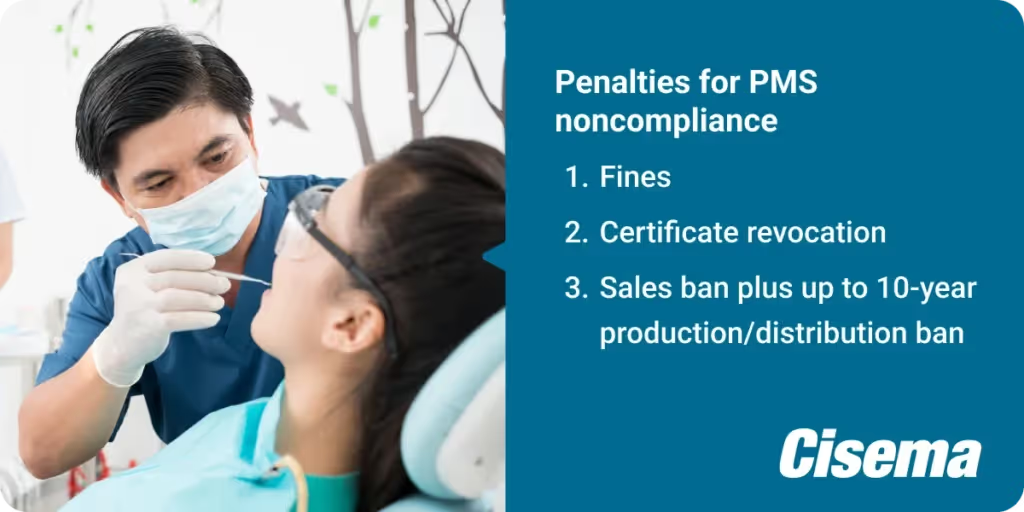
Non-compliance in these areas has become significantly riskier, with sanctions ranging from administrative fines to revocation of certificates, sales bans, and even 10-year prohibitions on manufacturing and distribution of medical devices in China.
Several global dental manufacturers have recently received fines and even had to undertake product recalls for devices sold in the market for many years, due to unmaintained certificates — especially the technical specifications in the certificate appendices. This has led to NMPA inspection testing failures.
To protect certificate validity and maintain market access, manufacturers must continuously monitor regulatory updates and maintain close communication with their NMPA Legal Agent.
5. Explore Fast-Track Registration Pathways: GBA, Hong Kong & Hainan
While most dental devices enter China through the standard NMPA registration pathway, recent regulatory policies have created promising alternative routes.
These programs are particularly valuable for innovative technologies with high clinical demand.
The Hong Kong–Greater Bay Area (GBA) Pathway
Manufacturers can first obtain approval in Hong Kong, where the regulatory process is often faster and voluntary.
Once approved and used in Hong Kong public hospitals, products can potentially be sold to designated medical institutions in the GBA, providing early revenue and real-world data (RWD) for future national NMPA registration.
This pathway is ideal for companies seeking a staged entry into China, including international premium dental brands testing market acceptance.
Hainan’s Boao Lecheng International Medical Tourism Pilot Zone
Another innovative pathway exists in Hainan’s Boao Lecheng International Medical Tourism Pilot Zone.
Located on China’s Hainan Island, this zone enables hospitals to import unregistered medical devices (with home-country approval) to treat Chinese patients seeking advanced technologies. Manufacturers can subsequently leverage the RWD generated in Hainan to strengthen NMPA submissions for nationwide approval.
Both pathways showcase China’s focus on accelerating access to cutting-edge technologies, providing manufacturers of innovative implants, surgical systems, and advanced dental devices with faster market entry and domestic clinical evidence.
Final Thoughts: China Dental Medical Device Market Entry
China offers substantial growth opportunities for international dental MedTech companies, particularly those delivering high-quality implants, advanced equipment, and innovative dental technologies.
However, success in this rapidly evolving market requires careful regulatory preparation and a well-structured market entry strategy. Manufacturers must understand the China dental medical device registration process, manage biocompatibility testing, select the right NMPA Legal Agent, and maintain rigorous post-market compliance systems.
With the right approach and an experienced independent NMPA Legal Agent, the investment can deliver substantial long-term advantages in one of the world’s most dynamic healthcare markets.

Further Information
Explore Cisema's Regulatory Services For China Medical Device Registration
- Discover how a China NMPA Legal Agent can support foreign manufacturers with registration, regulatory communication, and post-market compliance
- Learn more about Cisema’s support for China medical device registration services, including regulatory strategy, testing coordination, and full NMPA submission management
For a deeper understanding of China’s regulatory framework, the following guides explain key aspects of NMPA medical device approval and classification:
- China medical device risk classification guide – Understanding how Class I, II, and III devices are determined under NMPA rules
- China IVD device risk classification guide – Regulatory classification requirements for in-vitro diagnostic devices
- China NMPA medical device glossary – Key terminology used in China medical device registration and regulatory documentation
- China medical device registration FAQs – Answers to common questions about the NMPA registration process, timelines, and requirements
Connect with Cisema
With more than 20 years of experience and a team of over 100 specialists, Cisema helps global companies achieve compliance across Asia Pacific with confidence and accelerate market entry.
Stay Informed with Monthly News and Analysis
Stay informed with the latest regulatory changes, expert insights, and market opportunities across APAC, delivered straight to your inbox.
Related Articles

Understand the key differences between China Medical Device GMP and ISO 13485, including requirements for quality management, suppliers, facilities and documentation.

Learn when medical device and IVD changes in Indonesia require a notification, variation, or new registration, and how to maintain ongoing regulatory compliance.
Discover how leveraging Real World Data generated in the Greater Bay Area can accelerate market entry for medical products in China.