
Published on
Last updated on
China Medical Device GMP Readiness: A Checklist for Overseas Manufacturers
China medical device GMP readiness begins long before product registration or commercial supply. Because ISO 13485 certification alone is not enough, overseas manufacturers must prove their quality management system (QMS) meets China-specific GMP requirements across the entire product lifecycle, from design and manufacturing to distribution and post-market surveillance.
This compliance challenge has become even more demanding with the NMPA’s revised Good Manufacturing Practice (GMP) for Medical Devices. Issued on November 4, 2025, and effective November 1, 2026, this major update replaces the 2014 regulation by introducing strictly detailed expectations for:
- Quality governance and personnel competence
- Lifecycle risk management and change control
- Design and production controls
- Supplier and outsourced activity management
- Inspection-ready documentation
To successfully navigate China’s GMP requirements, a structured readiness assessment is essential. Proactively identifying compliance gaps is the only way to prevent delayed registrations, negative inspection findings, or sudden disruptions to your market access.
Use the checklist below to assess your operations, or contact Cisema today to align your QMS directly with NMPA quality standards.
Focus Area 1: Quality Governance and Personnel Competence
A China-ready QMS depends on effective governance, independent quality oversight, accountable leadership, and competent personnel.
Organizational Governance and Leadership
China's revised GMP places greater accountability on senior management and requires clearly defined responsibilities, independent quality functions, and effective escalation of quality issues.
Readiness Checklist
- Are quality responsibilities, reporting lines, and decision-making authorities clearly documented?
- Are production and quality management functions organizationally independent?
- Do quality personnel have the authority to approve, reject, or escalate quality decisions independently?
- Are significant quality issues escalated through defined procedures?
Management Oversight
Senior management should actively oversee the effectiveness of the QMS through regular management reviews that evaluate quality performance, emerging risks, and opportunities for continual improvement.
Readiness Checklist
- Does senior management regularly review quality objectives, risks, audit findings, complaints, CAPAs, and overall QMS performance?
- Do management reviews result in documented actions and continual improvement?
Personnel Qualifications and Competence
China's GMP features prescriptive qualification requirements for management representatives and quality leaders, particularly for Class II and Class III medical devices. Manufacturers should also be able to demonstrate that personnel receive appropriate training and remain competent throughout their assigned roles.
Readiness Checklist
- Do management representatives and quality leaders meet the revised education, qualification, and experience requirements where applicable?
- Are key quality and production roles filled by suitably qualified full-time personnel?
- Are personnel trained before performing GMP-related activities, with role-specific and refresher training provided as needed?
- Are competency assessments used to confirm training effectiveness?
- Can training records demonstrate that personnel remain competent and qualified for their assigned responsibilities?
Focus Area 2: Lifecycle Risk Management and Change Control
Under the revised GMP, change control is more than an administrative process. Every significant change should undergo documented review before implementation, with quality and regulatory impacts assessed throughout the product lifecycle.
Change Control
Change control is more than an administrative process. Significant changes should undergo documented review before implementation to ensure quality, safety, performance, and regulatory compliance are maintained.
Readiness Checklist
- Are design, manufacturing, supplier, software, facility, material, and labelling changes formally assessed before implementation?
- Does every change include documented quality and regulatory impact assessments?
- Are changes approved by authorized personnel?
- Is verification or validation completed where product safety or performance may be affected?
- Are suppliers and contract manufacturers required to notify you of significant changes?
Lifecycle Risk Management
NMPA expects risk management files to remain living documents that incorporate production data, supplier performance, complaints, CAPAs, and post-market surveillance throughout the product lifecycle.
Readiness Checklist
- Are risk files systematically updated after product launch rather than remaining static?
- Do risk assessments actively incorporate real-time production data and supplier performance?
- Are complaint trends and CAPA records routinely evaluated for hidden risks?
- Is post-market surveillance data continuously fed back into your master risk files?
Focus Area 3: Design and Production Controls
China's GMP emphasizes traceability from product design through commercial manufacture, particularly where development or production activities are outsourced.
Design and Development
Design documentation should clearly demonstrate how user needs evolve into finished products through controlled development activities. Every stage, from planning to design transfer, should be fully traceable.
Where development activities are outsourced, manufacturers remain responsible for contractor qualification, design review, documentation, and successful transfer into production.
Readiness Checklist
- Are design plans, inputs, outputs, verification, validation, and design reviews fully documented?
- Can design outputs be traced back to user needs, regulatory requirements, and risk controls?
- Are design changes supported by documented risk assessments?
- Is design transfer adequately documented before production begins?
- Are outsourced R&D activities fully integrated into the QMS?
Production, Facilities, and Equipment
NMPA inspectors expect manufacturers to demonstrate that facilities, equipment, and manufacturing processes consistently produce compliant medical devices.
Readiness Checklist
- Have all critical manufacturing processes been validated?
- Do cleanrooms meet the required pressure differentials where applicable?
- Are production, testing, and storage areas designed to prevent contamination, mix-ups, and unauthorized access?
- Are environmental conditions routinely monitored and reviewed?
- Can every material, component, batch, and finished device be fully traced?
- Are product release procedures clearly documented?
- Do production IT systems support controlled manufacturing activities?
- Is equipment qualified, calibrated, maintained, and requalified after significant repairs or relocation?
- Are damaged, expired, or unqualified instruments prevented from being used?
Focus Area 4: Supplier and Outsourced Activity Management
Under China's GMP, manufacturers remain fully responsible for outsourced R&D, entrusted manufacturing, entrusted testing, and supplier performance, even where activities are performed by third parties.
Supplier Qualification and Contract Oversight
Supplier management should reflect the level of risk each supplier presents to product quality. Critical suppliers require greater oversight, ongoing monitoring, and clearly defined contractual responsibilities.
Quality agreements should establish more than commercial expectations. They should clearly define:
- Who performs each quality activity
- Who owns the resulting documentation
- How changes are communicated
- How deviations, complaints, and nonconforming products are managed
Contract manufacturers should be managed through the same risk-based approach. Even when production is outsourced, regulatory responsibility remains with the manufacturer, registrant, or record holder.
Readiness Checklist
- Are suppliers classified according to their impact on product quality?
- Are suppliers formally qualified before approval?
- Are approved supplier lists maintained and periodically reviewed?
- Are supplier audits performed based on risk?
- Is supplier performance monitored using quality metrics?
- Do suppliers provide advance notification of significant process or material changes?
- Do quality agreements clearly define responsibilities for specifications, testing, complaints, documentation, audits, and change management?
- Are contract manufacturers regularly evaluated and audited?
- Are production release and market release responsibilities clearly separated?
- Are release responsibilities protected against unauthorized sub-delegation?
Focus Area 5: Inspection-Ready Documentation
Inspection readiness should be embedded within everyday quality management, not treated as a last-minute exercise.
During an NMPA inspection, manufacturers must demonstrate compliance through complete, accurate, and readily retrievable objective evidence. China's revised GMP therefore places greater emphasis on document control, electronic records, data integrity, and effective training.
Documentation and Electronic Quality Systems
Documentation should support the entire quality lifecycle, from procedure creation to record retention.
Every controlled document must be:
- Approved
- Version-controlled
- Readily available to relevant personnel
- Removed from use when obsolete
Inspectors should be able to retrieve records quickly and confirm they reflect current practice.
The revised GMP also formally recognizes electronic records and electronic signatures, making data integrity a key compliance expectation. Electronic quality systems should protect records against unauthorized changes while maintaining complete traceability throughout their retention period.
Readiness Checklist
- Are controlled documents reviewed, approved, and version-controlled before use?
- Are obsolete documents promptly removed while maintaining an auditable revision history?
- Can records be retrieved quickly during an inspection?
- Are document retention periods clearly defined?
- Is training updated whenever procedures change?
- Do electronic systems use role-based access and unique user accounts?
- Are audit trails enabled to record changes and deletions?
- Are electronic signatures appropriately controlled?
- Are backup, disaster recovery, and long-term record retention procedures in place?
- Have electronic quality systems been validated or otherwise demonstrated to be fit for their intended purpose?
Internal Audits and Objective Evidence
Regular internal audits provide one of the strongest indicators that a manufacturer is prepared for an NMPA inspection. Audits should verify not only that procedures exist, but that they are consistently implemented across manufacturing, supplier management, quality oversight, and outsourced activities.
Audit findings should drive meaningful CAPAs, with management verifying implementation and effectiveness.
Readiness Checklist
- Do internal audits assess both documented procedures and actual implementation?
- Are governance, change control, risk management, and design controls routinely audited?
- Are supplier management and contract manufacturing activities included in the audit program?
- Are production controls, equipment qualification, environmental monitoring, and data integrity regularly reviewed?
- Are CAPAs tracked through implementation and effectiveness verification?
- Are management review actions documented and completed?
- Can inspectors easily access current procedures, validation records, supplier files, audit reports, calibration records, complaint files, CAPAs, training records, quality agreements, and electronic system logs?
Final Thoughts
At its core, China’s medical device GMP is an evolving, lifecycle-centered ecosystem that demands localized, objective proof of quality at every turn. For overseas manufacturers, treating China compliance as a simple mirror-image of your ISO 13485 QMS is a high-risk approach.
A structured readiness assessment is therefore a vital market-protection strategy. Catching and resolving compliance gaps early shields your organization from failed field inspections, frozen registration applications, and costly disruptions to your commercial supply chain.
Because navigating the unique mechanics of China’s entire quality framework requires hands-on, local expertise, Cisema is here to support your team. From targeted gap assessments and quality system evaluations to practical NMPA inspection readiness reviews, we ensure your operations align seamlessly with Chinese requirements.
To ensure your QMS is fully compliant for the China market, contact Cisema today to schedule a gap assessment consultation.
Further Information
Explore Cisema’s services for medical device registration in China.
Read our analysis on the news announcement: China NMPA Issues New GMP (Good Manufacturing Practice) for Medical Devices
References
- NMPA – Good Manufacturing Practices for Medical Devices (No. 107 of 2025) https://www.nmpa.gov.cn/xxgk/fgwj/xzhgfxwj/20251104173724174.html
- CFDI – Comparison of revised Good Manufacturing Practices for Medical Devices https://www.cfdi.org.cn/cfdi/resource/news/16544.html
Connect with Cisema
With more than 20 years of experience and a team of over 100 specialists, Cisema helps global companies achieve compliance across Asia Pacific with confidence and accelerate market entry.
Stay Informed with Monthly News and Analysis
Stay informed with the latest regulatory changes, expert insights, and market opportunities across APAC, delivered straight to your inbox.
Related Articles

Avoid common China infant formula labeling mistakes involving registration, allergen statements, date marking, milk-source claims, production changes, and existing inventory.
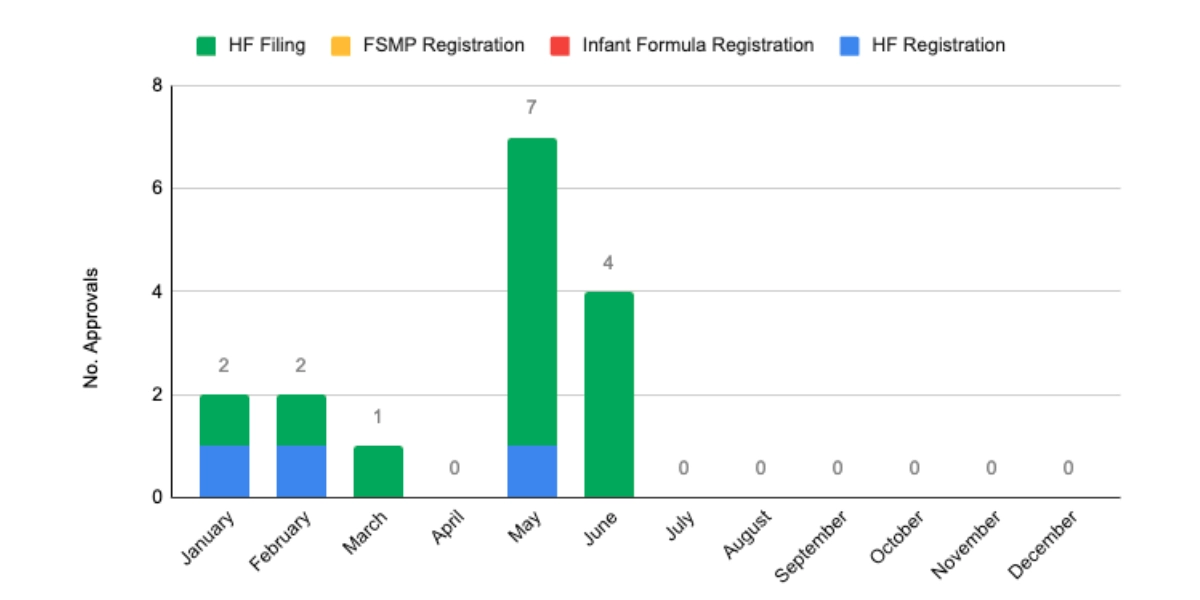
Track China’s 2026 imported health food approvals, monitor SAMR regulatory trends, and compare market activity by category and source with Cisema’s interactive tracker.

This guide explains Singapore’s HSA regulatory system and why it is a strategic first step for entering Southeast Asian markets with medical devices, pharmaceuticals, and cosmetics.