
Published on
Last updated on
5 Step Guide to Singapore Cosmetic Product Registration
Singapore Cosmetic product registration is designed to be clear and efficient, making it one of the more accessible markets in Asia for cosmetics. Instead of waiting months for pre-market approval, manufacturers simply notify the Health Sciences Authority (HSA), in line with the ASEAN Cosmetic Directive (ACD), before placing products on the market.
The process may be straightforward, but success depends on getting the details right — from ingredients and labelling to your Product Information File (PIF) and ongoing compliance.
In this guide, we’ll walk you through the 5 essential steps of cosmetic product registration in Singapore, so you know exactly what to expect and how to prepare. Or for support with registering cosmetic products in Singapore, contact Cisema today.
Definition of a Cosmetic Product in Singapore
Before starting a notification, it is essential to confirm that your product qualifies as a cosmetic.
A cosmetic product in Singapore is defined as any substance or preparation intended for use on the external parts of the human body — such as skin, hair, nails, lips, or mouth (including gums, teeth, and tongue). The purpose may be to clean, perfume, change appearance, correct body odours, or protect and keep these areas in good condition. Examples of cosmetic products include make-up, hair care products, and acne treatment creams.
This definition matters because products that fall outside it may be classified as drugs or medical devices, which are subject to much stricter regulatory frameworks.
Role of the Registrant in Cosmetic Product Registration
Once product classification is confirmed, the next step is identifying who can submit the cosmetic product notification.
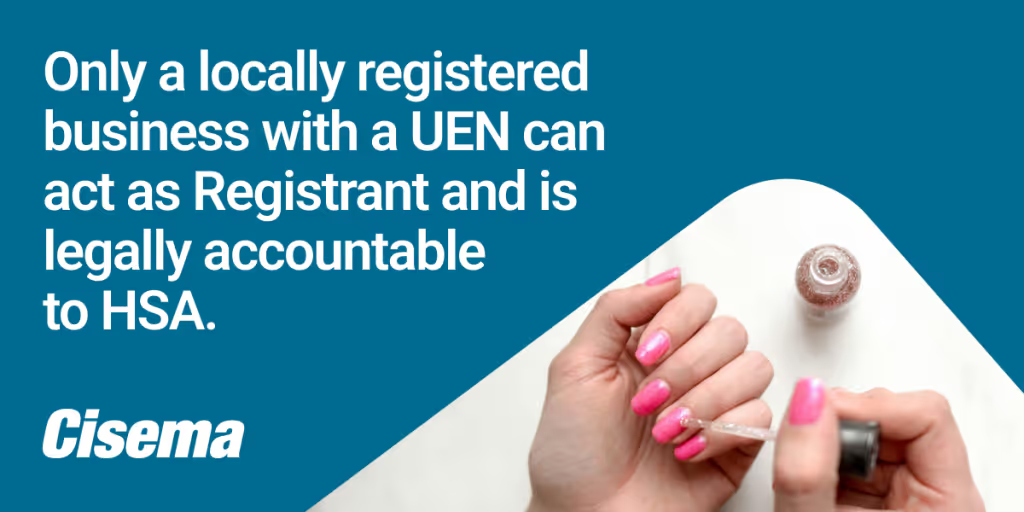
In Singapore, only a Registrant — also known as the license holder — can carry out this task. The Registrant must be a locally registered business with a Unique Entity Number (UEN) and is responsible for ensuring compliance with the Health Products Act and the Health Products (Cosmetic Products, ASEAN Cosmetic Directive) Regulations 2007.
Because the Registrant is legally accountable to HSA, choosing the right one is a crucial business decision.
Responsibilities of the Cosmetic Registrant in Singapore
The Registrant’s responsibilities go beyond filing paperwork. They act as the main compliance partner throughout the lifecycle of your cosmetic product in Singapore.
Key responsibilities include:
- Submitting cosmetic product notifications through the HSA PRISM online system before placing products on the market.
- Ensuring products comply with the ASEAN Cosmetic Directive, including ingredient restrictions, labelling, and claims requirements.
- Maintaining a complete Product Information File (PIF) ready for HSA review on request.
- Monitoring product safety post-market, as well as managing complaints and adverse event reporting.
- Supporting recalls or product withdrawals if directed by HSA.
In short, the Registrant is both the gateway and the safeguard for your cosmetic product in Singapore.
Independent Registrant vs Distributor
Foreign manufacturers often rely on local distributors to act as Registrants. While this can be convenient, it also creates long-term risks: registrations may remain with the distributor, making it harder to switch partners or expand distribution without repeating the process.
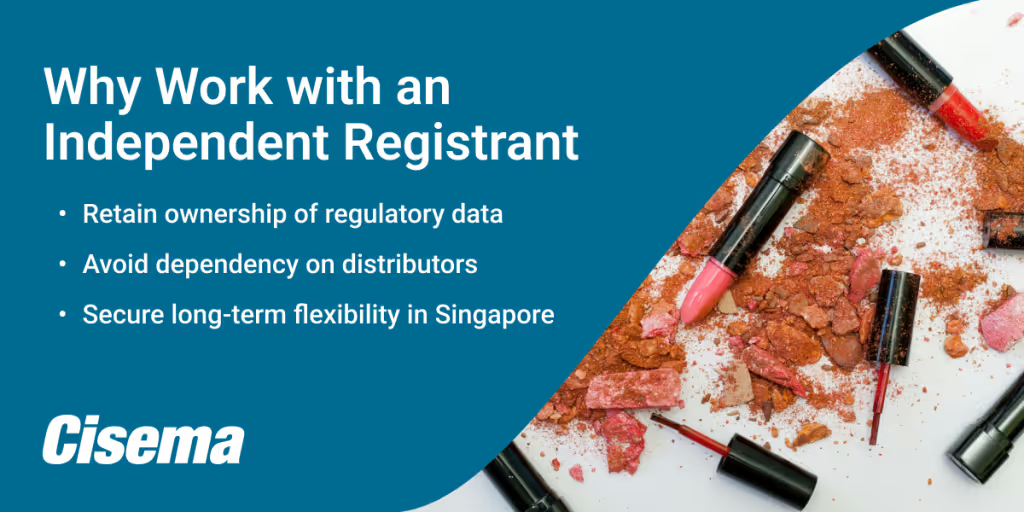
Working with an independent Registrant such as Cisema helps overcome these limitations. With Cisema acting as the Responsible Company in Singapore, you benefit from:
- Retaining ownership of your registrations and regulatory data.
- The freedom to switch commercial partners without regulatory disruption.
- The ability to scale your distribution network without costly re-notifications.
This approach gives foreign manufacturers greater flexibility, stronger control over compliance, and a more resilient presence in Singapore's cosmetic market.
Cosmetic Product Notification Process in Singapore with HSA PRISM
With responsibilities clarified, the next step is understanding the notification process itself. In Singapore, cosmetic product registration is completed entirely through HSA’s PRISM online system.
Here’s how it works step by step:
Step 1: Confirm Product Scope & Readiness
The process starts by confirming that your product qualifies as a cosmetic rather than a drug or medical device.
At this stage, you should also:
- Review the cosmetic formulation against HSA’s prohibited and restricted lists, including UV filters, preservatives, and colorants.
- Prepare compliant labelling and ensure claims are substantiated by scientific data.
- Confirm the manufacturer follows cosmetic GMP to ensure product quality.
Step 2: Appoint a Registrant and Secure HSA PRISM Access
Next, appoint a Registrant with a valid UEN in Singapore who will act as your Responsible Company. The Registrant must also have Corppass access to the HSA PRISM system in order to submit the notification on your behalf. Without both UEN and PRISM access, the notification cannot proceed.
Step 3: Prepare the Cosmetic Product Information File (PIF)
The PIF is the backbone of compliance. It should contain:
- Safety assessments and product description.
- Qualitative and quantitative formulas.
- Manufacturing methods and GMP conformity.
- Stability and microbiological data (where relevant).
- Labelling and claims substantiation.
Since HSA may request this file at any time, it should be kept current and audit-ready throughout the product’s lifecycle.
Step 4: Submit Notification via PRISM
Once the PIF is in order, the Registrant can log into PRISM and submit the product details — including formulation, manufacturer, product name, brand, intended use, and labelling — together with the notification fee.
After submission and payment, PRISM generates an acknowledgement instantly. This acknowledgement serves as proof of notification and must be retained. Since there is no pre-market approval in Singapore, products can be placed on the market immediately after acknowledgement.
Step 5: Post-Market Compliance for Cosmetic Products in Singapore
The responsibility does not end with notification. After the product enters the market, the manufacturer and Registrant must continue to ensure compliance.
This includes:
- Maintaining accurate labelling and claims.
- Cooperating with HSA if sampling or testing is requested.
- Ensuring advertising materials meet regulatory standards.
- Handling consumer complaints and adverse event reports.
- Being prepared for product recalls or withdrawals if directed by HSA.

Government Fees and Costs
The cost of cosmetic product notification depends on the product type and the number of variants submitted. In addition to the notification fee, manufacturers may also apply for optional documentation such as a Certificate of Free Sale from Singapore Customs for goods sold locally (see more details here).
Amendment submissions are usually free, though a new notification may be required if the change is significant.
HSA’s fee structure is divided into two categories:
Cosmetic products applied around the eyes, on the lips, oral or dental care products, or hair dyes containing diamine compounds:
- Single product or each of the first three variants: $28
- Each additional variant from the fourth onward: $8
Other cosmetic products:
- Single product or each of the first three variants: $13
- Each additional variant from the fourth onward: $8
These costs are recurring, which ties directly to the annual validity of cosmetic notifications.
Validity of Cosmetic Product Notification & Renewal Process
Each cosmetic notification is valid for one year. To continue marketing a product in Singapore, businesses must submit a re-notification annually. If a product is discontinued, the Registrant is required to withdraw or cancel the notification.
This cycle of yearly renewals makes ongoing management essential. And when product details or company information change, the renewal process is not the only step — notifications themselves may also need to be updated.
Change Notifications for Cosmetic Products in Singapore
Whenever a cosmetic product or company detail changes, this must be reflected in PRISM. To guide companies, HSA separates changes into two categories:
Type 1 (Amend on PRISM):
- Name or address of the business (no change in UEN)
- Applicant’s contact details, such as email address
- Manufacturer’s details
These changes are relatively simple and can be made directly in PRISM.
Type 2 (Re-notification required):
- Brand name
- Product name
- Product type
- Company change of distribution rights
Because of this distinction, managing the Registrant relationship becomes especially important when business arrangements shift.
Changing Your Registrant for Cosmetic Product Registration
If the Registrant changes — for example, when transferring distribution rights — the new Registrant must submit a fresh notification in PRISM under their UEN. At the same time, the previous Registrant must withdraw their existing notification.
The PIF access must also be updated to reflect the new Registrant. This ensures continuity and prevents compliance gaps during business transitions.
Tips for Successful Cosmetic Product Registration in Singapore
Even though Singapore’s cosmetic product notification process is more straightforward than in many other territories, small mistakes can still cause costly delays.
To avoid setbacks and ensure smooth market entry, manufacturers should keep in mind these 5 practical tips:
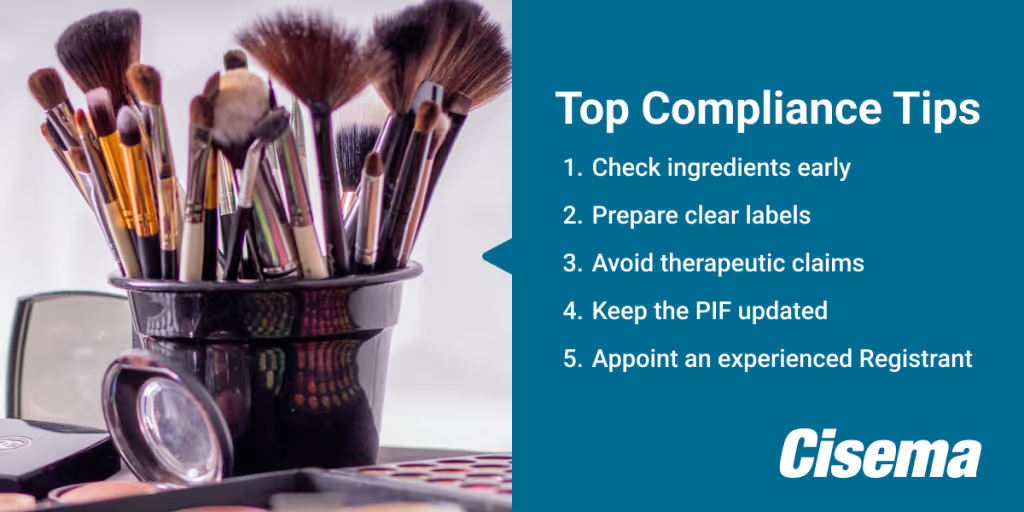
Tip 1: Double Check Ingredients Against ASEAN Lists Early
One of the fastest ways to run into trouble is by including restricted or prohibited substances. Review your formulation against the ASEAN lists before submission. Doing this early helps you avoid wasted effort, unexpected reformulation, and setbacks at the HSA notification stage.
Tip 2: Ensure Labels Go Beyond Minimum Compliance
Clear, accessible labelling sets the tone for your product’s success.
English is mandatory, but stopping there can be short-sighted. Bilingual labels not only reduce the risk of consumer misunderstanding but also build trust with distributors and Singapore’s multilingual population.
Tip 3: Keep Claims Safely Within the Cosmetic Category
Though it may be tempting to highlight bold product benefits, therapeutic or exaggerated claims can reclassify your product as a drug or medical device. Advertising requirements prohibit claims about treating medical conditions, altering a physiological process, or reversing hair loss unless supported by scientific data. That means stricter requirements, longer timelines, and higher costs. Reviewing marketing claims upfront ensures your product stays firmly in the cosmetic category.
Tip 4: Appoint a Registrant with Proven PRISM Experience
Not all Registrants are equally skilled. Your Registrant is your direct link to HSA, so their expertise matters.
Choosing a partner with a track record in handling HSA PRISM submissions — like Cisema — can save you time by avoiding common errors, ensuring smoother submissions, and reducing regulatory back-and-forth.
Tip 5: Treat the PIF as a Living Document
The Product Information File (PIF) isn’t a “create once and forget” requirement. Since HSA may request access at any time, keeping the PIF updated with stability data, safety assessments, and formulation changes ensures you’re always audit-ready and avoids last-minute scrambles.
Final Thoughts on Cosmetic Registration in Singapore
Throughout this guide, we have explored the essentials of cosmetic product registration in Singapore — what qualifies as a cosmetic, the responsibilities of the Registrant, how to navigate the HSA PRISM system, and the practical details of fees, timelines, renewals, and changes.
While the process is more straightforward than in many other markets thanks to the absence of pre-market approval, success still depends on precision: accurate notifications, compliant labelling, and diligent post-market oversight.
This is where Cisema can make a difference. As your independent Registrant in Singapore, we provide regulatory expertise and local presence to ensure compliance, while you retain full ownership of your registrations. This approach safeguards your business from setbacks and gives you the flexibility to adapt distribution strategies and grow your market presence.
If you are looking for a reliable partner to streamline your cosmetic product registration in Singapore, get in touch with Cisema today.
Further Information
- Learn more about Cisema’s cosmetic product regulatory services in Singapore.
References and Resources
For more details on cosmetic product registration and compliance in Singapore, you can refer to the following official sources:
- Health Sciences Authority (HSA) – Cosmetic Products
- ASEAN Cosmetic Directive (ACD)
- HSA Guidance Notes on Cosmetic Products
FAQ on Cosmetic Product Registration in Singapore
What authority regulates cosmetic product registration in Singapore?
Cosmetics are regulated by the Health Sciences Authority (HSA) under the Health Products Act and in line with the ASEAN Cosmetic Directive (ACD). All cosmetic products must be notified to HSA before sale in Singapore.
How long does it take to register a cosmetic product in Singapore?
The process is immediate once the notification is submitted through PRISM and the government fee is paid. Since there is no pre-market approval requirement, products can be marketed in Singapore right away.
Do cosmetics in Singapore require pre-market approval?
No. Unlike in many regions, cosmetic products in Singapore do not require pre-market approval. Instead, they must be notified through HSA’s PRISM online system, and an acknowledgement is issued instantly once the process is complete.
How long is a cosmetic product notification valid in Singapore?
Each cosmetic product notification is valid for one year. To continue marketing the product, businesses must submit a re-notification annually.
Who can submit a cosmetic product notification in Singapore?
Only a Registrant — a locally registered business with a valid Unique Entity Number (UEN) — can submit notifications to HSA. Foreign manufacturers must appoint a Registrant to act on their behalf.
What is the role of the Registrant in Singapore’s cosmetic product registration?
The Registrant is legally accountable to the Health Sciences Authority (HSA). Their responsibilities include submitting cosmetic notifications, ensuring compliance with the ASEAN Cosmetic Directive, maintaining the Product Information File (PIF), monitoring post-market safety, and facilitating recalls if required.
Can a distributor act as the Registrant in Singapore?
Yes, distributors can act as Registrants. However, this often ties your registrations to the distributor. Many foreign manufacturers prefer to work with an independent Registrant like Cisema, which allows them to keep ownership of their registrations and switch distributors without regulatory disruption.
What if I need to change my Registrant?
If the Registrant changes, for example, due to the transfer of distribution rights, the new Registrant must submit a fresh notification in PRISM under their UEN. The previous Registrant must withdraw their notification, and PIF access must be updated to ensure compliance continuity.
Connect with Cisema
With more than 20 years of experience and a team of over 100 specialists, Cisema helps global companies achieve compliance across Asia Pacific with confidence and accelerate market entry.
Stay Informed with Monthly News and Analysis
Stay informed with the latest regulatory changes, expert insights, and market opportunities across APAC, delivered straight to your inbox.
Related Articles

This guide explains Singapore’s HSA regulatory system and why it is a strategic first step for entering Southeast Asian markets with medical devices, pharmaceuticals, and cosmetics.
From registration to tariffs and CPTPP benefits, here’s what Japanese cosmetics manufacturers need to know about Vietnam’s cosmetics market.
Navigate cosmetic product registration in Singapore in this guide offering key insights and practical tips.