
Published on
Last updated on
NHC Updates China’s “Three New Foods” List With 16 Newly Approved Substances
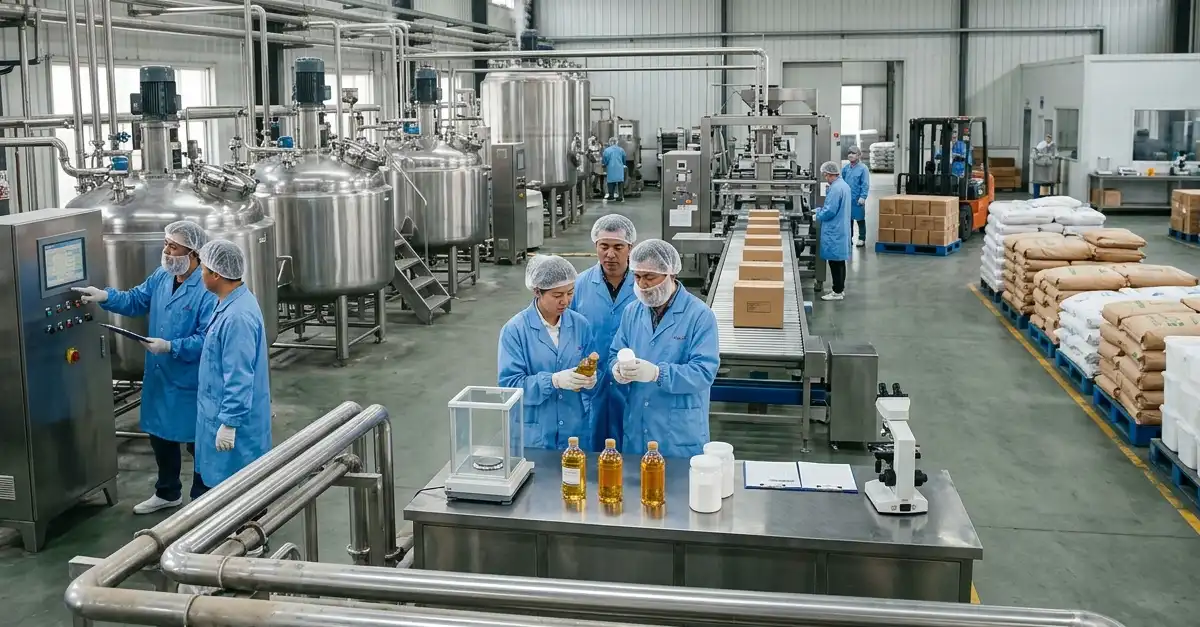
On May 27, 2026, China’s National Health Commission (NHC) released Announcement No. 5 of 2026, adding 16 substances to its “Three New Foods” framework following expert safety review. The implementation date is May 13, 2026.
The announcement covers three categories of approvals:
- Seven new food ingredients, including peony seed oil
- Seven new food additive varieties, including xylanase
- Two new food-related product varieties, including polyvinyl alcohol homopolymer
Food Ingredient Decisions Introduce New Options and Update Existing Approvals
The seven ingredient decisions combine new authorizations with meaningful revisions to prior approvals.
NHC Removes Peony Seed Oil Consumption Limit
Peony seed oil stands out as the most commercially relevant revision.
Originally approved in 2011 with a 10 g/day cap, the updated decision removes the consumption limit based on new exposure data. However, the ingredient remains:
- Excluded from infant foods
- Subject to standard edible oil regulations
For manufacturers, the change may provide greater flexibility in product formulation and serving sizes, particularly in adult nutrition and functional food applications.
New Infant-Food Probiotic Strain Receives Approval
The addition of Bifidobacterium animalis subsp. lactis XLTG11 to China's "List of Strains Suitable for Infant Food" highlights the regulator's continued but cautious expansion of approved microbiome-related ingredients.
According to the official interpretation materials, the strain was isolated from the intestinal tract of healthy children and is intended for use in infant and young child nutrition products. The decision reinforces China's preference for well-characterized, traceable strains when evaluating ingredients for infant-food applications.
Food Additive Approvals Expand Uses and Manufacturing Flexibility
The seven additive approvals emphasize industrial scale-up and functional extension rather than new substances.
Human Milk Oligosaccharide Fortifiers Continue to Expand
The approvals for 2'-fucosyllactose, 3'-sialyllactose sodium salt, and lacto-N-neotetraose further expand the regulatory framework for human milk oligosaccharides (HMOs) in China.Although these are not entirely new substances, the approvals introduce new production-strain pathways and reflect the continued normalization of HMOs within China's nutrition fortifier system. New Packaging Material Approvals Extend Food-Contact Applications
The announcement also includes two approvals affecting food-contact materials and packaging applications.
What Overseas Food Companies Should Review
For ingredient suppliers, food manufacturers, packaging companies, and brand owners operating in or exporting to China, the latest approvals may create opportunities for product reformulation, new product development, and expanded sourcing strategies.
At the same time, companies should carefully assess whether any existing products are affected by revised authorizations or updated technical requirements.
Key areas for review include:
- Product compliance: Assess whether existing products contain any newly approved ingredients, additives, or food-contact substances, and verify compliance with updated requirements, including permitted use scopes, intake limits, product specifications, approved production processes, and applicable food safety standards.
- Labelling requirements: Verify whether ingredients with intake limits or population restrictions, such as Cyclocarya paliurus leaf polyphenols, require specific Chinese-language warning statements or usage instructions.
- Supplier documentation: Ensure suppliers can provide the quality, safety, and technical documentation needed to demonstrate compliance with applicable Chinese standards and regulatory requirements.
Final Thoughts
Announcement No. 5 of 2026 demonstrates how China's “Three New Foods” framework continues to evolve through both new approvals and targeted refinements to existing authorizations.
While the addition of new ingredients, additives, and food-contact materials expands opportunities for innovation, some of the most commercially significant changes involve updates to previously approved substances, including the removal of the peony seed oil intake limit, expanded applications for calcium alginate, and revisions to manufacturing and technical specifications.
For companies seeking to navigate China’s evolving food regulatory landscape, understanding both new approvals and changes to existing authorizations will be essential for maintaining compliance and identifying new market opportunities.
To learn how these developments may affect your products or market access strategy in China, contact Cisema today.
Further Information
References
- Announcement on 16 “Three New Foods,” Including Peony Seed Oil
- Interpretation of the “Announcement on 16 ‘Three New Foods,’ Including Peony Seed Oil” (Announcement No. 5 of 2026)
Connect with Cisema
With more than 20 years of experience and a team of over 100 specialists, Cisema helps global companies achieve compliance across Asia Pacific with confidence and accelerate market entry.
Stay Informed with Monthly News and Analysis
Stay informed with the latest regulatory changes, expert insights, and market opportunities across APAC, delivered straight to your inbox.
Related News

China Issues First Ethical Guidelines for Artificial Intelligence Medical Imaging Research
China’s Science Ministry issued ethical guidelines establishing strict standards for AI medical imaging data, algorithm validation, and ethics reviews.

China Approves NMN, Bakuchiol, & Two Other Ingredients for Existing Cosmetic Use
China’s latest regulatory change removes the NCI registration hurdle for these ingredients, with new limits and compliance requirements now applying to finished cosmetic products.

TFDA Simplifies Paperwork for Medical Device Applications in Taiwan
From October 1, 2026, TFDA will expand electronic review and stop issuing paper copies of approved labeling for Class I, II, and III medical devices in Taiwan.