
Published on
Last updated on
6 China Infant Formula Labeling Mistakes Manufacturers Keep Making

China’s infant formula market is enormous, and its labeling rules are unforgiving. For international brands, a seemingly minor packaging change can create regulatory delays, filing obligations, or costly rework.
Does changing an expiry date require reopening your formula registration with SAMR? Can packaging colors be used to signal premium imported milk? What happens when production moves to another facility within the same corporate group?
Here are six common labeling mistakes manufacturers should avoid, and what to check before artwork goes to print. Or, for support with label compliance, formula registration and filing, and end-to-end regulatory assessments for infant formula products in China, contact Cisema today.
The China Infant Formula Labeling Framework
Before looking at the common mistakes, it is important to distinguish three separate compliance requirements. They overlap, but they are not interchangeable:
- Formula Registration (配方注册): Infant formula milk powder product formulas must be registered with SAMR. Labels and instructions relating to the product formula must be consistent with the registered information.
- Label compliance: Covers the information and presentation required on the packaging. Labels must comply with the Food Safety Law, applicable food safety standards such as GB 7718, infant formula requirements, and SAMR's infant formula labeling rules. The label must also be consistent with the registered formula where it refers to the product formula.
- Label filing (标签备案): Under Article 81 of the Food Safety Law, infant formula food producers must file specified matters, including labels, with the provincial-level food safety regulator.
In practice, every proposed artwork change should therefore pass three checks:
- Does it change anything covered by the registered formula?
- Does the revised artwork comply with the applicable labeling requirements?
- Does the change trigger a new or updated filing?
Keeping these questions separate helps avoid both unnecessary registration amendments and missed filing obligations.
Mistake 1: Treating Every Label Change as a Registration Amendment
A common misconception is that any change to approved packaging automatically requires a formal amendment to the SAMR formula registration.
The Reality: Certain adjustments — including production and expiry date markings, allergen statements, and milk-source labeling — do not require a registration amendment when they do not affect the consistency of the registered formula. However, the revised label must still be filed with the provincial market regulator as required, and the label used on the market must remain consistent with the registered and filed information.
Before revising artwork, determine separately whether the change affects the registered formula and whether it triggers a label-filing requirement.
Mistake 2: Omitting the Mandatory Milk Allergen Statement
Because infant formula is commonly milk-based, manufacturers may assume the presence of milk is obvious and does not need a separate allergen statement.
The Reality: Infant formula labels must comply with the allergen declaration requirements of GB 7718. The label should state:
“本产品含有乳成分”
“This product contains milk ingredients.”
The statement should appear in a position close to the ingredient list.
Mistake 3: Putting Production and Expiry Dates Wherever They Fit
Design teams may treat date markings as a layout issue: if the dates are visible and readable, the placement should be fine.
Not necessarily.
The Reality: For infant formula, production and expiry dates must be marked in an independent area of the packaging and presented in year/month/day order.
If that independent area is not on the Principal Display Panel (PDP), the PDP must include:
“见包装物某部位”
“See [location] on package.”
This directs consumers to where the dates are printed.
Review date format, location, and any required directional wording as part of regulatory artwork approval, not just design approval.
Mistake 4: Using Packaging Design to Communicate Milk Origin
Want to distinguish products by milk source? Changing the can color, lid, container shape, or other visual elements may seem like an easy solution.
The Reality: Where a product makes a claim about the source of raw milk or milk powder, the label must clearly identify the country of origin or specific place of origin.
Products from the same enterprise with the same formula should have consistent label content, format, and color. A milk-source distinction should therefore be stated explicitly rather than left for consumers to infer from packaging design. For products with organic certification, the organic status may be indicated through text or a certification mark on a non-PDP, with the relevant certification documentation submitted during registration or registration change.
Put milk-source claims in words. Do not rely on color, lid design, can shape, or other packaging cues to distinguish milk sources for the same enterprise and formula.
Mistake 5: Listing Only the Brand Owner When Production Moves
What happens when a formula is manufactured by another company within the same corporate group? A common mistake is leaving the brand owner or formula registration holder on the label while failing to identify the entity actually producing the product.
The Reality: Where production is transferred to another controlling subsidiary or the group’s parent company, the arrangement must be reported to SAMR and undergo the required public announcement process.
The label must then clearly identify the actual producer and production address. These details must be readily identifiable and must match the producer's name and address on the relevant Food Production License.
Mistake 6: Automatically Withdrawing Existing Inventory When Rules Change
New labeling requirements can trigger an understandable reaction: pull everything produced under the old rules.
But that is not always necessary.
The Reality: For infant formula manufactured before implementation of the Food Labeling Supervision and Administration Measures (March 16, 2027), products may continue to be sold through their expiry date if their labeling does not violate prohibited provisions.
However, products whose labeling violates a prohibition in the applicable regulations cannot continue to be sold.
Therefore, the correct approach is not to withdraw legacy inventory automatically. Instead, assess existing stock against the applicable transition rules and prohibited labeling provisions before deciding whether withdrawal or relabeling is required.
China Infant Formula Labeling: A Quick Compliance Audit
Before approving your next packaging run, check these six points:
Final Thoughts: Getting China Infant Formula Labeling Right
China infant formula compliance requires more than checking whether packaging “looks right.” Manufacturers need to align registered information, label content, filing requirements, production details, and applicable transitional rules.
The challenge is that these requirements do not operate in isolation. A change that looks purely editorial to a marketing or packaging team can have implications for registration consistency, provincial filing, production information, or existing inventory. SAMR's latest labeling guidance makes this distinction particularly important as manufacturers prepare for the new labeling requirements taking effect in 2027.
From comprehensive label and artwork reviews to regulatory gap analysis and formula update assessments, through to infant formula registration and label filing, Cisema helps manufacturers assess proposed changes and keep their China labeling strategy aligned with current requirements.
To discuss your China infant formula labeling and registration requirements, contact Cisema today.
Further information
Explore Cisema’s services for health food registration in China.
Regulatory References
- Food Labeling Supervision and Administration Measures (食品标识监督管理办法)
- Infant Formula Registration Management Measures (婴幼儿配方乳粉产品配方注册管理办法)
- Technical Guidance for Infant Formula Registration Labeling (Trial) (婴幼儿配方乳粉产品配方注册标签规范技术指导原则(试行))
- GB 7718 — National Food Safety Standard: General Standard for the Labeling of Prepackaged Foods (GB 7718 食品安全国家标准 预包装食品标签通则)
- Announcement on Label Changes for Registered Infant Formula Products (总局关于婴幼儿配方乳粉产品配方注册标签变更有关事项的公告)
- Guidance on Filing Matters Concerning Infant Formula Food Ingredients and Other Matters (婴幼儿配方食品原料等事项备案工作指南)
- SAMR Q&A Guidance on Infant Formula Labeling Standards (国家市场监督管理总局婴幼儿配方食品标签问答)
Connect with Cisema
With more than 20 years of experience and a team of over 100 specialists, Cisema helps global companies achieve compliance across Asia Pacific with confidence and accelerate market entry.
Stay Informed with Monthly News and Analysis
Stay informed with the latest regulatory changes, expert insights, and market opportunities across APAC, delivered straight to your inbox.
Related Articles
Avoid common China infant formula labeling mistakes involving registration, allergen statements, date marking, milk-source claims, production changes, and existing inventory.
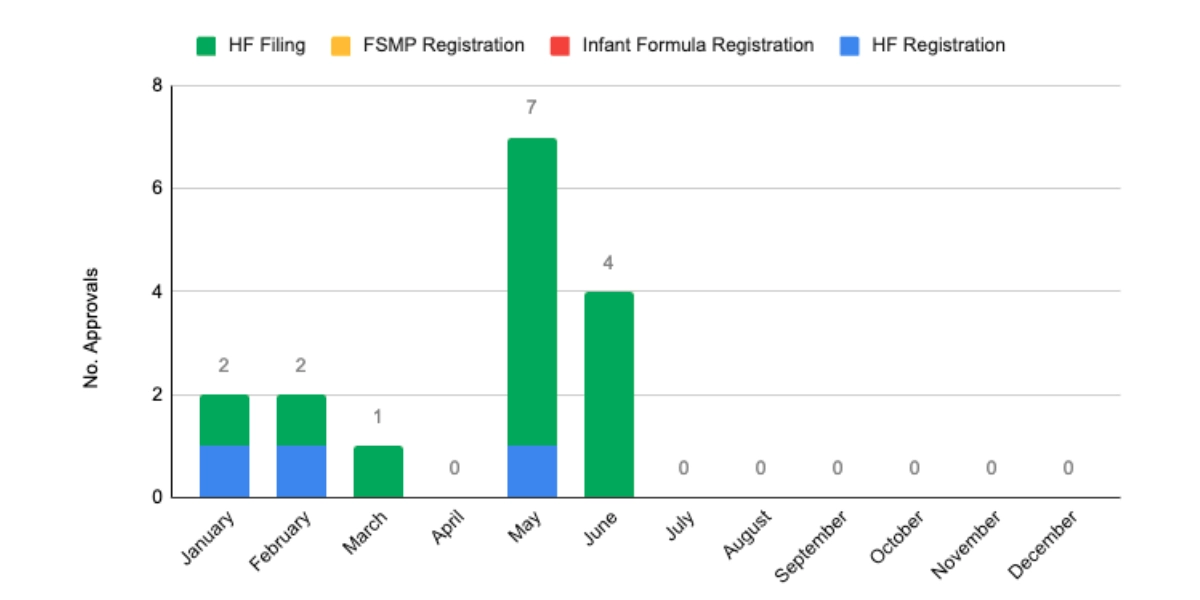
Track China’s 2026 imported health food approvals, monitor SAMR regulatory trends, and compare market activity by category and source with Cisema’s interactive tracker.
.avif)
Learn 5 key steps for China dental medical device registration, covering classification, biocompatibility testing, and legal agent selection.