
Published on
Last updated on
China Medical Device GMP vs ISO 13485: Key Differences Explained

You have ISO 13485 certification. Your quality system is established, your processes are documented, and your teams already work within a recognized medical device QMS. So, are you compliant with China Medical Device GMP? Not necessarily.
China Medical Device GMP builds on many of the same principles as ISO 13485 but introduces more specific local requirements covering areas such as quality assurance, personnel, facilities, and contract manufacturing and more.
So, what does ISO 13485 already cover, and where does China GMP require more?
Continue reading as we break down the key differences and see how you can adapt an ISO 13485-based QMS for China. And for a practical assessment of your China GMP compliance, contact Cisema’s regulatory specialists or explore our medical device services for China.
Is ISO 13485 Enough for China Market Access?
Not by itself.
ISO 13485 provides a globally recognized framework for establishing and maintaining a medical device QMS. China’s GMP requirements cover many of the same fundamentals but introduce more prescriptive requirements in specific areas.
The distinction is straightforward:
- ISO 13485: A globally applicable quality management standard that sets requirements for management responsibility, risk management, process control, and other core QMS elements while allowing flexibility in implementation.
- China GMP: Builds on these principles but adds China-specific requirements for areas such as key personnel, facilities, equipment, electronic records, supplier controls, validation, and contract manufacturing.
The good news is that an ISO 13485-based QMS provides a strong foundation for China compliance. Manufacturers will typically already have controls covering.
An ISO 13485-certified manufacturer will typically already have controls covering:
- Documented quality policy and management responsibility
- Formally controlled documents and record-keeping procedures
- Risk-based process design, verification, and validation
- Standardized purchasing and supplier control workflows
- Facility maintenance, equipment calibration, and environmental tracking
- Corrective and Preventive Action (CAPA) and non-conformity tracking
- Training programs and personnel competency evaluations
Because of this overlap, you do not need a duplicate quality system for China. The most efficient path is a targeted gap assessment to integrate NMPA-specific rules directly into your existing ISO framework.
Key Differences Between ISO 13485 and China Medical Device GMP
The differences become clearer when the two frameworks are examined by operational area:
Quality Assurance and Risk Management
- ISO 13485: Expects a documented quality management system that covers the standard lifecycle—management, resources, product realization, measurement, and improvement.
- China GMP: Features a dedicated, standalone Quality Assurance chapter (Articles 7–13) and requires the QMS to support quality assurance across design, development, production, distribution, and after-sales service. It also formalizes change control and requires continuous collection of risk information and regular risk management reviews.
The Takeaway: Having a QMS manual is insufficient. Inspectors evaluate how actively QA intervenes in daily manufacturing, design changes, and continuous risk assessments.
Personnel Qualifications and Responsibilities
- ISO 13485: Mandates that personnel performing quality-critical work must be competent based on appropriate education, training, skills, and experience, with appropriate training records.
- China GMP: Sets specific qualification requirements for key roles. For Class II and III devices, the management representative must have a relevant bachelor's degree or intermediate technical qualification and at least three years of relevant experience. Equivalent requirements apply to the head of quality management. The legal representative, management representative, and quality lead must be full-time, while the heads of production and quality management cannot hold both roles.
The Takeaway: An ISO 13485 competency matrix may not be enough. Manufacturers need to verify that the people occupying China-regulated roles meet the required qualifications, employment status, and separation of responsibilities.
Facilities and Environmental Controls
- ISO 13485: Directs manufacturers to provide and maintain an environment suitable for achieving product conformity, leaving specific parameter choices largely to the manufacturer's risk analysis.
- China GMP: Imposes concrete environmental and facility layout rules. For cleanroom operations, it outlines explicit requirements for differential pressure thresholds, airflow directionality, access control gates, and environmental monitoring protocols.
The Takeaway: A facility that satisfies ISO 13485's general environmental requirements may still need China-specific verification of cleanroom pressures, layout, access controls, and environmental monitoring.
Equipment and Instrument Management
- ISO 13485: Requires equipment to be suitable for its intended purpose, routine maintenance to be performed, and measurement devices to be calibrated with recorded results.
- China GMP: Applies a strict Equipment Lifecycle Approach. Controls begin at initial procurement and proceed through formal qualification (DQ/IQ/OQ/PQ), operational logging, maintenance history, status labeling, and mandatory requalification following major repairs or engineering modifications.
The Takeaway: A current calibration certificate is only one part of the evidence. Manufacturers should be able to produce complete equipment records showing qualification, operating status, maintenance, changes, and requalification where required.
Data Integrity and Electronic Records
- ISO 13485: Focuses on standard document control, ensuring current versions are approved, accessible, legible, protected, and obsolete versions are retired.
- China GMP: Introduces more explicit requirements for electronic records and signatures, user access controls, logging of changes and deletions, data backups, and maintaining data readability throughout the retention period. The 2025 GMP for Medical Devices places specific emphasis on digital and intelligent manufacturing.
The Takeaway: Electronic Quality Management Systems (eQMS) and manufacturing execution platforms must clearly document who accessed, modified, approved, or deleted any record across its retention lifecycle.
Design Transfer and Outsourced R&D
- ISO 13485: Requires controlled transfer of design outputs into production parameters, ensuring manufacturing capability matches product specifications.
- China GMP: Retains these lifecycle controls while placing greater emphasis on ensuring R&D outputs can be reliably transferred into production and on the oversight of outsourced design and development activities. The contracting manufacturer remains responsible for assessing the contractor's capability and the quality of its output.
The Takeaway: An outsourced design partner cannot simply sit outside the QMS. Its capabilities, deliverables, responsibilities, and oversight should be formally controlled and documented.
Supplier and Procurement Controls
- ISO 13485: Requires defined supplier selection and evaluation criteria, supplier monitoring, and controls over purchased products and services based on their effect on product quality.
- China GMP: Adds structured, risk-based purchasing controls. Purchasing items are categorized according to their impact on product quality, quality agreements must define technical and quality requirements, suppliers must notify manufacturers of relevant changes, and on-site audits are conducted according to risk.
- The Takeaway: Standard supplier evaluation questionnaires are insufficient for critical components; documented risk classification, appropriate quality agreements, change notification mechanisms, and risk-based supplier audits are essential.
Contract Manufacturing
- ISO 13485: Requires outsourced processes to remain under the manufacturer's QMS controls, with responsibilities and applicable supplier requirements clearly defined.
- China GMP: Contains a dedicated chapter establishing explicit legal responsibilities between the Registrant (license holder) and the Contract Manufacturer. Quality agreements must define responsibilities, with two-way oversight, on-site evaluations, periodic audits, and prompt deviation reporting. The contract manufacturer is responsible for production release, while the registrant or record holder is responsible for market release, and these responsibilities cannot be sub-delegated.
The Takeaway: Commercial supply agreements must be augmented by dedicated, NMPA-compliant Quality Agreements that clearly assign technical and legal responsibilities.
Comparison Summary: ISO 13485 vs. China Medical Device GMP
Common China Medical Device GMP Compliance Mistakes
Several assumptions can create unnecessary compliance risk for overseas manufacturers.
Final Thoughts
Bringing ISO 13485 into line with China GMP is about turning a broad quality framework into a precise, inspection-ready operation rather than replacing what already works. While ISO gives you the structure to manage quality globally, the NMPA tests how rigorously those principles hold up under local legal scrutiny.
The real test for any medical device manufacturer is moving from high-level policy to day-to-day execution. Regulatory friction usually hides in the small details, whether that's a missing digital audit trail, an unverified supplier agreement, or a disconnect between quality and production authority. Bridging these gaps smoothly requires a clear line of sight into how Chinese inspectors evaluate evidence on the factory floor.
That is where the right partner changes the outcome. With over 20 years of on-the-ground experience in China, Cisema helps international medical device manufacturers turn complex regulatory demands into practical, audit-ready workflows.
Whether you are fine-tuning an existing system or preparing for your first NMPA audit, contact Cisema today to secure your path to compliance.
Further Information
Explore Cisema’s medical device registration, QMS, and regulatory compliance services for the China market.
For further reading, see these related resources from Cisema:
- China NMPA Issues New GMP (Good Manufacturing Practice) for Medical Devices - An overview of the latest NMPA GMP requirements and what manufacturers need to know.
- China Medical Device GMP Readiness: A Checklist for Overseas Manufacturers - A practical checklist for assessing your GMP readiness before entering the Chinese market.
References
- Good Manufacturing Practice for Medical Devices (2025), 医疗器械生产质量管理规范.
- Announcement on the Release of the Good Manufacturing Practice for Medical Devices (Announcement No. 107 of 2025), 国家药监局关于发布医疗器械生产质量管理规范的公告(2025年第107号).
- Good Manufacturing Practice for Medical Devices (2014), 医疗器械生产质量管理规范(2014年版).
- Regulations on the Supervision and Administration of Medical Devices (State Council Order No. 739), 医疗器械监督管理条例(中华人民共和国国务院令第739号).
- Provisions for Supervision and Administration of Medical Device Manufacturing (Decree No. 53 of 2022), 医疗器械生产监督管理办法(2022年版).
- ISO 13485:2016 — Medical devices — Quality management systems — Requirements for regulatory purposes (2016)
Connect with Cisema
With more than 20 years of experience and a team of over 100 specialists, Cisema helps global companies achieve compliance across Asia Pacific with confidence and accelerate market entry.
Stay Informed with Monthly News and Analysis
Stay informed with the latest regulatory changes, expert insights, and market opportunities across APAC, delivered straight to your inbox.
Related Articles

This guide explains Singapore’s HSA regulatory system and why it is a strategic first step for entering Southeast Asian markets with medical devices, pharmaceuticals, and cosmetics.

Avoid common China infant formula labeling mistakes involving registration, allergen statements, date marking, milk-source claims, production changes, and existing inventory.
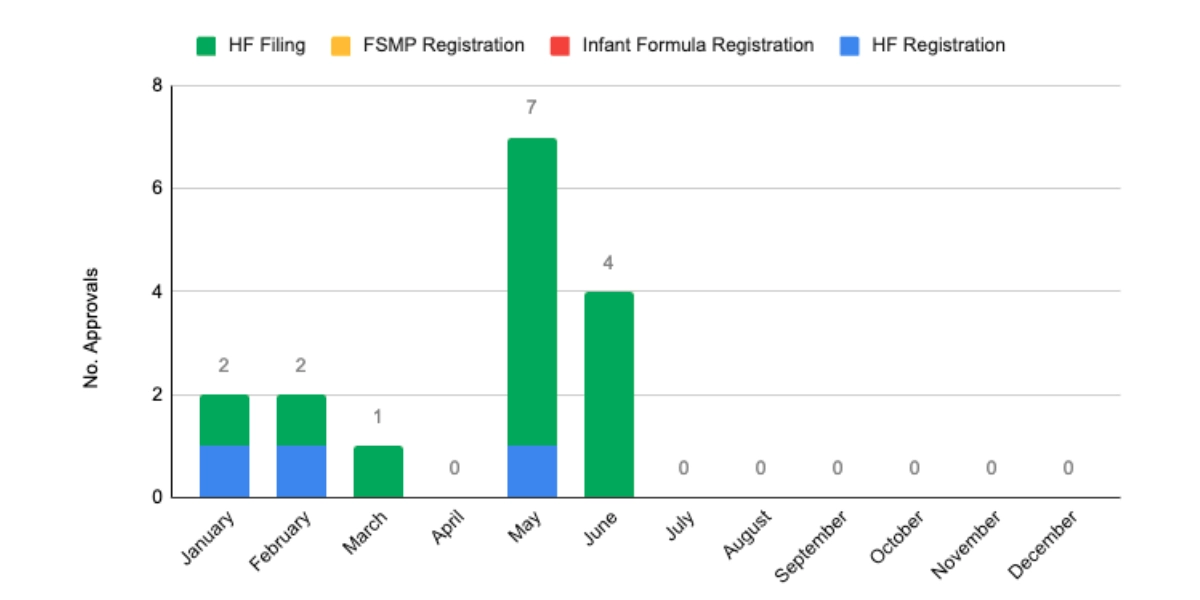
Track China’s 2026 imported health food approvals, monitor SAMR regulatory trends, and compare market activity by category and source with Cisema’s interactive tracker.