Mastering GMP for Medical Devices in China

Good Manufacturing Practice (GMP) is the regulatory backbone of China’s medical device quality system. Mandated by the National Medical Products Administration (NMPA), GMP regulations ensure that medical devices are manufactured consistently and controlled according to safety, quality, and performance standards by following proper practices as outlined in the NMPA's GMP guidelines.

With increasing global focus on good manufacturing practices, especially in the medical device manufacturing industry, understanding and implementing China’s GMP medical devices framework is more critical than ever for medical device companies entering or operating in the market.
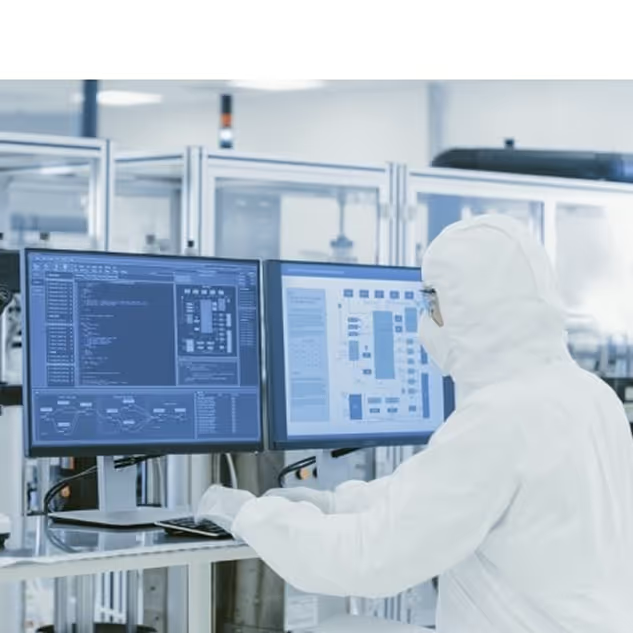

GMP Medical Devices
Medical Device Registration Indonesia

Clinical Development Services 

Recent revisions to China’s Good Manufacturing Practices regulations expanded the framework from 82 to 131 articles, reinforcing its alignment with ISO 13485 and emphasizing lifecycle quality management, risk management, and accountability. Whether you’re a domestic or overseas medical device manufacturer, complying with these quality system requirements is essential to access and remain in China’s regulated medical device market.

As part of these regulatory updates, China released draft revisions to its GMP framework in 2022, signaling a shift toward more proactive and rigorous GMP compliance. These changes reflect a broader push among regulatory authorities for stronger quality assurance, more detailed process controls, and greater alignment with international quality standards:

Key Regulatory Requirements from China’s 2022 Good Manufacturing Practices Revisions

Risk-based GMP: Manufacturers are now expected to apply risk assessment across all stages of design, production, and distribution, not just within the quality management system or the manufacturing process per se. This includes proactively evaluating changes, outsourced processes, and deviations.: Manufacturers are now expected to apply risk assessment across all stages of design, production, and distribution, not just within the quality management system or the manufacturing process per se. This includes proactively evaluating changes, outsourced processes, and deviations.
Increased documentation burden: The revised regulations emphasize lifecycle documentation, requiring manufacturers to maintain clear records of product development, design controls, validation, and post-market surveillance.
Stricter controls for implantable and sterile devices: Cleanroom operations, sterilization protocols, microbial testing, and validation cycles are subject to enhanced scrutiny, raising the bar for compliance for these higher-risk product categories.
QMS audits linked to product registration: A notable shift is the proposed integration of quality management system audits into the device registration process, particularly for Class III products. If implemented, this would require class iii medical device products passing a QMS audit before receiving market approval from the NMPA.

These updates reflect a broader regulatory trend: moving beyond procedural compliance toward a holistic, risk-based, and lifecycle-focused quality culture.

What is Good Manufacturing Practice for Medical Devices in China?

Good Manufacturing Practice, especially in the medical device industry, refers to a structured and regulated set of activities that ensure high quality products are produced under defined conditions. In the Chinese context, GMP for medical devices spans the entire manufacturing environment—from raw material sourcing to final product testing and distribution.

In China, GMP is legally binding for Class ii devices and Class iii devices. It encompasses:

Personnel training and hygiene
Production environment and contamination control
Design and development controls
Process validation and equipment maintenance
Traceability and documentation integrity
Supplier management and contract manufacturing oversight

Failure to comply can result in regulatory rejection, suspension of operations, or product recalls.
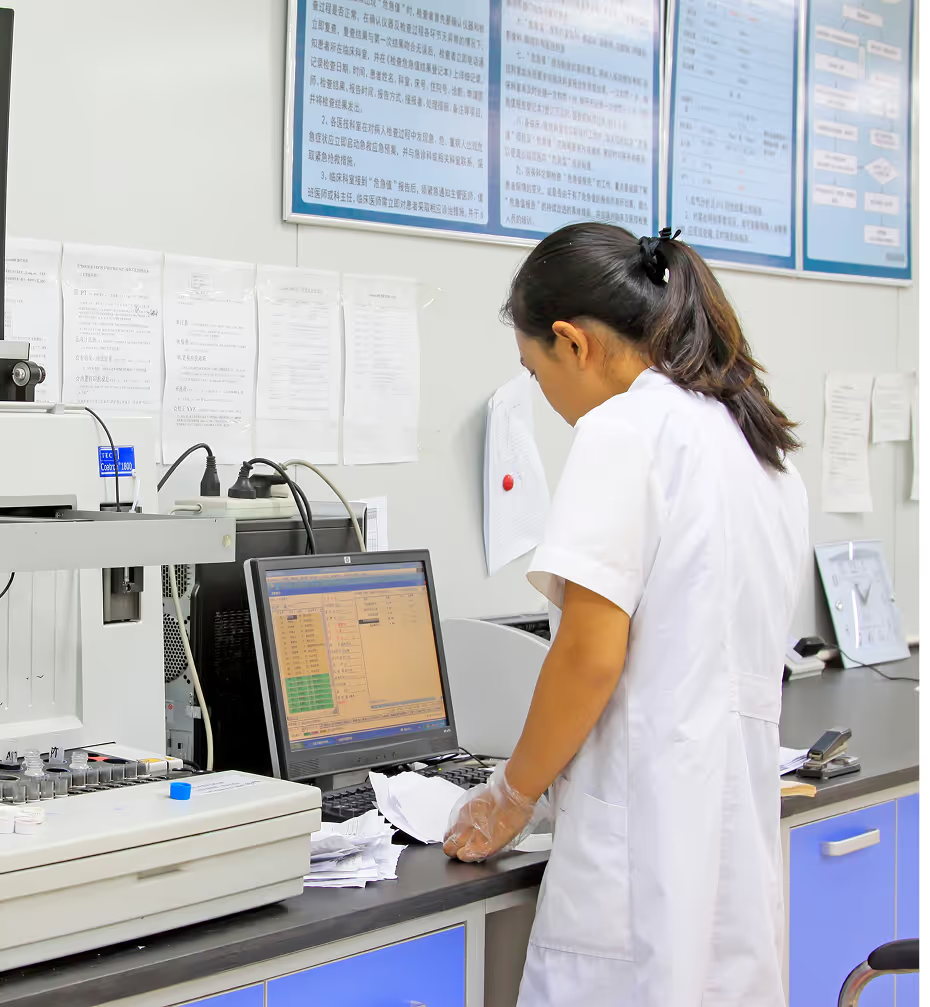
Quality System Requirements

Core China GMP Requirements for Medical Device Manufacturers

To ensure full compliance with Chinese GMP standards, manufacturers must establish robust quality systems. Key requirements include:

Quality Management Systems (QMS)

A China-compliant QMS, preferably aligned with ISO 13485, serves as the foundation of GMP. It must include:

Design and development documentation
Internal audits and management reviews
Non-conformance management and CAPA
Batch manufacturing records and risk assessments
Document control for managing the creation, review, and storage of essential documentation, ensuring compliance with quality standards and facilitating traceability throughout the manufacturing process

An effective QMS also helps companies maintain compliance with both local and international regulatory bodies, ensuring faster market access and fewer disruptions.

Equipment & Environmental Control

All equipment used in medical device products must be validated, calibrated, and maintained in accordance with defined GMP standards. For sterile or implantable medical devices, strict control of the manufacturing environment is mandatory, with validated cleanroom procedures, microbial monitoring, and environmental control.

Personnel Training

Employees must receive regular GMP training tailored to their responsibilities. Training programs should be documented, evaluated, and regularly updated to reflect regulatory changes and new technologies. Regular and documented GMP training programs are essential. These ensure that personnel understand applicable good manufacturing practices, standard operating procedures, and evolving GMP requirements, particularly those related to quality system regulation and product safety.

Supplier & Outsourcing Management

Device manufacturers are fully responsible for outsourced processes and must audit suppliers, implement quality agreements to ensure compliance, and document oversight activities. This includes contract sterilization, packaging, and testing services.

Validation, Change Control, & Risk Management

GMP adherence, including process validation, equipment qualification and change control mechanisms, is essential to maintain consistency. A proactive risk management strategy must be embedded from design through post-market surveillance.

Good Manufacturing Practices

Common Compliance Challenges for China Good Manufacturing Practice

Successfully navigating China’s good manufacturing practice GMP landscape often comes with a steep learning curve. Below are some of the most frequently encountered challenges faced by finished device manufacturers, especially overseas medical device companies, and how they can be addressed.

Lack of Familiarity with NMPA Expectations

Many international manufacturers are accustomed to EU or FDA quality system regulations but overlook China-specific nuances. NMPA inspections emphasize different procedural formats, regulatory terminology, and audit styles, many of which are conducted in Chinese and require supporting documents to be fully localized.

Language & Documentation Barriers

All core GMP documentation must be available in Chinese. This includes SOPs, validation reports, batch records, and CAPA logs. Inconsistent translations or incomplete localization can result in misunderstandings during audits or even formal non-conformities.

Inadequate Internal Audit & Self-Inspection Programs

For Class II and III device manufacturers, self-inspections are a legal requirement not just part of quality assurance. However, some companies either neglect them or treat them as a formality, missing systemic issues that would be identified by NMPA inspectors.

Cleanroom & Sterilization Process Weaknesses

Sterile and implantable device manufacturers are expected to maintain validated cleanroom environments to prevent product contamination. Common findings include improper air classification, missing environmental monitoring data, and incomplete sterilization validation.

Poor Oversight of Suppliers & Outsourced Operations

The NMPA holds the legal manufacturer accountable for all outsourced processes. Many non-compliances stem from missing supplier evaluations, lack of signed quality agreements, or insufficient oversight of subcontracted services like sterilization or packaging, which are crucial for ensuring high product quality.

Weak Corrective & Preventive Action (CAPA) Systems

CAPA systems are essential for continuous improvement, yet they are often underdeveloped, with companies lacking structured root cause analysis or clear documentation of corrective measures and follow-up.

Inexperience with NMPA Overseas Inspections

Overseas companies preparing for NMPA audits often underestimate the intensity of these inspections. They may not have Chinese-speaking staff on hand, nor a clear understanding of the inspection flow and expectations.

Difficulty Keeping Up with Regulatory Changes

China’s regulatory environment evolves quickly, and guidance documents are often issued with limited transition periods. Companies that fail to monitor changes risk falling out of compliance.

Our China GMP Compliance Services for Medical Device Manufacturers

Cisema offers comprehensive support to help medical device companies successfully meet every stage of China’s GMP compliance requirements. Our services include:

Chinese GMP Audits

Whether local or overseas, we help device manufacturers prepare for and respond to NMPA audit expectations—covering all aspects of quality system regulation and good manufacturing practices.

Development & Strategy Consulting

Full compliance readiness assessments based on the 131-article GMP standards to ensure your manufacturing process is fully prepared
Mock audits modeled on real NMPA inspection procedures
CAPA action plans tailored to the most frequent inspection findings
Guidance for preparing and submitting annual self-inspection reports, as mandated for Class II and III manufacturers

GMP Documentation & Process Compliance

Development of Chinese GMP-compliant documentation, including:
  • Batch production records
  • Process control, process validation and equipment qualification reports
  • Risk analysis and mitigation strategies
Review and revision of cleanroom SOPs, sterilization protocols, and GDP records for supply chain compliance
Chinese translation and formatting of documents in line with NMPA expectations
Document control systems to manage the creation, review, and storage of essential documentation, ensuring compliance with quality standards and facilitating traceability throughout the manufacturing process

Corrective & Preventive Actions (CAPA) Implementation

Design and integration of company-specific CAPA frameworks
Monitoring metrics to assess CAPA effectiveness over time
Structured root cause analysis using industry-recognized methodologies
Compliance checks to ensure audit findings are fully resolved and documented

On-Site & Remote NMPA Inspection Support

On-the-ground or remote assistance during live NMPA inspections
Audit interpretation and communication support for overseas sites
Help responding to document requests, clarifying QMS structure, and guiding the audit process
Post-inspection action tracking to ensure alignment with NMPA’s regulatory authorities.

Useful Articles

View More

Malaysia Drug–Medical Device Combination Products: A Guide to Classification & Regulatory Pathways

Learn how Malaysia classifies drug–medical device combination products and how the PMOA determines pathways and compliance responsibilities.

April 16, 2026
Malaysia Drug–Medical Device Combination Products: A Guide to Classification & Regulatory Pathways
Laboratory professional in protective eyewear, hair cover, sterile gown, and blue nitrile gloves examining a filled syringe in a clean laboratory environment.

Entering China’s Intraocular Lens (IOL) Market: NMPA Registration Requirements for Foreign Manufacturers

Understand the pathway for intraocular lens (IOL) registration in China, including NMPA requirements and key compliance steps.

April 15, 2026
Entering China’s Intraocular Lens (IOL) Market: NMPA Registration Requirements for Foreign Manufacturers
A close-up of an eye with a transparent intraocular lens held by surgical tweezers positioned in front of the pupil, illustrating ophthalmic medical device use. The visual supports themes of regulatory compliance, product registration, and market access

China Hyaluronic Acid Registration: A Complete Guide

A complete guide to China hyaluronic acid registration, covering classification, NMPA requirements, and compliance steps for manufacturers.

April 16, 2026
China Hyaluronic Acid Registration: A Complete Guide

Indonesia's Halal Requirements for Medical Devices: What Manufacturers and Importers Need to Know

Learn which products are covered by Indonesia's halal framework, the labeling and manufacturing obligations, and phased compliance timelines.

April 15, 2026
Indonesia's Halal Requirements for Medical Devices: What Manufacturers and Importers Need to Know

Medical Device Registration in Indonesia: A Practical Guide for Foreign Manufacturers

Learn how to register medical devices in Indonesia, including Authorized Representative rules, classification, dossiers, timelines, and fees.

April 15, 2026
Medical Device Registration in Indonesia: A Practical Guide for Foreign Manufacturers

Medical Devices in China: A Regulatory Glossary for NMPA Compliance

Practical China medical device glossary explaining NMPA terms, with clear comparisons to US FDA and EU MDR terminology.

April 15, 2026
Medical Devices in China: A Regulatory Glossary for NMPA Compliance
Previous
Previous

Explore Related Services

Whether you’re just starting out or are a blue-chip, access our wide range of services and solutions to help your business thrive.

China Medical Device Registration

We guide you through every step of the China medical device registration and filing process. We take care of compliance with NMPA requirements, advising you on the optimal market entry pathway, and helping you through the whole process.

NMPA Legal Agent

We are your authorized representative in China, and fulfill your registrations and filings as well as ensuring compliance with quality and PMS requirements.

China Clinical Trials

You may be required to provide supplementary clinical data on Chinese patients or conduct a full clinical trial in China.Our clinical research team will advise you, prepare the study protocol and assist setting up the clinical trial in China.

NMPA Clinical Evaluation Report

Clinical Evaluation Reports can avoid the need for a China clinical trial in some instances. Our experts can advise and prepare NMPA compliant CERs.

Drug Device Combination Products

We assist with the classification, registration, and compliance of combination products in China, whether drug or device led.

NMPA Type Testing

Our on-site test engineers coordinate and supervise type tests of your medical devices in NMPA-accredited laboratories.

Medical Device PMS & Vigilance

The NMPA is placing greater focus on Post-Market Surveillance (PMS) such as more in-market sampling inspections and regular standard changes.Our specialist PMS team means you stay up to date with the many aspects of compliance.

Regulatory Outsourcing

If you are seeking specific specialist expertise or have ongoing resource-intensive needs, we have a variety of solutions to meet your needs.


How We’ve Helped Clients with Our Expert Guidance

Read about how we work with clients to find solutions, bringing together deep industry knowledge with leading talent.

View More
April 18, 2026

China Manufacture License Renewal for Level A2 Pressure Vessels

How Cisema Supported Inox Torres Group, S.L. in Successfully Renewing its China Manufacture License (SELO) for Level A2 Pressure Vessels

The China Manufacture License (CML), also known as the SELO license, is a mandatory requirement for manufacturers of pressure equipment intended for the Chinese market. Inox Torres Group, S.L.’s manufacturing site produces high-pressure vessels falling under the Level A2 scope. This license ensures compliance with China’s stringent quality and safety regulations for special equipment.

The Challenge: Managing SELO Complexity for High-Risk Equipment

Renewing a SELO license for Level A2 pressure vessels required careful coordination across regulatory, technical, and cultural dimensions.

  • Navigating Regulatory Complexity
    Navigating the complex and evolving SELO regulatory framework, particularly for high-risk products under Level A2, required meticulous planning and real-time compliance updates.
  • Ensuring Audit Readiness
    Inox Torres Group, S.L. needed to ensure all documentation and procedures were fully up to date and to select an appropriate demo product that met inspection requirements.
  • Managing Inspector Expectations
    Success depended on understanding the unspoken cultural and procedural expectations of SELO inspectors, including hosting and on-site hospitality.

Our Solution: Full-Spectrum SELO Audit Support

Recognizing the high stakes of SELO license renewal, Inox Torres Group, S.L. engaged Cisema for comprehensive regulatory and strategic support.

  • Reviewed the Quality Management System
    Cisema led the review and upgrade of the customer’s quality management system in line with the latest Chinese requirements, including a comprehensive gap analysis and revision of key documentation.
  • Audit Simulation & Preparation
    A preparatory remote audit simulation was conducted, walking through every step of the audit to ensure full readiness ahead of the on-site inspection.
  • Delivered On-Site Bilingual & Regulatory Support
    During the on-site audit, Cisema provided continuous bilingual support, interpreting inspector questions in real time and translating regulatory nuances for the customer.
  • Provided Culturally Appropriate Inspector Hosting
    Cisema arranged culturally appropriate corporate hospitality, helping establish a respectful and positive tone for the inspection. The team remained onsite throughout all audit days, including the weekend, to ensure no detail was overlooked.

The Outcome: Successful Renewal Without Disruption

Through hands-on execution and close coordination, the SELO renewal process was completed smoothly and efficiently.

  • Secured CML Renewal with Full A2 Status
    Inox Torres Group, S.L. successfully renewed its China Manufacture License for pressure vessels, maintaining its Level A2 classification.
  • Executed the Project Efficiently
    Full regulatory preparation and audit execution were completed within six months.
  • Achieved Seamless Inspector Coordination
    SELO inspectors were hosted and coordinated smoothly, with culturally aligned engagement throughout the audit.
  • Secured Regulatory Continuity  
    The renewal avoided operational disruptions and ensured compliance with updated SELO requirements.

Expertise and Efficiency: Acting as an Extension of the Client Team

Cisema’s experienced consultants acted as an extension of Inox Torres Group, S.L.’s regulatory and quality teams, providing both regulatory expertise and strategic foresight. Inspector concerns were anticipated and addressed proactively, transforming a potentially stressful process into a streamlined, well-orchestrated engagement with Chinese authorities.

Hands-on mentoring throughout the project helped the customer gain confidence and clarity in managing future SELO audits.

Why Choose Cisema

  • Strategic Regulatory Expertise: Deep understanding of Chinese bureaucracy, evolving SELO requirements, and inspector expectations.
  • Mentorship & Training: Step-by-step guidance that supported the customer’s quality team throughout the process.
  • Corporate Hospitality Excellence: Culturally aligned hosting that supports successful audit outcomes in China.
  • Audit Readiness & Precision: Gap analysis, audit simulation, and documentation refinement to pass SELO reviews efficiently.
  • End-To-End Support: Full management of the audit process, from document revision to on-site interpretation.

Further Information

Explore Cisema’s China Special Equipment (SELO) Certification services.

Learn More
China Manufacture License Renewal for Level A2 Pressure Vessels
Previous
Previous

Latest Insights

View More

Malaysia Drug–Medical Device Combination Products: A Guide to Classification & Regulatory Pathways

Learn how Malaysia classifies drug–medical device combination products and how the PMOA determines pathways and compliance responsibilities.

April 16, 2026
Malaysia Drug–Medical Device Combination Products: A Guide to Classification & Regulatory Pathways
Laboratory professional in protective eyewear, hair cover, sterile gown, and blue nitrile gloves examining a filled syringe in a clean laboratory environment.

Entering China’s Intraocular Lens (IOL) Market: NMPA Registration Requirements for Foreign Manufacturers

Understand the pathway for intraocular lens (IOL) registration in China, including NMPA requirements and key compliance steps.

April 15, 2026
Entering China’s Intraocular Lens (IOL) Market: NMPA Registration Requirements for Foreign Manufacturers
A close-up of an eye with a transparent intraocular lens held by surgical tweezers positioned in front of the pupil, illustrating ophthalmic medical device use. The visual supports themes of regulatory compliance, product registration, and market access

China Hyaluronic Acid Registration: A Complete Guide

A complete guide to China hyaluronic acid registration, covering classification, NMPA requirements, and compliance steps for manufacturers.

April 16, 2026
China Hyaluronic Acid Registration: A Complete Guide

Indonesia's Halal Requirements for Medical Devices: What Manufacturers and Importers Need to Know

Learn which products are covered by Indonesia's halal framework, the labeling and manufacturing obligations, and phased compliance timelines.

April 15, 2026
Indonesia's Halal Requirements for Medical Devices: What Manufacturers and Importers Need to Know

Medical Device Registration in Indonesia: A Practical Guide for Foreign Manufacturers

Learn how to register medical devices in Indonesia, including Authorized Representative rules, classification, dossiers, timelines, and fees.

April 15, 2026
Medical Device Registration in Indonesia: A Practical Guide for Foreign Manufacturers

Medical Devices in China: A Regulatory Glossary for NMPA Compliance

Practical China medical device glossary explaining NMPA terms, with clear comparisons to US FDA and EU MDR terminology.

April 15, 2026
Medical Devices in China: A Regulatory Glossary for NMPA Compliance
Previous
Previous

Get in Touch with Our Life Sciences Team

And discover how we can support you in adapting your quality management system for your medical device or IVD in China. Our expert team can help you conduct audits of suppliers, buyers, and product qualifications to ensure regulatory compliance and effective quality tracking.

Request Proposal