
Published on
Last updated on
China Signals Nuclear Market Expansion with HAF003 QA Reform and Global Nuclear Pledge
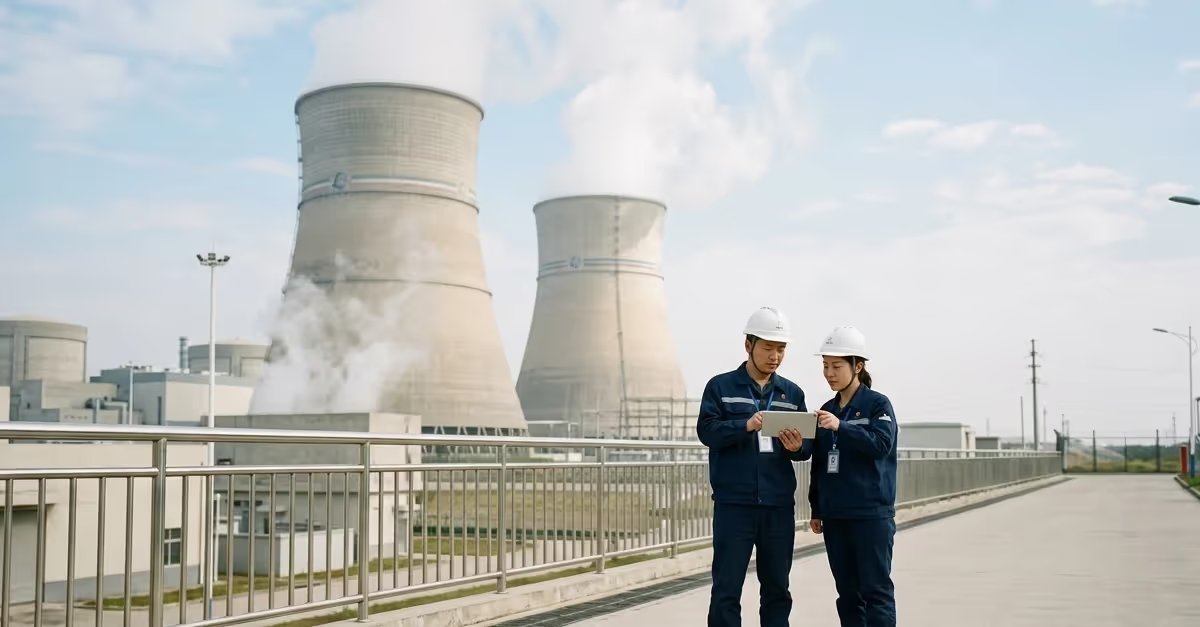
On March 18, 2026, the Department of Nuclear Safety Regulation under China's Ministry of Ecology and Environment announced the formal launch of a revision to the "Regulations on Quality Assurance for Nuclear Power Plants" (HAF003). Earlier on March 10, 2026, the China Atomic Energy Authority confirmed China's participation in the "Tripling Nuclear Energy Declaration" at the Paris Nuclear Energy Summit. Separately, the China Nuclear Energy Association published its full-year 2025 operational data, documenting stable performance across the national nuclear fleet.
Taken together, these developments signal a clear direction in China’s nuclear policy — strengthening domestic nuclear regulation while expanding its role in the global nuclear energy landscape.
China Begins HAF003 Revision to Strengthen Nuclear QA Regulation
China's decision to revise HAF003 represents a structural regulatory update directly tied to the sector's current scale and growth trajectory. The regulation has been in force since 1991, establishing the foundational quality assurance framework for nuclear power plants.
Authorities now signal that this framework must evolve to meet the demands of an industry that has grown considerably in scope and complexity over more than three decades — framing the revision not as a technical correction, but as a necessary realignment between regulatory oversight and rising expectations for safety and quality management.
Scope and Objectives of the HAF003 Revision
Drawing on accumulated operational experience within China's nuclear sector and the latest international research and technical developments, regulators intend to build a more integrated framework that connects all stages of nuclear power plant activities, spanning nuclear power plant construction, safety management and production activities.
The stated objective is a system that is "comprehensive, connected, and effectively aligned" across the full lifecycle. This means strengthening quality assurance mechanisms at each stage while explicitly addressing known weaknesses and areas that have proven difficult to manage under existing rules. The dual grounding in domestic practice and global technical evolution signals that the updated regulation will reflect both lessons learned within China and benchmarks set by international nuclear safety frameworks.
Operational Data Confirms Stability of China’s Nuclear Power Sector
While regulatory reform is underway, The China Nuclear Energy Association’s 2025 report provides operational data that presents a parallel message: the current system is functioning reliably, even as capacity grows.
Steady Growth in Nuclear Power Generation
As of December 31, 2025, China operated 59 nuclear power units with a total installed capacity of 62,518.74 MWe, including one newly commissioned unit during the year.
Total nuclear generation reached 467.019 billion kWh, accounting for 4.82% of national electricity output and increasing by 4.91% year-on-year. These figures reflect consistent, incremental growth, reinforcing nuclear energy's role as a stable and expanding component of China's broader energy mix.
Nuclear Energy Supports Emissions Reduction Goals
The data also underscores nuclear power’s contribution to emissions reduction and energy efficiency. Compared with coal-fired generation, nuclear energy in 2025 resulted in:
- Reduction of approximately 133.65 million tons of standard coal consumption
- Reduction of approximately 350.17 million tons of CO₂ emissions
- Additional reductions in SO₂ and nitrogen oxides
This positions nuclear energy as a stable, low-carbon component of China’s energy transition strategy.
Strong Safety Performance Across Key Indicators
Operational safety indicators remained stable throughout 2025, supporting confidence in the current regulatory system:
- No INES Level 1 or above incidents occurred
- No radiation accidents or major production safety incidents were reported
- Core safety systems met all technical requirements
- Radiological discharge levels remained within approved limits
- Environmental monitoring detected no abnormal radiation impact
This record suggests that the HAF003 revision is driven by anticipation of future complexity rather than as a response to current failures.
China Expands International Role Through Nuclear Energy Declaration
Alongside the domestic regulatory and operational picture, China has taken a significant step in global nuclear governance. Its participation in the "Tripling Nuclear Energy Declaration" at the Paris Nuclear Energy Summit on March 10, 2026, places China among a growing coalition of countries committed to expanding nuclear energy capacity as part of long-term decarbonization strategies.
Aligning With Global Nuclear Growth Targets
The declaration sets a collective goal of tripling global nuclear energy capacity by 2050, relative to 2020 levels. It is framed as a pathway to support net-zero emissions targets and the objectives of the “Paris Agreement.”
China's endorsement of this target aligns its domestic expansion plans with an internationally coordinated ambition, signaling that its nuclear growth is not only a national priority but also a contribution to a broader multilateral agenda.
Expanding Cooperation Across the Nuclear Value Chain
The declaration outlines 11 areas of cooperation spanning the full nuclear value chain, including safety, financing, and supply chain resilience.
For China, this signals an intention to engage more actively in:
- International nuclear safety and governance frameworks
- Technology development and knowledge exchange
- Industrial and supply chain collaboration
Implications for Foreign Companies in China’s Nuclear Market
For international stakeholders, the significance lies not in any single development, but in how these elements converge.
Opportunities in an Expanding Nuclear Market
China’s continued nuclear expansion and participation in global initiatives may open pathways for foreign companies in specific areas:
- Specialized equipment and advanced technologies
- Quality assurance, testing, and inspection services
- Participation in supply chains linked to resilience and international cooperation
The explicit reference to international research in the HAF003 revision suggests potential openness to external technical input.
Preparing for Stricter Nuclear QA Compliance Requirements
At the same time, foreign companies should prepare for evolving regulatory expectations under China’s nuclear QA framework:
- New and more detailed QA requirements following the HAF003 revision
- Increased emphasis on lifecycle traceability and system integration
- Greater alignment with both Chinese and international nuclear safety standards
Importantly, concrete new requirements are not yet specified, therefore proactive monitoring and internal preparedness are essential.
Recommended Actions for Overseas Stakeholders
Given the pace and direction of change, companies should take a forward-looking and structured approach:
- Track the development and release of the revised HAF003 text
- Conduct internal gap assessments against anticipated lifecycle QA expectations
- Identify areas where international expertise aligns with China’s stated priorities
- Strengthen engagement with Chinese operators, contractors, and research bodies
- Monitor developments linked to the “Tripling Nuclear Energy Declaration” and related cooperation frameworks
A Coordinated Shift: Regulatory Reinforcement and Global Integration
These three developments reflect a deliberate and coordinated approach to nuclear sector development that is becoming more rigorous domestically and more integrated internationally. For foreign companies, this is not a short-term adjustment, but part of a broader shift toward tighter system integration and higher expectations for quality assurance and compliance.
The immediate priority is understanding how the revised HAF003 will translate into practical requirements, and where alignment with international practices may create both opportunities and new compliance obligations. Companies that develop that understanding now will be better positioned to respond when the regulation is finalized.
Cisema supports international companies at each stage of this process — from assessing regulatory applicability and compliance obligations to preparing and localizing technical documentation, coordinating with Chinese authorities and testing institutions, and supporting market entry, certification updates, renewals, and ongoing operations within China’s nuclear sector.
For tailored guidance on navigating China’s evolving nuclear regulatory framework, get in touch with Cisema today.
References
Connect with Cisema
With more than 20 years of experience and a team of over 100 specialists, Cisema helps global companies achieve compliance across Asia Pacific with confidence and accelerate market entry.
Stay Informed with Monthly News and Analysis
Stay informed with the latest regulatory changes, expert insights, and market opportunities across APAC, delivered straight to your inbox.
Related News

Hong Kong Requires MDACS Listing for Injectable Dermal Fillers by March 1, 2027
New requirements could affect how injectable devices, including dermal fillers, are supplied in Hong Kong’s private healthcare sector.

China Enacts First Healthcare Security Law: Impact on Global Medtech
China’s new Healthcare Security Law affects medical device reimbursement, health economic evidence, payment models, and digital traceability from 2027.

Indonesia Mandates Pre-Shipment Halal Verification for Imported Products
BPJPH Regulation No. 4 of 2026 introduces pre-shipment halal verification and LPPH reports for imported goods starting September 2026.