
Published on
Last updated on
China to Launch Three-Year Cosmetic E-Label Pilot Program
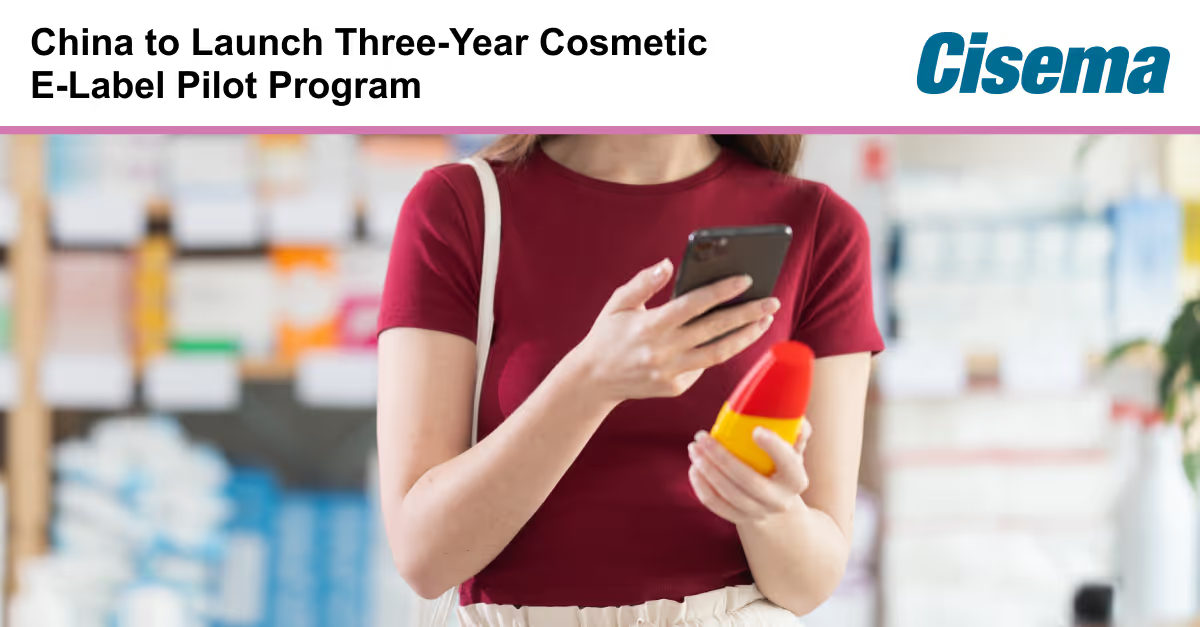
China’s National Medical Products Administration (NMPA) issued the “Notice on Launching the Cosmetic Electronic Label Pilot Program (NMPA Cosmetics [2025] No. 16)” on October 20, 2025. The three-year program, starting February 1, 2026, will introduce electronic labels for cosmetics and toothpaste to improve consumer access to information and support elderly-friendly features.
China’s Cosmetic E-Label Pilot at a Glance: Scope and Timeline
- Pilot start date: February 1, 2026, marking the beginning of a three-year pilot period.
- Product scope: All cosmetics, including toothpaste
- E-Label Requirements: Scannable QR-code visible on packaging surface
- Pilot locations: Beijing, Shanghai, Zhejiang, Shandong, Guangdong, and Chongqing; Hainan offshore duty-free zone may adopt the same requirements.
- Industry next steps: Overseas brands monitor provincial announcements, assess internal readiness, and prepare internal systems and packaging for e-label adoption.
Continue reading for more in-depth insights into the regulatory details, or contact Cisema’s experts for tailored support in entering China’s cosmetics market.
How the E-Label Pilot Fits into China’s Cosmetic Regulatory System
China’s cosmetic regulatory system has advanced significantly under the Cosmetic Supervision and Administration Regulation (CSAR), with continual updates to registration, filing, safety, and ingredient management requirements.
Supported by earlier developments in China’s shift towards digital regulation — such as electronic drug registration certificates and the adoption of standardized data structures — the e-label pilot reflects the continued evolution of China’s cosmetics regulatory framework.
What the Pilot Involves
China’s cosmetic e-label pilot introduces QR code–based electronic labels on the sales packaging of cosmetics, including toothpaste. The initiative defines the electronic label as part of the overall cosmetic label and establishes requirements for generating, displaying, and maintaining label information in digital form.
For participating products, a core set of mandatory items must still appear on the physical sales packaging, while the full set of required label information may be presented via the electronic label.
Eligibility Requirements for Cosmetic E-Label Pilot Participants
The pilot is open to cosmetics registrants and filers, as well as domestic responsible persons authorized by a registrant or filer. To participate, enterprises must demonstrate the technical ability to:
- Generate and manage QR codes
- Ensure data integrity and traceability
- Maintain historical label information.
Participants are required to designate appropriate management personnel, maintain a sound quality management system, and show the operational capacity to perform pilot activities in a stable, compliant manner.
Process for Joining the Pilot
The pilot requirements allow the electronic label system to be established in one of three ways: developed by the participating enterprise itself; provided by a third-party technical institution; or organized at the provincial level.
Each provincial drug regulatory authority determines the specific system model used within its jurisdiction. Participating authorities include:
- Beijing
- Chongqing
- Guangdong
- Shanghai
- Shandong
- Zhejiang
- Hainan offshore duty-free zone may adopt the same requirements
These areas reflect a mix of regulatory and market conditions: Beijing, Shanghai, and Guangdong are digitally mature consumer hubs; Zhejiang and Shandong serve as major production centers; and Chongqing offers representation from western China.
Preparing Cosmetics for E-Label Launch in China
Before launching products with an electronic label, companies must upload the following to the Cosmetics Registration and Filing Information Service Platform:
- The e-label URL data-structure code
- Complete electronic-label content; any updates to this content must be uploaded before products bearing the revised information enter the market
- Packaging images showing the QR code clearly on the visible surface of the sales packaging (and on the Chinese label, if affixed).
The electronic label QR code must:
- Be marked directly below with “化妆品电子标签” (electronic label for cosmetics) or “牙膏电子标签” (electronic label for toothpaste)
- Be printed or affixed clearly and securely, remain easy to scan, and in principle measure no less than 9 mm × 9 mm.
When scanned, the code must directly display all mandatory labeling items required under the “Cosmetics Label Management Measures” without additional steps, conditions, or pop-up interruptions. The electronic label must remain truthful, accurate, consistent with registration or filing documentation, and easy for consumers to read and recognize.
The physical packaging must continue to display key information, including the product’s Chinese name, the registrant or filer name, net content, use-by date, required safety warnings, and the children’s cosmetics logo where applicable.
Compliance Obligations During the Cosmetic E-Label Pilot
Once approved, participants must ensure consistent and reliable e-label operations. Key obligations include:
- Keeping QR codes scannable and ensuring information loads quickly
- Maintaining truthful, accurate, and registration-consistent content
- Providing full Chinese label information upon request
- Ensuring system stability and resolving access issues promptly
- Retaining e-label content for the required period after product discontinuation
Regulators may conduct inspections at any time, with noncompliance leading to corrective actions or, in serious cases, suspension or revocation of pilot qualification. If revoked, the enterprise must stop producing, importing, and selling products with electronic labels.
Looking Ahead: Impacts of China’s E-Label Pilot on Cosmetics Companies
If the e-label pilot progresses as intended, it may influence future approaches to cosmetic labeling in China. For overseas cosmetics companies, broader adoption of e-labels in China’s cosmetics sector offers several advantages:
Streamlined Packaging for Global Brands
E-labels can reduce the amount of text required on physical packaging by shifting certain information to a digital format, while still retaining the mandatory on-pack items. This approach supports more unified global packaging designs where e-labels are adjusted to meet local requirements. This helps companies improve inventory control and reduce the frequency of packaging updates.
Improved Accessibility for Key Consumer Groups
E-labels also strengthen accessibility. Functions such as adjustable text size and audio playback —required within the pilot — support China’s silver economy priorities and make product information easier to access for consumers with additional needs.
Greater Flexibility in Supply Chain and Compliance
Digital labels allow companies to update electronic label content before new batches enter the market, providing flexibility when formulations or regulatory requirements change. This can reduce packaging waste, minimize production disruptions, and help maintain operational continuity during regulatory or supply chain adjustments.
Final Thoughts
China’s cosmetic e-label pilot represents another step forward in the shift toward digitally enabled regulatory supervision. Companies that join the pilot — or begin building e-labeling capability now — will be better prepared for future regulatory developments with established systems and tested workflows.
For overseas manufacturers, aligning technical systems with China’s regulatory requirements can be challenging. With more than 20 years of on-the-ground regulatory experience in China, Cisema supports international companies in navigating these demands, assisting with:
- Communication with regulators
- Compliance reviews for QR code and e-label systems
- Data structuring aligned with official data set requirements
- End-to-end project management from strategy through post-launch operations
For expert support in entering China’s cosmetic market, contact Cisema’s regulatory team today.
Further Information
Explore Cisema’s cosmetics registration services in China.

References
Read the original announcement in simplified Chinese (Notice of the State Food and Drug Administration on carrying out the pilot work of electronic labeling of cosmetics / 国家药监局关于开展化妆品电子标签试点工作的通知).
Connect with Cisema
With more than 20 years of experience and a team of over 100 specialists, Cisema helps global companies achieve compliance across Asia Pacific with confidence and accelerate market entry.
Stay Informed with Monthly News and Analysis
Stay informed with the latest regulatory changes, expert insights, and market opportunities across APAC, delivered straight to your inbox.
Related News

Hong Kong Requires MDACS Listing for Injectable Dermal Fillers by March 1, 2027
New requirements could affect how injectable devices, including dermal fillers, are supplied in Hong Kong’s private healthcare sector.

China Enacts First Healthcare Security Law: Impact on Global Medtech
China’s new Healthcare Security Law affects medical device reimbursement, health economic evidence, payment models, and digital traceability from 2027.
Indonesia Mandates Pre-Shipment Halal Verification for Imported Products
BPJPH Regulation No. 4 of 2026 introduces pre-shipment halal verification and LPPH reports for imported goods starting September 2026.