
Published on
Last updated on
China NMPA Introduces New Cosmetic Testing Methods, Effective July 2026
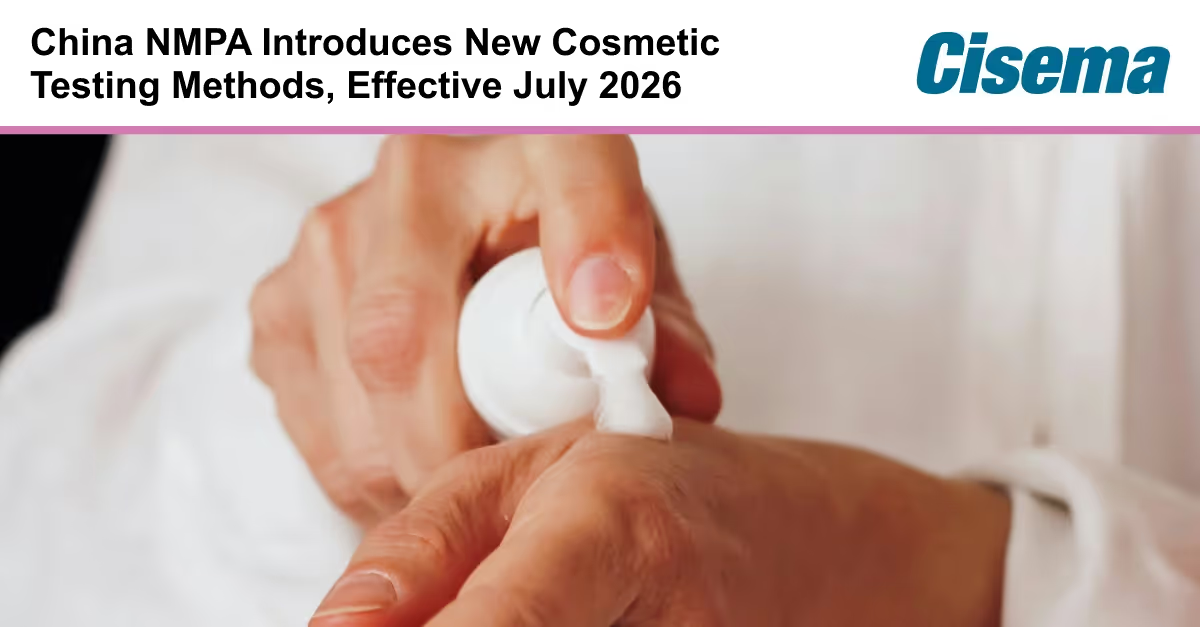
On January 12, 2026, China’s National Medical Products Administration (NMPA) issued “Announcement No. 5 of 2026,” formally incorporating four new and revised testing methods — including the “Skin Sensitization Local Lymph Node Assay: BrdU-FCM” — into the “Safety and Technical Standards for Cosmetics (2015 Edition).”
All methods will take effect on July 1, 2026. Products submitted for registration or filing after this date must comply with the updated requirements. Given testing timelines and dossier preparation, companies planning China market entry in late 2026 or 2027 should begin alignment immediately.
China Cosmetics Regulation Continues Shift Toward Scientific Evaluation
Recent developments under the Cosmetics Supervision and Administration Regulation (CSAR) reflect a clear shift toward data-driven, risk-based oversight. This update reinforces that direction by introducing advanced methodologies and refining existing approaches.
The inclusion of the BrdU-FCM local lymph node assay reflects growing regulatory acceptance of alternative methods to animal testing in China. At the same time, the introduction of toxicokinetic testing establishes a standardized framework for assessing systemic exposure of cosmetic ingredients — a critical component of modern cosmetic safety assessment in China.
Key exposure parameters include:
- Absorption
- Distribution
- Metabolism
- Excretion of cosmetic ingredients
The revised human testing methods further strengthen reliability, reinforcing a transition from procedural compliance to substantive safety validation.
Key Technical Updates in China Cosmetic Testing Requirements
The four methods introduced under “Announcement No. 5 of 2026” include two new methods and two revisions, reflecting both technical advancement and stricter expectations under China cosmetic regulations.
- BrdU-FCM Method: An optimized version of the traditional LLNA, using flow cytometry to measure lymphocyte proliferation and generate more objective, reproducible data for skin sensitization assessment.
- Toxicokinetic Testing Method: Establishes, for the first time within the standards, a structured framework to evaluate how cosmetic ingredients behave in the body, supporting more robust assessment of systemic exposure risks.
- (Revised) Human Skin Patch Test Method: Refines requirements for study design, subject selection, and result interpretation, reducing variability and subjective bias.
- (Revised) Human Safety in Use Test Method: Optimizes the safety assessment process for products under real-use conditions to better reflect actual consumer exposure.
Implications for Overseas Cosmetics Companies Entering China
These updates create immediate compliance obligations and broader strategic implications for overseas cosmetics manufacturers, importers, and brand owners targeting China. Beyond meeting new testing requirements, companies must reassess how product development, data generation, and market entry timelines align with evolving NMPA expectations
Higher Technical and Cost Burden
New and revised methods will increase development complexity. Additional testing, particularly for novel ingredients or advanced formulations, may extend timelines and raise R&D costs.
Stronger Emphasis on China-Specific Data
NMPA is placing stronger emphasis on data generated in accordance with China-specific testing standards. International data may not be sufficient unless aligned with Chinese methodologies, requiring companies to adapt global testing strategies or generate supplemental data.
Greater Reliance on Qualified Local Testing Infrastructure
Compliance will increasingly depend on access to qualified China-based laboratories capable of performing the updated methods. Overseas companies must ensure their testing partners meet NMPA requirements, as limitations in local capacity or experience could directly impact timelines and approval outcomes.
Practical Compliance Strategies for China Cosmetics Registration
To maintain market access and ensure efficient NMPA approval, overseas companies should adopt a structured and proactive compliance strategy.
Key actions include:
- Conduct gap analyses of existing product dossiers and development pipelines against China cosmetic regulations
- Identify ingredients and formulations requiring new or updated testing methods
- Engage qualified China-based laboratories for NMPA-compliant testing
- Review product development timelines to accommodate additional safety studies
- Strengthen internal coordination across regulatory, R&D, and quality teams
Ongoing regulatory monitoring remains essential, as NMPA may issue further guidance clarifying implementation of these testing methods.
Local Expertise Supports Efficient Market Access
China’s cosmetics regulatory framework continues to evolve in both technical depth and procedural complexity, creating barriers for overseas companies unfamiliar with NMPA requirements and local testing systems.
To address these challenges effectively, companies require reliable local expertise that can translate regulatory requirements into actionable compliance strategies and ensure smooth execution on the ground.
Cisema provides this support through end-to-end regulatory services — including regulatory interpretation, safety assessment strategy development, laboratory coordination, and dossier preparation — helping overseas companies reduce compliance risk and accelerate market access in China.
For companies seeking expert guidance on China cosmetics regulation and NMPA compliance, get in touch with Cisema today.
Further Information
Explore Cisema’s services for cosmetics registration and compliance in China.

References
Announcement No. 5 of 2026” issued by China’s National Medical Products Administration (NMPA)
Connect with Cisema
With more than 20 years of experience and a team of over 100 specialists, Cisema helps global companies achieve compliance across Asia Pacific with confidence and accelerate market entry.
Stay Informed with Monthly News and Analysis
Stay informed with the latest regulatory changes, expert insights, and market opportunities across APAC, delivered straight to your inbox.
Related News
Hong Kong Requires MDACS Listing for Injectable Dermal Fillers by March 1, 2027
New requirements could affect how injectable devices, including dermal fillers, are supplied in Hong Kong’s private healthcare sector.

China Enacts First Healthcare Security Law: Impact on Global Medtech
China’s new Healthcare Security Law affects medical device reimbursement, health economic evidence, payment models, and digital traceability from 2027.
Indonesia Mandates Pre-Shipment Halal Verification for Imported Products
BPJPH Regulation No. 4 of 2026 introduces pre-shipment halal verification and LPPH reports for imported goods starting September 2026.