
Published on
Last updated on
China Non-Compliant Cosmetics announced by the NMPA
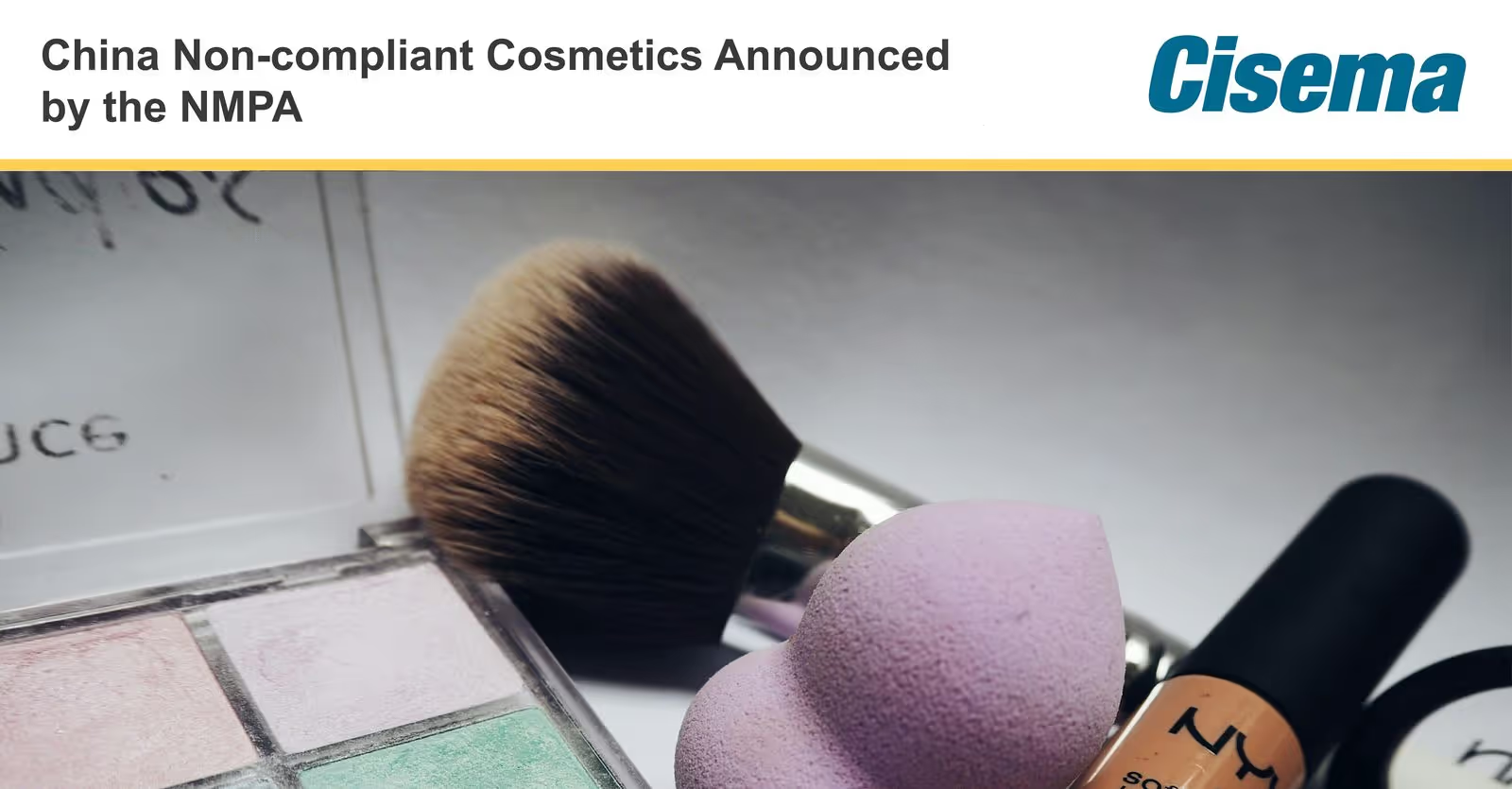
China non-compliant cosmetics have been announced by the National Medical Products Administration (NMPA) in October 2024. These actions highlight the NMPA's rigorous enforcement practices and how they might impact related sectors. Here's a look at the announcements and what they mean for manufacturers operating within China's regulated environment.
Announcement 1: Non-Compliance in 49 Batches of Cosmetics
In its 2024 national inspection of cosmetics, the NMPA discovered that 49 batches of cosmetic products did not meet regulatory standards. Among them was the Ban Xiaojing Whitening and Isolating Sunscreen, manufactured by Guangzhou Concord Biomedical Technology Co., Ltd. The product was found non-compliant due to the absence of the sunscreen agent ethylhexyl triazone, which was listed on the label and in the registration data, violating the requirement for ingredient consistency with the registration specifications.The inspection, conducted by bodies like the Fujian Institute of Food and Drug Quality Inspection, revealed significant non-compliance issues that violate China's Regulations on the Supervision and Administration of Cosmetics, as well as Measures for the Supervision and Administration of the Production and Operation of Cosmetics, and Measures for the Administration of Sampling Inspection of Cosmetics.Here are examples of other non-compliant cosmetics information:
- The Perfect Aloe Gel (40g) produced by Perfect (Guangdong) Daily Necessities Co., Ltd. was found non-compliant due to excessive bacterial count, exceeding regulatory limits of ≤1000 CFU/g, with a test result of 2.9×10^5 CFU/g.
- The Hongxinlong Hair Dye Cream (Golden Brown, 100ml) produced by Guangzhou Hongxinlong Cosmetic Manufacturing Co., Ltd. was found non-compliant for containing the banned substance p-Phenylenediamine, which was not listed in its declared ingredients.
- The DDF & Camille Flawless Powder Cream (Nude Beige, 12g+1g) produced by Guangzhou Youbeisheng biotechnology Co., Ltd. was found non-compliant for containing undeclared ingredients (Ethylhexyl methoxycinnamate, Ethylhexyl salicylate, and Homosalate), violating the requirement for product composition to match registration materials.
Announcement 2: Detection of Banned Raw Materials in 20 Batches of Cosmetics
In a separate inspection, the NMPA announced the discovery of banned raw materials in 20 batches of cosmetics during its 2024 national sampling inspection. Among the flagged items was the Meisi Care Hair Color Cream (Coffee Brown, 200ml), which lists Guangzhou Weiniya Cosmetics Co., Ltd. as the manufacturer. This product was found non-compliant due to an excessive level of lead at 11.0 mg/kg, exceeding the regulatory limit of ≤2 mg/kg.The Zhejiang Institute of Food and Drug Inspection and other authorized bodies detected that these batches contained prohibited ingredients, violating the Safety and Technical Standards for Cosmetics (2015 Edition).Here are examples of other non-compliant cosmetics information
- The MCHOIX Shampoo (800g) produced by Guangzhou Mingchenya Cosmetics Co., Ltd. was found non-compliant due to the presence of the banned substance Acrylamide at a level of 2.24 mg/kg, violating the requirement for this ingredient not to be added.
- The Mingkai Foaming Hair Dye (Natural Black, 25ml) produced by Guangzhou Mingkai Cosmetics Co., Ltd. was found non-compliant due to an excessive level of Benzene at 14.6 mg/kg, surpassing the regulatory limit of ≤2 mg/kg.
NMPA’s Action: Immediate Risk Control and Rectification Orders
Following the detection of these non-compliant batches, the NMPA mandated immediate risk control measures, directing drug administrations in Shanghai, Guangdong, Yunnan, and Beijing to investigate involved entities and enforce corrective actions. This includes ordering registrants, record-filers, and manufacturers to conduct comprehensive self-examinations and rectify any identified issues.Furthermore, operators are instructed to cease the sale of these non-compliant products, verify purchase records, and trace the origin of any infringing goods. Violators face stringent consequences, with potential criminal cases being transferred to public security authorities.
Implications for QA Managers in the Medical Device Sector
For medical device manufacturers, these announcements are a powerful reminder of the strict regulatory climate in China and the emphasis on both product and ingredient safety.QA managers should ensure that every aspect of the product lifecycle—especially supplier validation, material testing, and documentation—aligns with local regulations. As the NMPA’s actions illustrate, even minor deviations can lead to sweeping market impacts, including sales suspensions, fines, and potential reputational damage.
Further Information
Read the original China Non-Compliant Cosmetics announcement 1 and announcement 2.Discover our Cosmetics Filing & Registration Services
GET IN TOUCH
Connect with Cisema
With more than 20 years of experience and a team of over 100 specialists, Cisema helps global companies achieve compliance across Asia Pacific with confidence and accelerate market entry.
Stay Informed with Monthly News and Analysis
Stay informed with the latest regulatory changes, expert insights, and market opportunities across APAC, delivered straight to your inbox.
Related News
Hong Kong Requires MDACS Listing for Injectable Dermal Fillers by March 1, 2027
New requirements could affect how injectable devices, including dermal fillers, are supplied in Hong Kong’s private healthcare sector.

China Enacts First Healthcare Security Law: Impact on Global Medtech
China’s new Healthcare Security Law affects medical device reimbursement, health economic evidence, payment models, and digital traceability from 2027.
Indonesia Mandates Pre-Shipment Halal Verification for Imported Products
BPJPH Regulation No. 4 of 2026 introduces pre-shipment halal verification and LPPH reports for imported goods starting September 2026.