
Published on
Last updated on
Drug Adverse Reaction Report from China for 2024 Highlights Trends Impacting Imported Pharmaceuticals
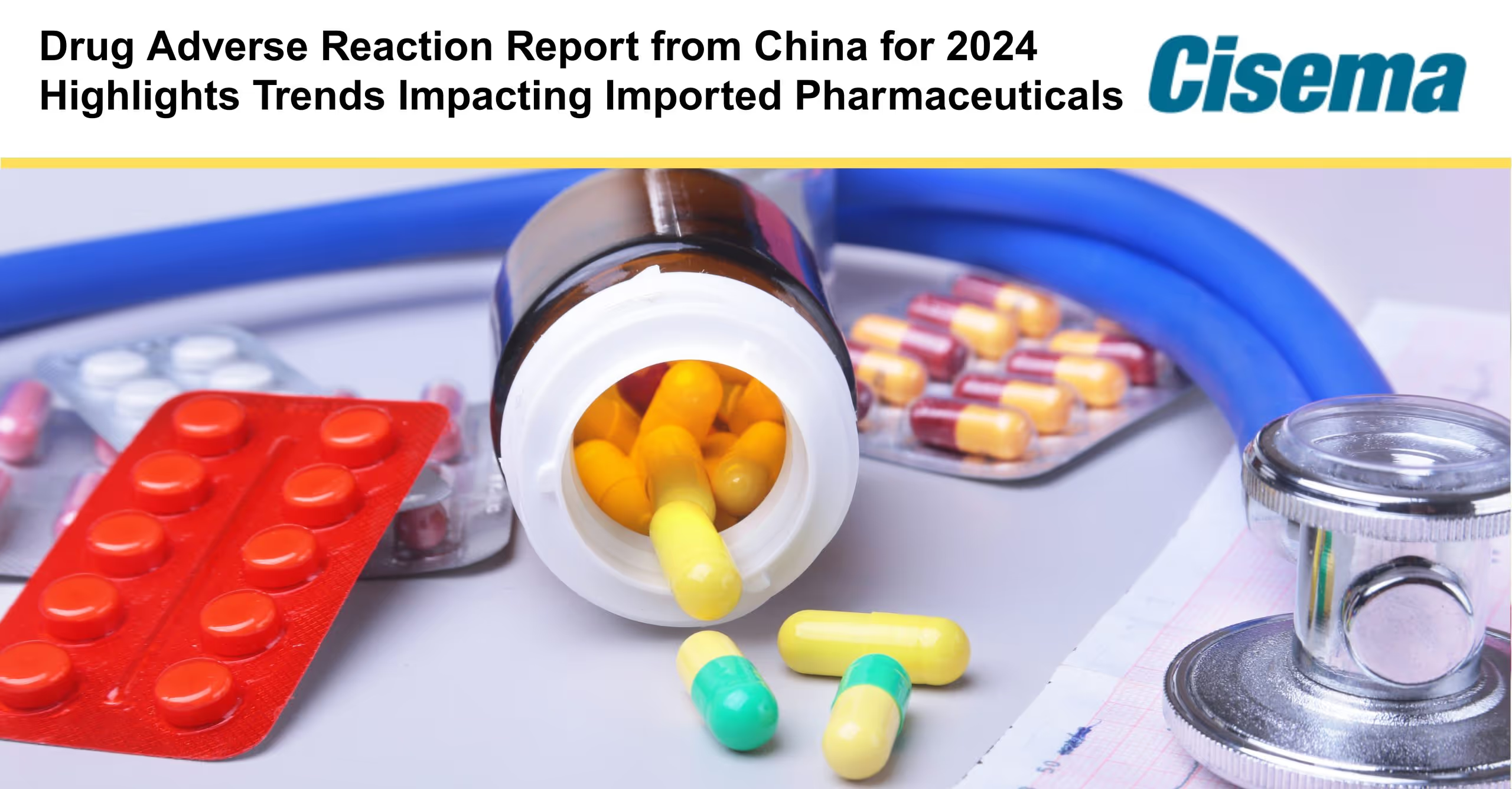
Drug Adverse Reaction Report from China for 2024 highlights trends impacting imported pharmaceuticals. On 7 April 2025, the Annual Report on National Drug Adverse Reaction Monitoring (2024) was released by the China Center for Drug Reevaluation and the National Center for ADR Monitoring. In 2024, the national adverse drug reaction monitoring network received a total of 2.597 million reports, with serious reports accounting for 17.5%. Among these, chemical drugs remained the primary source of adverse reactions, comprising 81% of the reports. However, biological products—particularly anticancer drugs—have also drawn significant attention due to the frequent occurrence of immune-related adverse reactions.
Report Overall Situation
Overview of Adverse Drug Reaction/Event Reports in 2024
In 2024, the national adverse drug reaction (ADR) monitoring network received a total of 2.597 million "Adverse Drug Reaction/Event Report Forms." From 1999 to 2024, the cumulative number of reports reached 25.872 million.

Reports of New and Serious Adverse Drug Reactions/Events
In 2024, the national ADR monitoring network received 909,000 reports of new and serious adverse drug reactions/events, accounting for 35.0% of all reports during the same period. Among these, 454,000 reports were classified as serious adverse drug reactions/events, making up 17.5% of the total reports for the year.

High-Risk Drug Categories Involving Overseas Manufacturers
Biological Products
- Anticancer monoclonal antibodies: Products such as PD-1/PD-L1 inhibitors (e.g., pembrolizumab, nivolumab) and HER-2 inhibitors (trastuzumab) accounted for as much as 49.3% of serious adverse reaction reports, primarily involving multinational pharmaceutical companies (e.g., Merck & Co., Roche, Bristol-Myers Squibb).
- Blood products: Imported products such as human albumin and immunoglobulin may pose risks of allergic reactions or infections due to cold-chain transportation or production process issues.
- Vaccines: Some imported HPV vaccines and COVID-19 vaccines require monitoring for hypersensitivity reactions and rare neurological side effects (e.g., Guillain-Barré syndrome).
Anti-Infective Drugs
- Quinolone antibiotics: Levofloxacin (originally manufactured by Daiichi Sankyo) topped the list of reports, associated with tendinitis and central nervous system toxicity.
- Cephalosporins: Some imported third-generation cephalosporins (e.g., ceftriaxone) are prone to causing allergic reactions, with a need to guard against cross-allergy risks.
- Antiviral drugs: Imported HIV treatment drugs (e.g., tenofovir) may increase the risk of hepatorenal toxicity with long-term use.
Cardiovascular and Metabolic Drugs
- Anticoagulants: New oral anticoagulants such as rivaroxaban (Bayer) and apixaban (Pfizer) have seen an increase in bleeding risk reports.
- Lipid-lowering drugs: Imported PCSK9 inhibitors (e.g., alirocumab) may cause injection site reactions and muscle pain.
Anticancer Small-Molecule Targeted Drugs
- EGFR and ALK inhibitors: EGFR inhibitors (e.g., osimertinib) and ALK inhibitors (e.g., crizotinib) have higher reports of hepatotoxicity and interstitial pneumonia, partly due to the extensive use of imported originator drugs.
The Impact of International Cooperation and Stricter Regulation on Overseas Manufacturers
- WHO drug monitoring program: China regularly exchanges data with the Uppsala Monitoring Centre (UMC). Adverse reaction data from overseas manufacturers may trigger global synchronized reviews (e.g., increased reports of serious allergies to PD-1 inhibitors in China have led to additional warnings from the European Medicines Agency (EMA)).
- ICH standard alignment: China's involvement in revising guidelines such as ICH E2D (post-marketing safety reporting) and M1 (MedDRA terminology) requires overseas companies to submit data in a format consistent with global standards, increasing compliance costs for China domestic companies who aren't already compliant with global standards.
- Real-world evidence (RWE) requirements: The National Medical Products Administration (NMPA) has issued principles for RWE supporting proactive drug safety monitoring, requiring imported drugs to provide RWE from Chinese patient populations (e.g., the impact of liver and kidney function differences in elderly patients on drug metabolism). Failure to do so may result in restricted indications or dosages.
- Dynamic updates to instructions and risk communication: In 2024, the NMPA required revisions to the instructions of 33 drugs, including imported ones (e.g., a black-box warning for "serious bleeding" was added to an anticoagulant). Overseas companies must complete synchronized updates of Chinese and English versions within three months and halt sales during the update process.
Challenges and Recommended Responses for Overseas Manufacturers
Challenges
- Pharmacovigilance inspections: In 2024, the country launched a special inspection for marketing authorization holders. Overseas manufacturers' subsidiaries or agents in China must have independent pharmacovigilance teams; otherwise, they may be placed on a "key supervision list."
- Data transparency: All adverse reactions must be reported to Chinese authorities in accordance with local regulations, including events already reported overseas. Failure to report may result in fines of up to 500,000 yuan.
- Biosimilar impact: Domestically produced PD-1 inhibitors (e.g., from Innovent Biologics and Hengrui Medicine) are capturing market share with lower prices and localized safety data.
- Volume-based procurement impact: Some imported originator drugs (e.g., levofloxacin) that failed to win bids have shifted to the high-end market but must address brand trust issues stemming from adverse reactions.
- Supply chain and quality control: Imported biologics must comply with China's "Batch Release Administration Measures for Biological Products," requiring inspection by the National Institutes for Food and Drug Control for each batch, which may delay market entry. Cold-chain transportation defects (e.g., temperature fluctuations) that cause drug degradation may trigger adverse reactions and recalls.
Recommended Responses
- Set up pharmacovigilance centers in China: Establish local teams for ADR signal detection and compliance reporting.
- Conduct risk pre-management: Carry out phase II/III clinical studies targeting the Chinese population to identify race-specific risks in advance (e.g., differences in CYP450 enzyme metabolism).
- Optimize the supply chain: Partner with local logistics companies to ensure end-to-end traceability of the cold chain.
- Highlight safety evidence: Demonstrate that the adverse reaction rates of imported drugs are significantly lower than those of domestically produced generics (e.g., immune-related side effects of PD-1 inhibitors).
Further Information
To read the original announcement about the annual report on National Drug Adverse Reaction Monitoring (2024) released by China Center for Drug Reevaluation and National Center, please click here.
If you are a pharmaceutical company with questions about how adverse drug reaction reporting or compliance requirements could affect your product registration in the China market, please contact Cisema.
GET IN TOUCH
Connect with Cisema
With more than 20 years of experience and a team of over 100 specialists, Cisema helps global companies achieve compliance across Asia Pacific with confidence and accelerate market entry.
Stay Informed with Monthly News and Analysis
Stay informed with the latest regulatory changes, expert insights, and market opportunities across APAC, delivered straight to your inbox.
Related News

Hong Kong Requires MDACS Listing for Injectable Dermal Fillers by March 1, 2027
New requirements could affect how injectable devices, including dermal fillers, are supplied in Hong Kong’s private healthcare sector.

China Enacts First Healthcare Security Law: Impact on Global Medtech
China’s new Healthcare Security Law affects medical device reimbursement, health economic evidence, payment models, and digital traceability from 2027.
Indonesia Mandates Pre-Shipment Halal Verification for Imported Products
BPJPH Regulation No. 4 of 2026 introduces pre-shipment halal verification and LPPH reports for imported goods starting September 2026.