
Published on
Last updated on
China Releases First Regulatory Guidance for Brain-Computer Interface Medical Devices
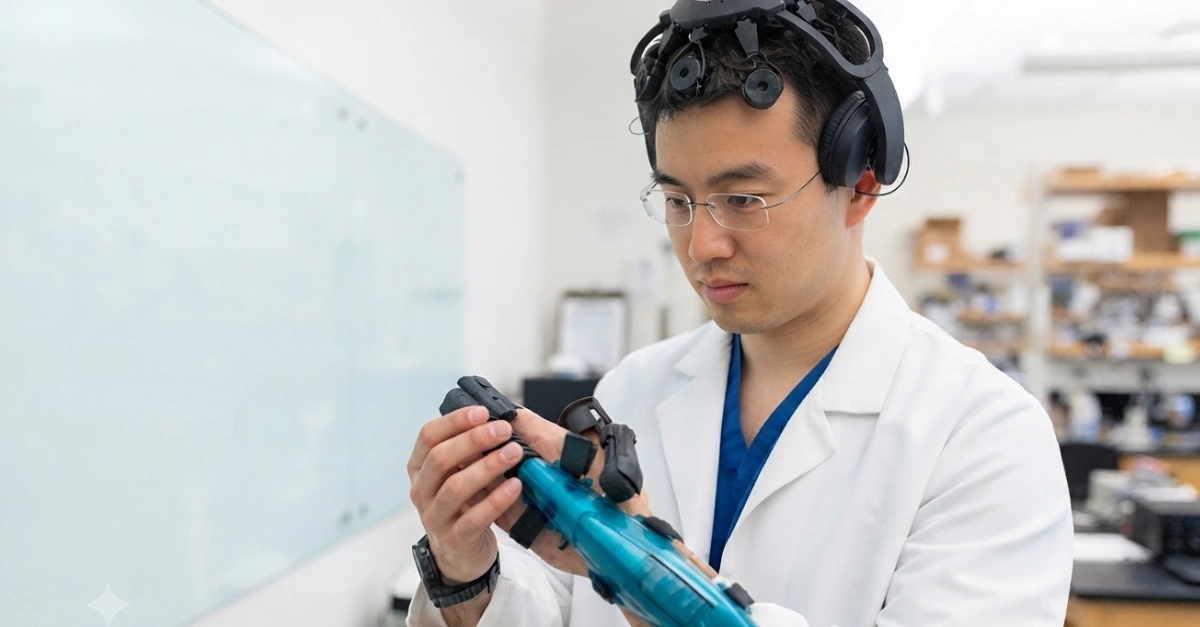
On July 1, 2026, China's National Medical Products Administration (NMPA) released "Announcement No. 24 of 2026," introducing the country's first regulatory guidance specifically for brain-computer interface (BCI) medical devices. Published through the National Institutes for Food and Drug Control (NIFDC) and effective immediately, the guidance fills a critical regulatory gap as BCI technologies transition from research to clinical practice.
The framework establishes consistent, predictable principles for:
- Product Definition: Determining whether a product falls within the scope of a BCI medical device
- Management Attributes: Determining whether a product is regulated as a medical device based on its intended use
- Classification: Assigning the appropriate risk-based regulatory category and classification code
- Generic Naming: Standardizing product names for registration
- Product Scope: Distinguishing BCI medical devices from other products that fall outside the guidance
Defining Brain-Computer Interface Medical Devices
The new guidance introduces a clear regulatory definition intended to reduce uncertainty during product development and registration.
Products Within Scope
A BCI medical device is defined as an active medical device that:
- Measures neural signals generated by the central nervous system using invasive or non-invasive methods
- Decodes those signals in real time
- Enables real-time two-way interaction or closed-loop feedback between patients and external assistive or therapeutic devices to improve, restore, or replace central nervous system functions
The intended use of the product remains the determining factor when establishing whether it is regulated as a medical device in China.
For example, a system that collects neural signals from the motor cortex through implanted electrodes, decodes them in real time, and controls an exoskeleton to assist hemiplegic stroke patients with rehabilitation training would be regulated as a medical device in China because it has a clear medical purpose.
Products Outside the Scope
The guidance explicitly excludes products that:
- Measure only peripheral nerve signals, electromyography (EMG), electrocardiography (ECG), or other non-central nervous system signals
- Provide only one-way signal acquisition or one-way stimulation without achieving real-time bidirectional interaction or closed-loop feedback
- Use central nervous system signal measurement only as an auxiliary function where the primary purpose is not to improve, repair, or replace central nervous system function
- Are intended for non-medical purposes, including functional enhancement, entertainment, virtual reality, augmented reality, or other daily assistance applications
The guidance also explains that products using BCI technology for non-medical purposes are not regulated as medical devices. Manufacturers of non-medical BCI devices should clearly state that the products are not intended for medical use and should not claim medical effects related to improving, repairing, or replacing central nervous system functions.
Risk-Based Classification Clarifies Registration Requirements
The guidance adopts a risk-based classification approach based on factors including invasiveness, intended use, and, in certain cases, the use of artificial intelligence.
- Invasive or implantable BCI medical devices are classified as Class III under classification code 12-00.
- Non-invasive BCI medical devices used for disease treatment are classified as Class III under classification code 09-00.
- Non-invasive BCI medical devices used for functional compensation or rehabilitation training are generally classified as Class III under classification code 19-00.
- For rehabilitation training of limb motor function in stroke patients, those that do not employ artificial intelligence technology may be managed as Class II devices, with the classification code 19-00.
According to the NMPA, this exception reflects the relatively mature clinical practice for stroke rehabilitation, the absence of implant-related risks, and the lack of additional uncertainty associated with AI algorithms. When AI technology is incorporated into these products, they are classified as Class III because algorithmic errors may introduce additional clinical risks, such as misinterpreting patient intent and causing injury.
The guidance also states that, in principle, BCI medical devices should be classified within the relevant active medical device categories rather than under the standalone medical software subcatalog because the safety and effectiveness evaluation is based on the performance of the complete system.
Standardized Generic Naming Requirements Improve Regulatory Consistency
To promote consistent generic naming, the NMPA specifies the following naming structure:
Characteristic Term 1 + Characteristic Term 2 + Characteristic Term 3 (if applicable) + Core Term
The Core Term must be selected from the prescribed terminology and may not be omitted, while the characteristic terms are selected according to the product's actual attributes.
One example provided by the guidance is: Implantable Brain-Computer Interface Hand Motor Function Compensation System
In this example, the product name is constructed using the contact method ("Implantable"), the technology ("Brain-Computer Interface"), the functional characteristic ("Hand Motor Function"), and the required Core Term ("Compensation System"
Strategic Steps for Overseas Manufacturers
For international developers, the guidance provides greater regulatory predictability throughout product development and market entry planning. To ensure compliance, manufacturers should act now to:
- Assess product scope: Confirm whether products meet the new BCI definition, particularly regarding central nervous system signal acquisition, real-time interaction, closed-loop feedback, and intended medical purpose.
- Confirm classification early: Determine the applicable management category and classification code based on invasiveness, intended use, and, where applicable, the use of AI technology.
- Update regulatory documentation: Ensure regulatory documentation and generic product names align with the new guidance.
Because BCI technology is moving at a rapid pace, the NMPA has indicated that these guidelines will continuously evolve. Manufacturers introducing novel features should monitor updates closely and seek formal classification determinations whenever uncertainty arises. Partnering with an experienced local regulatory consultant is highly recommended to successfully manage these shifts and streamline interactions with the NMPA.
Final Thoughts
China’s first dedicated regulatory guidance for BCI medical devices marks a major milestone in the oversight of emerging neurotechnologies. By establishing clear principles for product definition, classification, and naming, the NMPA has provided a highly anticipated, predictable framework that supports product development, investment planning, clinical strategy, and market access.
However, this newfound clarity underscores the importance of careful regulatory planning. To ensure seamless alignment, companies should immediately review their product definitions, intended use cases, AI functionalities, and registration documentation. Furthermore, because this framework will continue to mature, staying agile and attentive to future updates will be critical to long-term compliance.
Navigating these highly specialized, evolving requirements requires localized expertise. Cisema bridges this gap. From initial classification assessments and strategic planning to end-to-end NMPA registration, we help you bring innovative medical technologies to the Chinese market with confidence.
To learn how Cisema can support your China market entry or regulatory strategy, contact our team today.
Further Information
- Explore Cisema’s services for China medical device registration in China.
References
- Announcement of the National Medical Products Administration on Issuing Two Medical Device Product Guidelines: 'Guiding Principles for Classification and Definition of Brain-Computer Interface Medical Devices' and 'Guiding Principles for Naming Generic Names of Brain-Computer Interface Medical Devices' (2026 No. 24)
- Interpretation of the "Guiding Principles for Classification and Definition of Brain-Computer Interface Medical Device Products."
- Interpretation of the "Guidelines for Naming Brain-Computer Interface Medical Devices with Universal Names."
Connect with Cisema
With more than 20 years of experience and a team of over 100 specialists, Cisema helps global companies achieve compliance across Asia Pacific with confidence and accelerate market entry.
Stay Informed with Monthly News and Analysis
Stay informed with the latest regulatory changes, expert insights, and market opportunities across APAC, delivered straight to your inbox.
Related News

Hong Kong Requires MDACS Listing for Injectable Dermal Fillers by March 1, 2027
New requirements could affect how injectable devices, including dermal fillers, are supplied in Hong Kong’s private healthcare sector.

China Enacts First Healthcare Security Law: Impact on Global Medtech
China’s new Healthcare Security Law affects medical device reimbursement, health economic evidence, payment models, and digital traceability from 2027.

Indonesia Mandates Pre-Shipment Halal Verification for Imported Products
BPJPH Regulation No. 4 of 2026 introduces pre-shipment halal verification and LPPH reports for imported goods starting September 2026.