
Published on
Last updated on
China's New Standard for Infant Formula for Special Medical Purpose
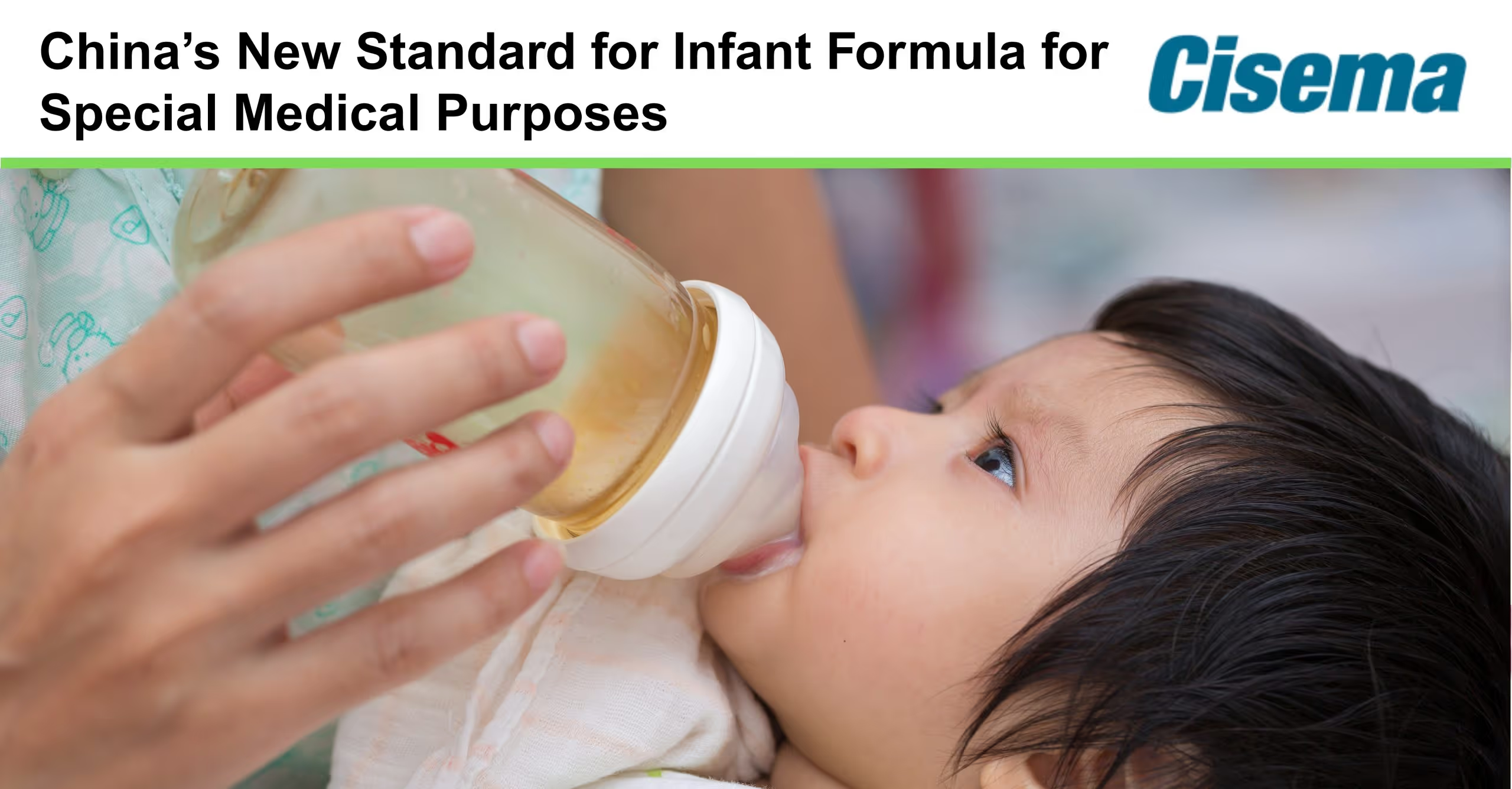
China’s New Standard for Infant Formula for Special Medical Purpose (FSMP) was released by the China’s National Health Commission (NHC) and the State Administration for Market Regulation (SAMR) jointly on March 27, 2025. NHC and SAMR released GB 25596-2025, marking a major update as infant formula FSMP. The new standard will come into effect on March 16, 2027. It introduces updates to product categories, nutritional composition, safety specifications, labeling requirements, and registration procedures. International manufacturers selling or planning to export infant formula for special medical purposes to China will need to assess the implications of these regulatory changes in order to remain compliant.
Background and Significance of the New Standard
Infant formula for special medical purposes is specifically processed and formulated to meet the nutritional needs of infants with medical conditions such as metabolic disorders or diseases. As clinical demand diversifies, the previous GB 25596-2010 standard has become insufficient. The GB 25596-2025 standard aims to harmonize regulatory requirements with those for general infant formula and adult FSMP, manage risks scientifically, guide R&D, and promote precision in clinical nutrition.
Key Changes in the New Standard
1. Adjustments to Product Forms and Categories
The new standard removes restrictions on product forms, now permitting both powdered and liquid types. It also introduces six new product categories: ketogenic formula, anti-reflux formula, fat metabolism disorder formula, high-energy formula, protein module, and medium-chain triglyceride (MCT) module. The former “extensively hydrolyzed protein or amino acid formula” category is split into two distinct groups.
2. Updated Nutritional Requirements
Changes include aligning essential nutrients with general infant formula standards. Notable updates: energy upper limit raised from 295 kJ/100 mL to 314 kJ/100 mL, dietary fiber energy coefficient adjusted from 8.5 kJ/g to 8 kJ/g, restrictions on carbohydrate sources (e.g., disallowing glucose polymers as primary sources), and revised vitamin/mineral levels. For instance, vitamin D and choline limits are doubled, and niacin’s lower limit is increased by ~40%.
3. Enhanced Safety Requirements
The standard clarifies ash content application for liquid products and aligns contaminant and microorganism limits with general standards. Solid products now have stricter lead and nitrite limits, and liquid products are subject to updated contaminant levels and aflatoxin B1 testing methods.
4. Optimized Labeling Requirements
Osmotic pressure must now be declared on all FSMP product labels. Anti-reflux formulas must also include reconstitution temperature, standing time, and viscosity post-preparation to support caregiver and clinical usage accuracy.
5. Streamlined Registration Process
According to the April 24, 2025, Q&A from the State Administration for Market Regulation:
- Registration applications under the new standard may be submitted immediately.
- Products produced before March 16, 2027, may be sold until expiration.
- Change registration is required for reformulated products, though unchanged documents may be omitted.
- Details on stability studies, production inspections, and sampling procedures have been clarified.
Key Considerations for International Manufacturers
- Formula Adjustments: Manufacturers must ensure all nutritional elements meet the updated standard. New product categories require compliance with revised technical criteria.
- Registration Timeline Planning: Early preparation is essential to meet the March 16, 2027 deadline.
- Labeling Compliance: Labels must meet new information requirements, including osmotic pressure declarations and viscosity instructions.
- Quality Control: Quality management systems must be updated to align with enhanced contaminant controls and production hygiene standards.
- Regulatory Integration: Companies must ensure their practices align with China’s broader FSMP, labeling, and import/export regulations.
Implications and Recommendations for Overseas Manufacturers
Opportunities:
- New product categories allow for expanded R&D possibilities.
- Clearer registration processes may shorten time to market.
Challenges:
- Formula revisions and compliance may increase development and testing costs.
- Higher safety standards require updated quality systems and staff training.
Recommendations:
- Monitor ongoing regulatory updates through expert channels.
- Adapt formulations for the China market and perform internal compliance reviews.
- Begin registration preparations early, including pilot production and inspection readiness.
- Tailor marketing and clinical communication strategies for local audiences.
- Engage regularly with Chinese regulatory authorities to ensure alignment.
Further Information
Please refer to the original announcement regarding the new standard for infant formula for special medical purposes from the NHC and SAMR, including it's Q&A section.
If you are a manufacturer of infant formula for special medical purposes with questions about registration timelines, compliance steps, or costs for entering the China market, please contact Cisema.
GET IN TOUCH
Connect with Cisema
With more than 20 years of experience and a team of over 100 specialists, Cisema helps global companies achieve compliance across Asia Pacific with confidence and accelerate market entry.
Stay Informed with Monthly News and Analysis
Stay informed with the latest regulatory changes, expert insights, and market opportunities across APAC, delivered straight to your inbox.
Related News

Hong Kong Requires MDACS Listing for Injectable Dermal Fillers by March 1, 2027
New requirements could affect how injectable devices, including dermal fillers, are supplied in Hong Kong’s private healthcare sector.

China Enacts First Healthcare Security Law: Impact on Global Medtech
China’s new Healthcare Security Law affects medical device reimbursement, health economic evidence, payment models, and digital traceability from 2027.

Indonesia Mandates Pre-Shipment Halal Verification for Imported Products
BPJPH Regulation No. 4 of 2026 introduces pre-shipment halal verification and LPPH reports for imported goods starting September 2026.