
Published on
Last updated on
China NMPA Issues 26 Medical Device Standards Affecting Orthopedics, IVDs, & Software
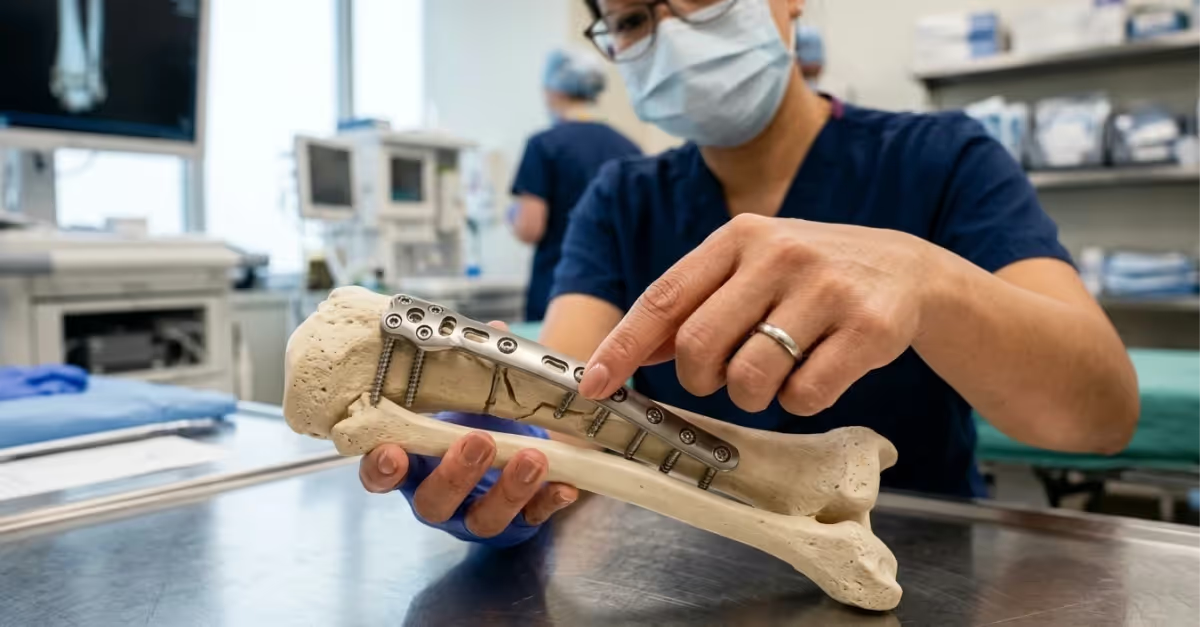
China’s National Medical Products Administration (NMPA) issued “Announcement of the National Medical Products Administration on the Release of 26 Medical Device Industry Standards Including ‘Bone Fixation Implant Devices – Metal Bone Plates’ (No. 24 of 2026)” on March 17, 2026. The announcement introduces a new set of medical device industry standards covering:
- Orthopedic implants
- Active medical devices
- In vitro diagnostics (IVD)
- Traditional Chinese medicine (TCM) devices
- Emerging technologies such as additive manufacturing and nanomaterials.
For overseas manufacturers seeking market access in China, the changes introduce clearer technical pathways while also raising expectations for product performance, clinical trial quality, and lifecycle risk management.
China Expands Its Medical Device Standards System
Several updates target established device sectors, including orthopedic implants and imaging equipment while others introduce first-time technical frameworks for emerging technologies and traditional Chinese medicine devices.
Stricter Technical Standards for Orthopedic Implants
One of the most significant areas of change concerns orthopedic implants, where several core product standards have been upgraded.
Mandatory standards such as YY 0017-2026 (metal bone plates), YY 0018-2026 (metal bone screws), YY 0118-2026 (hip joint prostheses), and YY 0502-2026 (knee joint prostheses) introduce stricter requirements covering materials, manufacturing processes, sterilization methods, and packaging specifications.
These standards are scheduled to take effect primarily between 2028 and 2029, providing a transitional period for manufacturers to update product designs, testing data, and regulatory registrations. Overseas manufacturers supplying orthopedic implants to China should therefore begin technical upgrades and registration adjustments well before these deadlines.
New Technical Benchmarks for Active Medical Devices
The new framework also strengthens technical standards for active medical devices, particularly in imaging and therapeutic equipment.
More detailed performance measurement methods are defined for standards including:
- YY/T 0750-2026 — ultrasound physiotherapy equipment
- YY/T 0479-2026 — X-ray tube assemblies
- YY/T 1625-2026 — mobile CT systems
These standards introduce clearer requirements for parameters such as sound fields, radiation fields, and imaging performance, establishing more precise technical benchmarks for device testing and registration in China.
Stronger Oversight of Clinical Trials and Medical Device Software
China’s updated standards also introduce stronger oversight of clinical trials and software risk management — two areas receiving increasing regulatory attention.
Two standards — “YY/T 0297-2026” and “YY/T 1998-2026” — introduce updated quality management requirements for clinical trials involving medical devices and IVD reagents. In parallel, the new standard “YY/T 1406-2026” establishes guidance on risk management across the medical device software lifecycle.
The clinical trial standards will apply beginning March 1, 2027, requiring manufacturers to ensure that study protocols, monitoring processes, and documentation align with the revised framework.
New Standards Address Emerging Medical Technologies
Several of the new standards address technologies that previously lacked dedicated technical frameworks within China’s medical device standards system.
Examples include:
- YY/T 1953-2026 — antibacterial performance of nanomedical devices
- YY/T 2008-2026 — additive manufacturing PEEK powder
- YY/T 2009-2026 — biodegradable magnesium-based metal implants
These standards establish performance testing methods and evaluation criteria for advanced materials and manufacturing technologies. Their introduction is intended to support the regulated entry of innovative medical devices into China while ensuring product safety and effectiveness.
First Structured Standards Series for Traditional Chinese Medicine Devices
The announcement also introduces a structured series of standards for devices used in traditional Chinese medicine.
New standards include:
- YY/T 2004.1-2026 — percussive skin needles
- YY/T 2005-2026 — small needle-knife devices
- YY/T 2006-2026 — electric cupping devices
Issuing these standards as a coordinated series represents a step toward the modernization and standardization of TCM medical devices.
Implementation Timeline for the New Standards
The 26 standards will be implemented in phases between 2027 and 2029, providing a transition period for manufacturers to update products and regulatory documentation.
Implementation schedule:
- March 1, 2027 — 22 standards
Primarily recommended standards (YY/T) covering clinical trials, IVDs, emerging technologies, and TCM devices. - March 1, 2028 — 2 standards
Mandatory standards (YY) for metal bone plates and bone screws. - March 1, 2029 — 2 standards
Mandatory standards (YY) for hip joint prostheses and knee joint prostheses.
This staggered timeline allows manufacturers time to evaluate technical changes and implement necessary product updates before mandatory requirements take effect.
What the New Standards Mean for Overseas Manufacturers
For foreign companies entering or operating in China’s medical device market, the new standards create both opportunities and compliance challenges.
On the opportunity side, the expanded standards system introduces clearer technical pathways for innovative technologies such as nanomaterials, additive manufacturing, and biodegradable implants. More standardized testing methods may also improve predictability during product evaluation and registration.
However, the standards also introduce higher regulatory expectations across several areas, including:
- Materials and manufacturing controls for orthopedic implants
- Performance testing for active imaging devices
- Clinical trial design and quality management
- Software lifecycle risk management
Key Compliance Steps for Manufacturers
Manufacturers seeking to maintain or expand market access in China should begin preparing for the new standards well before their effective dates. While the phased rollout between 2027 and 2029 provides a transition period, early preparation will help companies identify compliance gaps, adjust technical documentation, and plan any necessary regulatory updates.
Several practical steps can help manufacturers navigate the transition:
Conduct a Technical Gap Analysis
A structured review of existing product specifications, manufacturing processes, and testing data against the new standards should be the first priority. Particular attention should be paid to orthopedic implants, ultrasound equipment, and devices incorporating software components, where technical thresholds and testing expectations have been strengthened.
Review Clinical Trial Protocols
For companies planning clinical studies in China after 1 March 2027, trial protocols should be reviewed to ensure alignment with the updated quality requirements set out in YY/T 0297-2026 and YY/T 1998-2026. Early adjustments to study design and documentation can help prevent delays during clinical evaluation or product registration.
For practical guidance on planning clinical investigations in China, see Cisema’s article on building an effective China medical device clinical trial strategy.
Plan Registration Modifications
Products affected by revised mandatory standards — including metal bone plates, bone screws, and joint prostheses — may require registration amendments or re-registration before the 2028–2029 implementation deadlines. Manufacturers should begin evaluating whether additional testing, updated technical files, or regulatory submissions will be required.
Prepare Data for Emerging Technologies
Devices incorporating advanced materials or manufacturing techniques, such as nanomaterials, additive manufacturing, or biodegradable metals, will need to meet newly defined performance and testing requirements. Generating the necessary validation data early can help ensure a smoother technical review during the China registration process.
Preparing for China’s Next Phase of Medical Device Regulation
The introduction of 26 new medical device industry standards reflects China’s continued effort to modernize its regulatory framework and align more closely with international technical practices. While the phased implementation through 2029 allows time for adjustment, overseas manufacturers should begin assessing the impact now — particularly where stricter requirements apply to orthopedic implants, clinical trial quality management, and software risk control.
For many international companies, the challenge lies not only in understanding the technical changes but also in translating them into clear, workable compliance strategies within China’s regulatory system.
Bridging that gap often requires specialist regulatory expertise. With services spanning standards interpretation, regulatory gap analysis, China registration strategy planning, and guidance on software lifecycle risk management under “YY/T 1406-2026” and GB/T 42062 (ISO 14971), Cisema helps overseas manufacturers navigate evolving requirements while maintaining stable access to China’s medical device market.
For companies seeking support in assessing the impact of the new standards or preparing their China compliance strategy, contact the team at Cisema today.
Further Information
- Explore Cisema’s China medical device registration services to learn how overseas manufacturers can navigate the NMPA approval process with support for testing, documentation, and regulatory submissions.
- Learn more about Cisema’s China clinical trial services for medical devices and how companies can plan and manage clinical studies required for China market access.
- Read the article “Accelerating NMPA Approval: Building the Right China Medical Device Clinical Trial Strategy From Day 1” for practical insights on designing an effective clinical trial strategy for China medical device registration.
References
View the official NMPA announcement “Announcement of the National Medical Products Administration on the Release of 26 Medical Device Industry Standards Including ‘Bone Fixation Implant Devices – Metal Bone Plates’ (No. 24 of 2026).
Connect with Cisema
With more than 20 years of experience and a team of over 100 specialists, Cisema helps global companies achieve compliance across Asia Pacific with confidence and accelerate market entry.
Stay Informed with Monthly News and Analysis
Stay informed with the latest regulatory changes, expert insights, and market opportunities across APAC, delivered straight to your inbox.
Related News

Hong Kong Requires MDACS Listing for Injectable Dermal Fillers by March 1, 2027
New requirements could affect how injectable devices, including dermal fillers, are supplied in Hong Kong’s private healthcare sector.

China Enacts First Healthcare Security Law: Impact on Global Medtech
China’s new Healthcare Security Law affects medical device reimbursement, health economic evidence, payment models, and digital traceability from 2027.

Indonesia Mandates Pre-Shipment Halal Verification for Imported Products
BPJPH Regulation No. 4 of 2026 introduces pre-shipment halal verification and LPPH reports for imported goods starting September 2026.