
Published on
Last updated on
Toothpaste Testing Method for Hard Particles Added to China’s Cosmetic Safety Standards
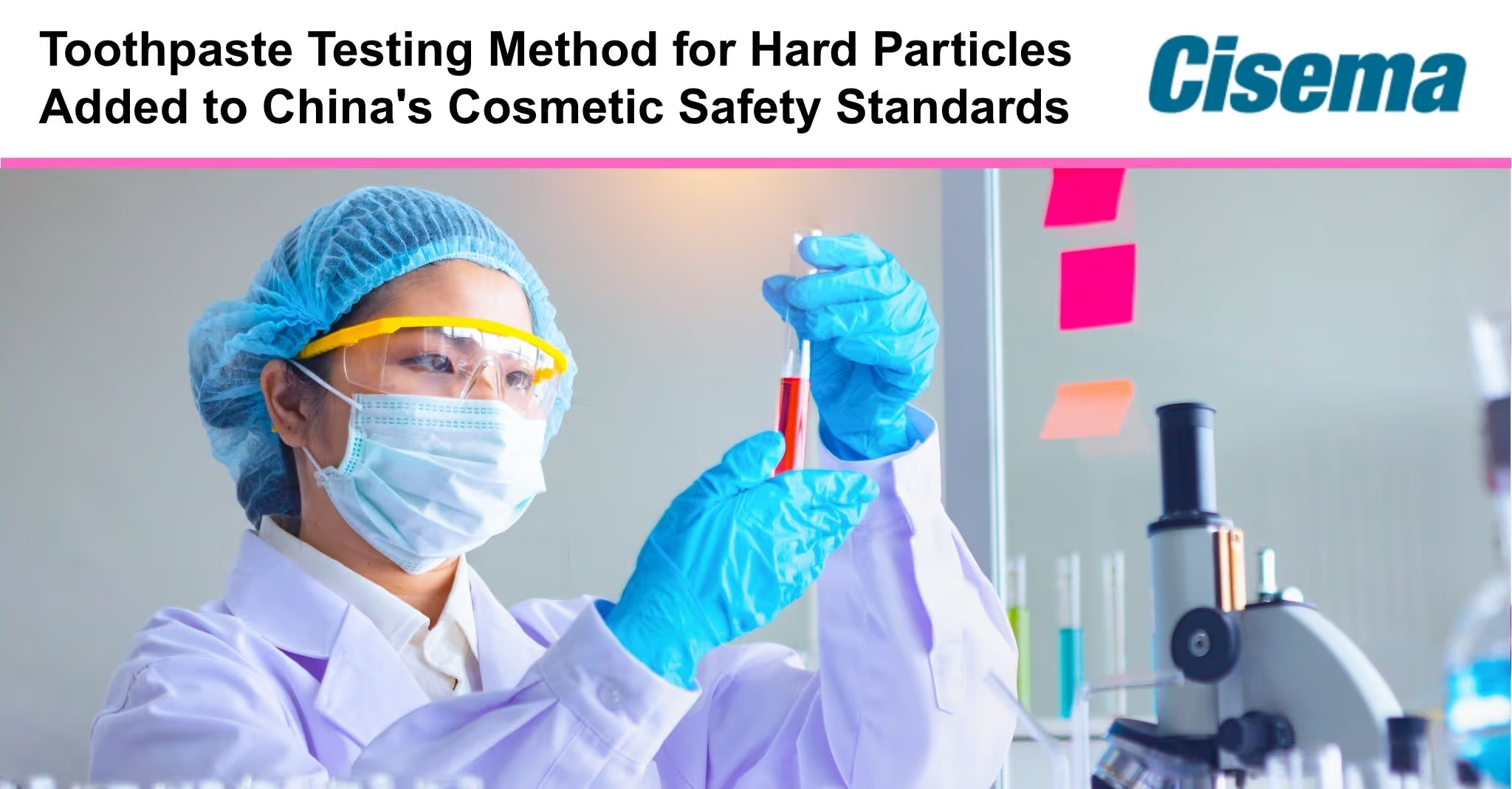
NMPA toothpaste testing method for hard particles added to China's cosmetic safety standards highlights the inclusion of seven new methods under the Technical Specifications for the Safety of Cosmetics (2015 Edition). On May 7, 2025, China's National Medical Products Administration (NMPA) issued Announcement No. 18 of 2025, declaring that these updates will come into effect on March 1, 2026.
Overview of the New Testing Methods
This update includes seven new testing methods, including the method for testing hard particles in toothpaste. These methods will be directly incorporated into the Technical Specifications for the Safety of Cosmetics (2015 Edition). These updates highlight China's increasingly strict regulation of cosmetic safety.
Implementation Date and Compliance Timeline
All newly added testing methods will take effect on March 1, 2026. From this date, all cosmetics registered, filed, and subject to sampling inspections in China must adopt these new testing methods. For international companies, this means that they need to adjust product formulations and production processes before the compliance deadline to ensure that their products meet the new testing standards.
Impact on International Companies
- Product Formulation Adjustments: Companies may need to re-evaluate and adjust product formulations to meet the new testing standards. In particular, products involving components such as hard particles in toothpaste may require formulation optimization.
- Quality Control Process Updates: Companies should update their quality control processes to ensure that products meet the new testing methods during production. This may involve updating laboratory equipment, training staff, and improving quality management systems.
- Registration and Filing Preparations: International companies planning to enter the Chinese market need to ensure that their products comply with the new testing methods and submit corresponding test reports during the registration and filing process. Companies already selling products in the Chinese market will need to re-evaluate existing products to ensure continued compliance.
Strategies for International Companies
- Keeping Up with Regulatory Changes: Closely monitor the latest regulations and guidelines issued by the National Medical Products Administration to ensure timely awareness of policy changes. Companies can stay informed by subscribing to official announcements, attending industry seminars, or collaborating with professional consulting firms.
- Conducting Internal Assessments: Conduct assessments of existing products to determine which may be affected by the new testing methods. Develop detailed rectification plans for affected products, including formulation adjustments and updates to quality control processes.
- Seeking Professional Support: Collaborate with professional regulatory consulting firms to obtain the latest regulatory interpretations and compliance recommendations. Professional firms like Cisema can provide regulatory consulting, registration and filing guidance, and optimization of quality control processes to help companies smoothly transition to the new regulatory requirements.
Evolution of China's Cosmetics Regulatory Framework
- Continuous Improvement of the Regulatory System: In recent years, China has continuously improved its regulatory system for cosmetics. From the Regulations on the Supervision and Administration of Cosmetics to the Technical Specifications for the Safety of Cosmetics (2015 Edition), and now the newly added testing methods, regulatory requirements have become increasingly strict and detailed.
- Alignment with International Standards: China is gradually aligning its cosmetics regulation with international standards. The newly added testing methods are similar to internationally accepted testing standards, reflecting China's trend towards internationalization in cosmetic safety regulation.
- Shift in Regulatory Focus: The regulatory focus is shifting from macro-management to micro-details, with greater emphasis on quality control and risk management throughout the entire product life cycle.
Further Information
To read the original announcement about the seven new cosmetic testing methods released by the National Medical Products Administration (NMPA), please click here.
If you are a cosmetics manufacturer with questions about how long it takes or how much it costs to comply with the new testing methods for the China market, please contact Cisema.
GET IN TOUCH
Connect with Cisema
With more than 20 years of experience and a team of over 100 specialists, Cisema helps global companies achieve compliance across Asia Pacific with confidence and accelerate market entry.
Stay Informed with Monthly News and Analysis
Stay informed with the latest regulatory changes, expert insights, and market opportunities across APAC, delivered straight to your inbox.
Related News
Hong Kong Requires MDACS Listing for Injectable Dermal Fillers by March 1, 2027
New requirements could affect how injectable devices, including dermal fillers, are supplied in Hong Kong’s private healthcare sector.

China Enacts First Healthcare Security Law: Impact on Global Medtech
China’s new Healthcare Security Law affects medical device reimbursement, health economic evidence, payment models, and digital traceability from 2027.
Indonesia Mandates Pre-Shipment Halal Verification for Imported Products
BPJPH Regulation No. 4 of 2026 introduces pre-shipment halal verification and LPPH reports for imported goods starting September 2026.