
Published on
Last updated on
China’s SAMR Mandates Hazardous Substances Regulations for Electrical and Electronic Products
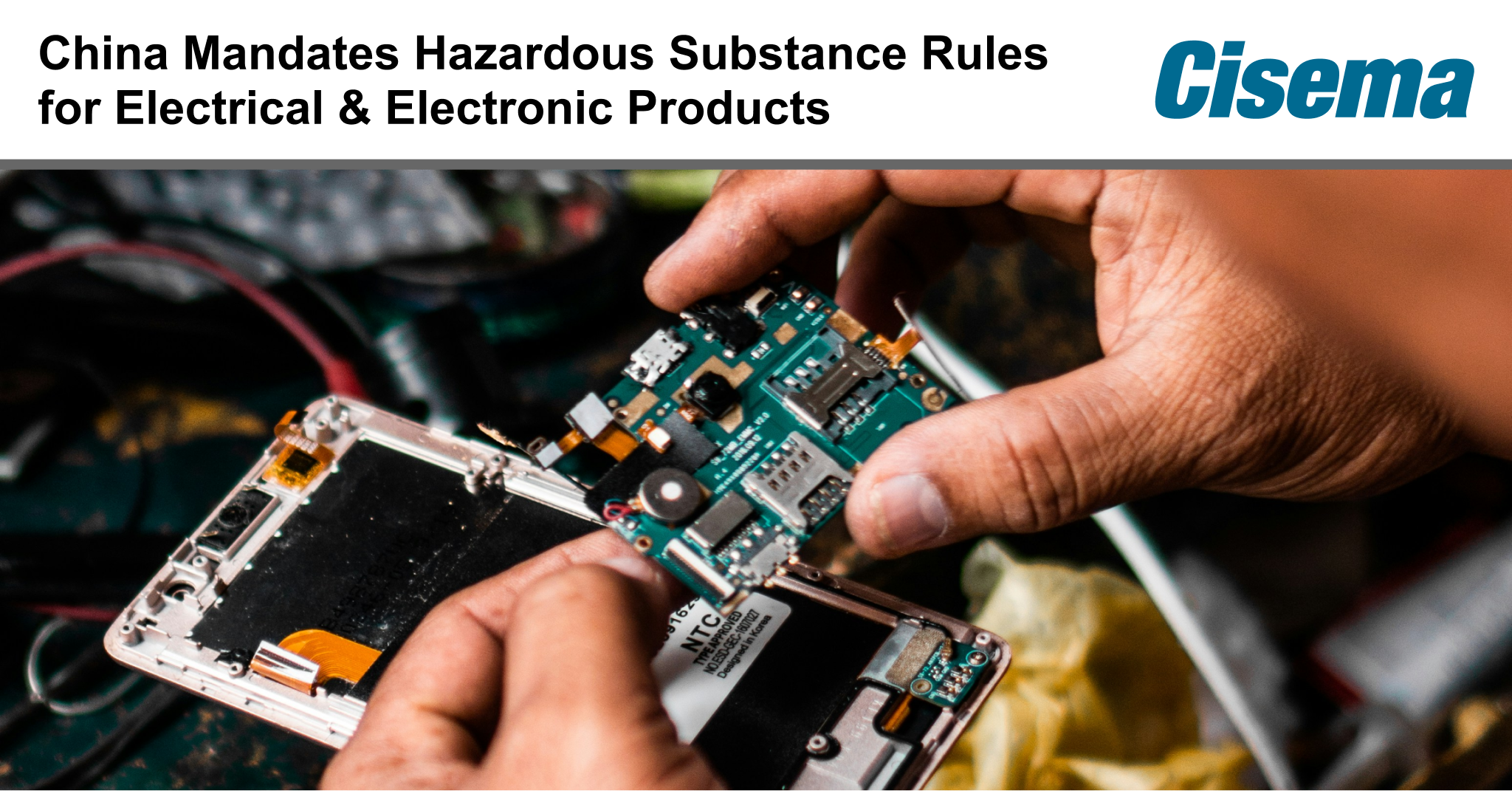
On 1 August 2025, the State Administration for Market Regulation (SAMR) announced significant updates to China’s hazardous substances regulations for electrical and electronic products as part of its push for sustainable development. The new mandatory standard, “Requirements for Restricting the Use of Hazardous Substances in Electrical and Electronic Products” (GB 26572-2025), will take effect on 1 August 2027, replacing the voluntary GB/T 26572-2011.
This update is significant because it makes compliance mandatory, expands the scope of restricted hazardous substances, introduces stricter conformity assessment requirements and brings China more closely in line with international environmental standards.
For manufacturers selling into China, understanding the new obligations and timelines will be essential to staying compliant and protecting market access.
A Brief History of “China RoHS”
China’s regulation of hazardous substances in electrical and electronic products dates back nearly two decades.
In 2006, the former Ministry of Information Industry (MIIT) introduced the “Administrative Measures for the Control of Pollution from Electronic Information Products” (commonly known as China RoHS 1.0). This regulation applied to “electronic information products” such as computers, mobile phones, televisions, and household appliances, and it was the first to promote source control of hazardous substances.
In 2016, MIIT, together with seven other ministries, launched the “Administrative Measures for the Restriction of the Use of Hazardous Substances in Electrical and Electronic Products” (also known as China RoHS 2.0). This expanded the scope from electronic information products to all electrical and electronic products, enforced through product catalogues and conformity assessments.
Key Features of GB 26572
GB 26572-2025 builds on existing environmental and product quality laws and applies across the full product lifecycle—from design and production to sale and recycling—creating a more integrated and enforceable compliance framework. By doing so, it brings China’s electrical and electronic industries into closer alignment with international sustainability practices.
The standard introduces four major updates that reshape obligations for manufacturers.
1. Expanded Restricted Substance List
The list of controlled substances grows from six to ten with the addition of four phthalates widely used as plasticisers. These substances enhance flexibility in plastics but carry risks to health and the environment. Manufacturers should now revisit sourcing for plastics, adhesives, and coatings to ensure compliance.
2. Refined Product Classification and Compliance Duties
Product classifications are refined to reflect risk.
- Category I products (e.g. household appliances) face stricter limits and mandatory conformity assessment.
- Category II products (e.g. medical devices) are not yet bound by the same limits but must disclose hazardous substances.
This tiered approach balances firm enforcement with gradual adaptation.
3. Modernised Testing and Labelling Measures
Testing aligns with IEC 62321, ensuring internationally comparable results. At the same time, digital labelling through QR codes and electronic displays gives consumers direct access to product information while reducing compliance costs, improving both transparency and consumer confidence.
4. Stricter Conformity Assessment
The regulation sets stricter requirements for the technical documentation supporting compliance declarations. Companies must:
- Retain records for three years after production ends.
- Ensure test reports cover high-risk components.
These measures discourage false claims and encourage more robust quality systems across procurement, production, and testing.
When GB 26572 2025 Takes Effect
Regulators recognise that industry needs time to adapt. Therefore, GB 26572-2025 adopts a phased approach.
- Phase 1 (August 2025 – August 2027): Companies will revise production processes, switch materials, and update labelling during this two-year transition period.
- Phase 2 (August 2027 – August 2028): Companies may continue selling existing inventory during this one-year grace period. After it ends, authorities will prohibit non-compliant products.
This phased design gives businesses predictability while advancing environmental and safety goals.
How to Stay Compliant with GB 26572 2025
Understanding the requirements and timeline is only the starting point. The challenge lies in how companies respond—particularly in the medical device sector, where regulatory expectations continue to evolve.
To succeed under GB 26572-2025, manufacturers should focus on three priorities:
1. Update Manuals and Hazardous Substance Disclosures
Manufacturers should begin by reviewing product documentation to ensure it is complete and compliant. Manuals for active medical devices must include hazardous substance disclosures and accurate labelling.
Updating these materials early will help ensure a smoother transition once the regulation takes effect.
2. Build Strong Compliance Records for Inspections
Clear documentation does not stop with manuals. Companies also need to preserve test reports, design drawings, and process documents in line with regulatory requirements. By maintaining strong records, manufacturers can stay ready for inspections.
3. Stay Alert to Future Regulatory Shifts
Even well-prepared companies must remain vigilant. Regulators may reclassify active medical devices as Category I products, which would impose stricter obligations. Monitoring developments closely and building flexibility into compliance systems allows manufacturers to adapt quickly and avoid disruption.
Your Path to Compliance and Market Success
With stricter substance controls, refined product classifications, and tougher conformity assessments under GB 26572-2025, navigating the complexities can strain internal resources. For international manufacturers, the risks are real: delays, non-compliance, or even loss of market access.
Cisema helps manufacturers address these challenges. With over 20 years of on-the-ground regulatory experience in China, we guide companies through every step of compliance. Get in touch today to secure your compliance strategy in China’s fast-moving market.
Further Information
Discover how Cisema can help your business with certification and compliance services in China.
References
Connect with Cisema
With more than 20 years of experience and a team of over 100 specialists, Cisema helps global companies achieve compliance across Asia Pacific with confidence and accelerate market entry.
Stay Informed with Monthly News and Analysis
Stay informed with the latest regulatory changes, expert insights, and market opportunities across APAC, delivered straight to your inbox.
Related News

Hong Kong Requires MDACS Listing for Injectable Dermal Fillers by March 1, 2027
New requirements could affect how injectable devices, including dermal fillers, are supplied in Hong Kong’s private healthcare sector.

China Enacts First Healthcare Security Law: Impact on Global Medtech
China’s new Healthcare Security Law affects medical device reimbursement, health economic evidence, payment models, and digital traceability from 2027.
Indonesia Mandates Pre-Shipment Halal Verification for Imported Products
BPJPH Regulation No. 4 of 2026 introduces pre-shipment halal verification and LPPH reports for imported goods starting September 2026.