
Published on
Last updated on
Important amendment to China's Pressure Vessel Directive (China Manufacturer License, CML)
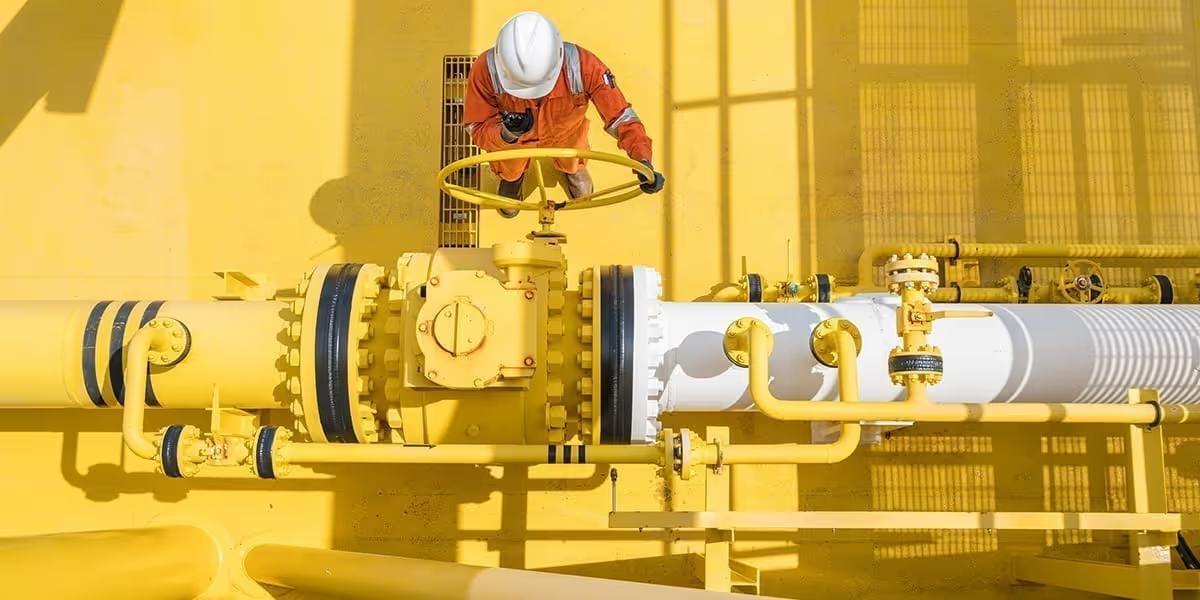
On 16.01.2019, the Chinese market supervisory authority SAMR (State Administration for Market Regulation of the Peoples Republic of China) published that "Pipes for Pressure Lines" and "Pressure Valves" are to be included in the catalogue for goods subject to licensing under the Chinese Manufacturer License (CML in short; similar to AD 2000 and ASME; also know as China SQL - China Safety Quality License).The changes will take effect on 01.06.2019.Until now, a Chinese type test report was sufficient to import pipelines for a pipeline or plant with pressure vessels to China. Once the revision comes into force, a valid China Manufacturer License from the China Special Equipment Licensing Office (SELO) and a Chinese type test report (also know as TS certificate) will be required for import and operation in China.Below you will find a rough overview of the upcoming changes as of 01.06.2019:Relevant goods for the China Manufacturer License (CML)Factory inspection required?Type test required?Stationary pressure vesselsYesNoBoilerYesYesMobile pressure vesselsYesYesPressure pipe (steel pipe: seamless, welded; non-metallic pipe)YesYes*Pressure pipe valve (metal valve)YesYes*Pressure pipe fittings (made of metal: seamless, folded, forged; made of polyethylene)YesYes*Safety-relevant special equipment (safety valve, bursting disc, emergency shut-off valve, valves for gas cylinders)YesYesGas cylinderYesYesOxygen chamberYesYesNon-metal valvesOfficial clarification is pendingOfficial clarification is pendingPressure pipe components other than pipe and valveNoYesElevatorNoYesHoisting machinesNoYesPassenger ropewayNoYesLarge entertainment facilityNoYesMotors for special applicationsNoYes*Until 01.06.2019 a type test report without a valid China Manufacturer License will be accepted for the import of goods into China. In our experience, such changes are subject to regular delays. On its part, we regularly observe that details for such implementation in China have not been sufficiently clarified by the time it comes into effect and that necessary standards and procedures have been updated or published by the official authorities in due time. Thus, it may happen that applications for individual cases of the above categories my currently not be processed in China.It should also not be neglected that the Chinese pool of inspectors for this area is limited and already represents a bottleneck. Therefore, waiting durations for a necessary inspection should not be underestimated
Connect with Cisema
With more than 20 years of experience and a team of over 100 specialists, Cisema helps global companies achieve compliance across Asia Pacific with confidence and accelerate market entry.
Stay Informed with Monthly News and Analysis
Stay informed with the latest regulatory changes, expert insights, and market opportunities across APAC, delivered straight to your inbox.
Related News

Hong Kong Requires MDACS Listing for Injectable Dermal Fillers by March 1, 2027
New requirements could affect how injectable devices, including dermal fillers, are supplied in Hong Kong’s private healthcare sector.

China Enacts First Healthcare Security Law: Impact on Global Medtech
China’s new Healthcare Security Law affects medical device reimbursement, health economic evidence, payment models, and digital traceability from 2027.
Indonesia Mandates Pre-Shipment Halal Verification for Imported Products
BPJPH Regulation No. 4 of 2026 introduces pre-shipment halal verification and LPPH reports for imported goods starting September 2026.