
Published on
Last updated on
Indonesia Mandates Pre-Shipment Halal Verification for Imported Products
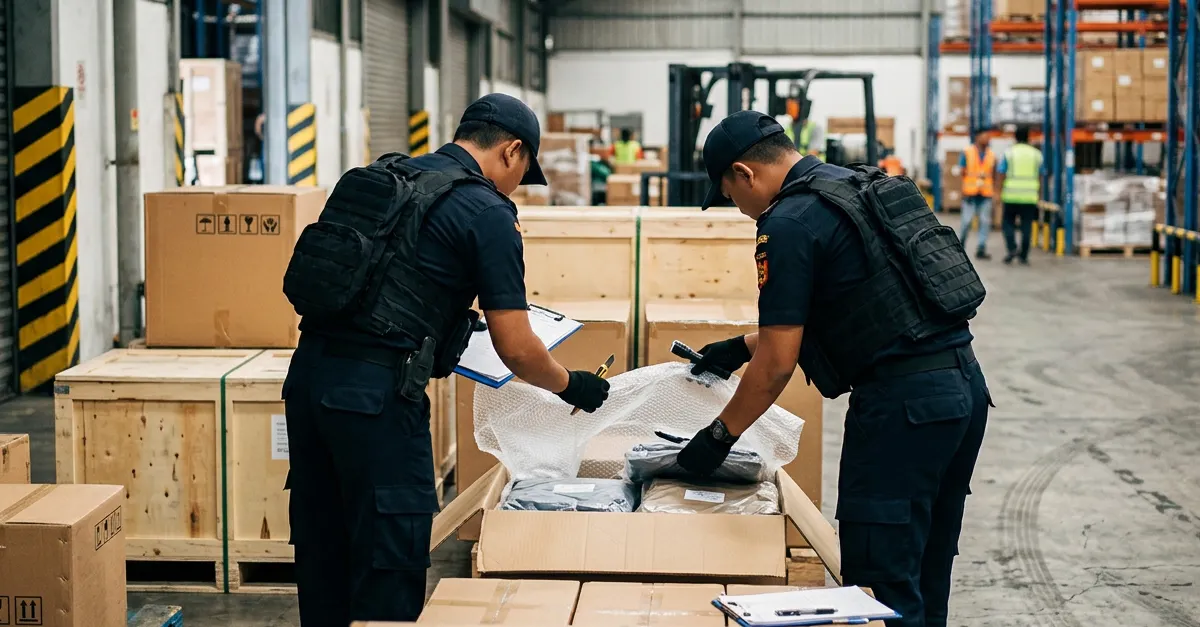
On August 10, 2026, Indonesia’s Halal Product Assurance Organizing Agency (BPJPH) promulgated Regulation No. 4 of 2026, “Ensuring the Suitability of Foreign Halal Products Entering Indonesian Territory.” Taking effect on September 9, 2026, the regulation introduces a significant new requirement: certain imported products must undergo halal conformity verification before leaving the country of origin.
For foreign manufacturers and Indonesian importers, this means certification, labeling, product data, and inspection requirements must be aligned before shipment.
framework, principally established by Law No. 33 of 2014, as amended by Law No. 6 of 2023, and Government Regulation No. 42 of 2024. Complementary measures issued in 2026 further address product classification, certification, non-halal labeling, pre-shipment verification, and customs integrationlab.
Regulatory Context
Under Indonesia’s national framework, products entering, circulating, and traded in Indonesia must comply with halal requirements, subject to specific exemptions.
Several measures issued in 2026 now shape the import compliance regime:
The framework covers a broad range of products, including food and beverages, medicines, cosmetics, biological products, chemicals, genetically engineered products, and other consumer goods. However, deadlines vary by product category.
Notably, compliance guidance from the Directorate General of Customs and Excise (DJBC) highlights October 17, 2026, as the crucial deadline for mandatory halal certification specifically covering:
- Imported food
- Beverages
- Slaughtered products
- Slaughtering services
Companies importing cosmetics, health supplements, or other regulated products should assess the timeline applicable to their specific category.
New Pre-Shipment Halal Verification (BPJPH Regulation No. 4 of 2026)
Under BPJPH Regulation No. 4 of 2026, products subject to mandatory halal certification must undergo conformity verification before the importer submits its customs declaration in Indonesia, subject to the regulation’s exemptions.
The verification is conducted by BPJPH-appointed inspection bodies at the loading warehouse in the country of origin or shipment and combines physical and documentary checks.
Key areas include:
- Administrative documentation, including Material Safety Data Sheets (MSDS), Certificates of Analysis (CoA), and Certificates of Origin (CoO) where applicable
- Product identification against the halal certificate or SHLN registration;
- Validation of the halal certificate or registration number on the packaging;
- Harmonized System (HS) codes, quantities, production codes, and production dates
- Correct halal or non-halal labeling
- Mitigation of contamination risks between halal and non-halal goods
- Verification of slaughtering details for halal meat items
This makes pre-export coordination critical. Foreign manufacturers and Indonesian importers will need to build inspection and verification into their shipment planning rather than treating halal compliance as a customs-stage issue.
How Long Does Halal Verification Take?
Once BPJPH receives payment, Regulation No. 4 of 2026 provides the following timeline:
- Scheduling: The importer or exporter must submit preferred inspection dates within 30 calendar days of payment.
- Execution: The appointed inspection body must complete the conformity assessment within 15 calendar days of receiving the schedule.
- Extension: An extension of up to 15 additional calendar days may be requested if complex verification warrants extra time.
LPPH Report and Customs Documentation
After verification, the inspection body issues a Laporan Pemastian Produk Halal (LPPH), a conformity report valid for a single shipment. The importer must attach the LPPH to its import customs declaration (Pemberitahuan Pabean Impor, or PPI).
DJBC uses two electronic document codes for the relevant halal documentation:
- Document Code 952: Foreign Halal Certificate or Foreign Halal Certificate Registration (RSHLN)
- Document Code 953: LPPH Verification Report
Halal Imports and LARTAS Status
DJBC confirms that halal import controls are not classified as Larangan dan Pembatasan (LARTAS), Indonesia’s formal import prohibition and restriction regime. Halal verification therefore does not operate as an automatic border block.
However, Documents 952 and 953 feed into BPJPH’s compliance database, supporting post-border enforcement and market surveillance. Customs clearance therefore does not eliminate the importer’s ongoing halal compliance obligations.
What Must Importers Submit?
Applications for conformity assurance are made through Indonesia’s Integrated Electronic System and require:
- A valid Business Identification Number (NIB) acting as an Importer Identification Number (API)
- Company Tax ID (NPWP)
- A valid Halal Certificate/RSHLN, or product packaging displaying an approved Non-Halal Statement
- List of products to be imported alongside their specific HS codes
- Purchase orders and sales documentation detailing product specifications
- A formal declaration confirming document validity and accuracy
- Power of attorney (where applicable) and selection of an appointed inspection body
Non-Halal Labeling Requirements (BPJPH Regulation No. 3 of 2026)
BPJPH Regulation No. 3 of 2026, promulgated on July 13, 2026, establishes labeling requirements for products derived from prohibited (haram) materials. Such products do not need halal certification, but they must clearly identify themselves as non-halal.
Products already on the market before the regulation was promulgated have a 12-month grace period to update their packaging. The required statements must be indelible, clear, and prominently displayed on the outermost packaging layer received by consumers.
The permitted statements include:
- “MENGANDUNG BABI”, accompanied by the standardized pig icon, primarily for food and products containing pork-derived materials.
- “NON HALAL” for non-food products, health supplements, cosmetics, chemicals, and other consumer goods meeting non-halal criteria.
The framework therefore creates three distinct compliance pathways:
- Halal-certified products: subject to mandatory certification where applicable.
- Products containing prohibited materials: exempt from halal certification but subject to mandatory non-halal labeling.
- Specified exempt raw materials: exempt from certification under applicable ministerial provisions and not necessarily subject to consumer-facing non-halal labeling.
Administrative Sanctions for Non-Compliance
To enforce the 2026 framework, BPJPH maintains an active monitoring regime to address non-compliant import flows. Under BPJPH Regulation No. 2 of 2026 on The Imposition of Administrative Sanctions for Violations of Halal Product Assurance, sanctions are tiered based on the nature and severity of the violation:
- Appointed Inspection Bodies: Subject to formal written warnings, operational suspension, or permanent revocation of their inspection authority.
- Importers and Foreign Business Actors: Subject to written warnings, administrative revocation of Halal Certificates or SHLN registration numbers, mandatory market recall orders, and public destruction of non-compliant goods.
What Should Foreign Manufacturers and Importers Do?
To avoid costly customs holds or market recalls, foreign manufacturers and Indonesian importers should follow these five essential action steps:
1. Verify Your Product's Halal Status & Classification
Determine whether your finished product requires mandatory certification, qualifies for non-halal labeling, or falls under an exempt category.
2. Audit Packaging & Labeling Requirements
Ensure your packaging accurately displays either a valid halal logo or a compliant Non-Halal Statement on the outermost consumer-facing layer before export.
3. Align Trade & Certification Data
Cross-check all shipping manifests, purchase orders, and customs filings against your foreign halal certificate or SHLN registration. Product descriptions, HS codes, production dates, and batch quantities must match across every document.
4. Coordinate Pre-Shipment Conformity Assessments
Work closely with your Indonesian importer to schedule warehouse inspections with a BPJPH-appointed inspection body in the exporting country. Build at least 15 to 30 calendar days into your operational timeline post-payment to accommodate scheduling and verification before departure.
5. Integrate Documentation into Customs Clearance
Verify that your importer submits the Foreign Halal Certificate/RSHLN under Document Code 952 and the issued LPPH conformity report under Document Code 953 when filing the import customs declaration (PPI).
Final Thoughts
The addition of pre-shipment verification under BPJPH Regulation No. 4 of 2026 represents a structural shift where Indonesia’s 2026 halal regime is becoming more integrated — and more operationally demanding.
For overseas suppliers, navigating multi-tiered packaging rules, technical category assessments, and origin warehouse inspections presents real operational risks. Unprepared businesses risk shipping delays, customs holds, or market recalls.
At Cisema, we specialize in helping international businesses navigate Indonesia’s complex regulatory landscape. From SHLN registrations and BPJPH category evaluations to customs documentation alignment, our regulatory team ensures your products meet all compliance hurdles smoothly before leaving port.
For support with your halal compliance, BPJPH registration, and product regulatory strategy in Indonesia, contact Cisema today.
Further Information
- Explore Cisema’s services for medical device registration in Indonesia.
- Learn more about Cisema’s services for cosmetics registration in Indonesia.
Read more about Halal Compliance in Indonesia:
- Key Requirements for Indonesia Halal Medical Devices: What Manufacturers & Importers Need to Know
- What Is Indonesia Halal Certification for Health Supplements? What Manufacturers & Importers Need to Know
- Understanding Indonesia Halal Cosmetic Certification Requirements
- Is a Foreign Halal Certificate Valid in Indonesia? Requirements Explained
References
- BPJPH Regulation No. 2 of 2026 on The Imposition of Administrative Sanctions for Violations of Halal Product Assurance
- BPJPH Regulation No. 3 of 2026 on the Form and Procedure for the Inclusion of Non-Halal Statements
- BPJPH Regulation No. 4 of 2026 on the Assurance of Conformity of Foreign Halal Products Entering Indonesia
- Directorate General of Customs and Excise (DJBC) Guidance (2026) on Import Customs Integration for Halal Compliance (Document Codes 952 & 953)
- Government Regulation No. 42 of 2024 on the Implementation of Halal Product Assurance
- Law No. 33 of 2014 on Halal Product Assurance (as amended by Law No. 6 of 2023)
Connect with Cisema
With more than 20 years of experience and a team of over 100 specialists, Cisema helps global companies achieve compliance across Asia Pacific with confidence and accelerate market entry.
Stay Informed with Monthly News and Analysis
Stay informed with the latest regulatory changes, expert insights, and market opportunities across APAC, delivered straight to your inbox.
Related News

China Enacts First Healthcare Security Law: Impact on Global Medtech
China’s new Healthcare Security Law affects medical device reimbursement, health economic evidence, payment models, and digital traceability from 2027.
Indonesia Mandates Pre-Shipment Halal Verification for Imported Products
BPJPH Regulation No. 4 of 2026 introduces pre-shipment halal verification and LPPH reports for imported goods starting September 2026.

China Issues New Compliance Guidelines for Online Veterinary Drug Sales
New CVDA guidelines provide detailed guidance for online veterinary drug sellers and platforms, covering licensing, imports, labeling, prescriptions, and traceability.