
Published on
Last updated on
Indonesia Updates Registration Timelines for Medical Devices & IVDs
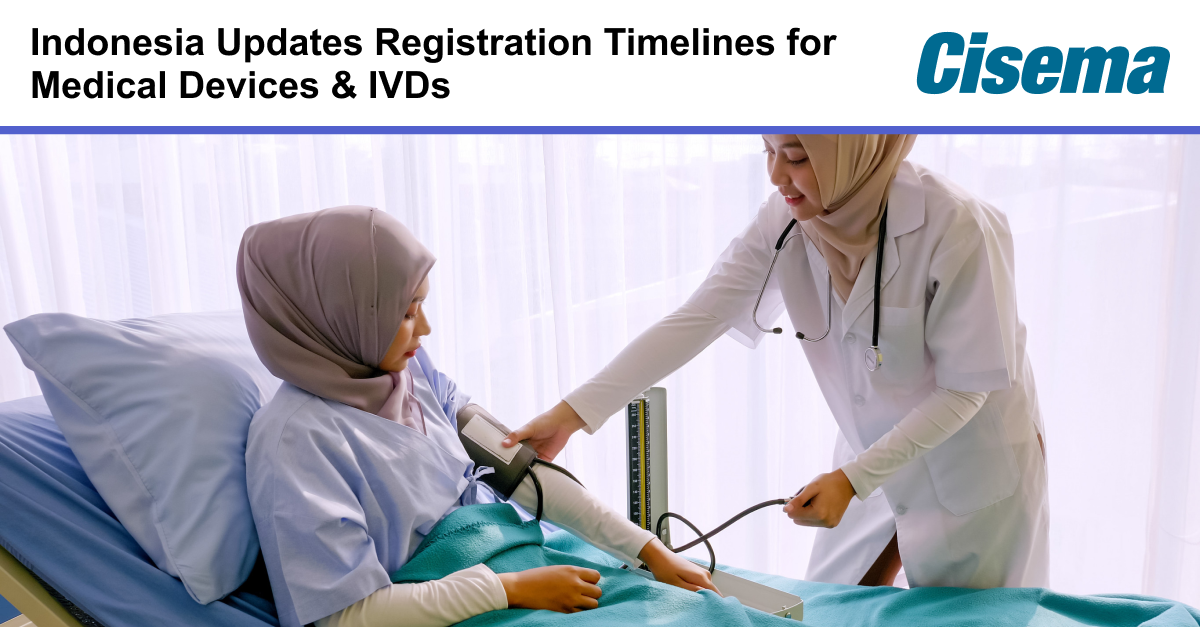
Indonesia’s Ministry of Health has introduced revised evaluation timelines for medical devices, IVDs, and household health product registration under Permenkes No. 11 of 2025. These updates replace the earlier framework defined in Permenkes No. 62 of 2017 and align the approval process with the country’s risk-based business licensing system (OSS-RBA).
The revised structure reflects the government’s ongoing efforts to improve data integrity, enhance traceability, and strengthen regulatory harmonization across the healthcare sector.
Although Permenkes 11/2025 is now in effect, the Regalkes Indonesia platform has not fully updated and may not yet show the revised timelines.
How Long Will Approvals Take Under the New Regulation?
One of the most notable changes in the new regulation is the extension of evaluation timelines across most application types. These longer review periods aim to support more comprehensive assessments by the Ministry of Health, but applicants should expect a longer overall registration process compared with the previous regulatory framework.
The table below compares official evaluation timelines, helping applicants anticipate processing durations under the updated Indonesia medical device approval system.
Official Evaluation Timelines: Previous vs. Revised
Estimated End-to-End Approval Timelines: Previous vs. Revised
While the official timelines define the core evaluation phase, the total approval timeframe — from dossier submission to license issuance — depends on several additional factors. These may include dossier quality, the number of review cycles required, and technical synchronization between the OSS-RBA platform and the Ministry of Health’s internal systems.
Because of these variables, end-to-end approval times often extend beyond the statutory evaluation windows. The following table illustrates how total processing times have shifted under Permenkes 11/2025.
Key Features of the Updated Medical Device Registration Framework
In addition to revised timelines, Permenkes 11/2025 introduces several procedural updates that directly affect the submission and review process for medical device and IVD registration.
Key features include:
- Reviews are conducted through OSS or integrated platforms such as Regalkes
- Two correction rounds now permitted, each up to 10 working days (15 for Class D)
- Potential for expedited review of priority or public health–related products
- Integrated coordination among MoH, the National Agency of Drug and Food Control (BPOM), and the National Public Procurement Agency (LKPP) enhances product tracking and traceability
Impact on Foreign Manufacturers and Importers
For foreign manufacturers and Authorized Representatives, the updated framework offers clearer expectations but also results in longer medical device approval timelines in Indonesia. These extended timelines may affect market entry planning, product launch schedules, and inventory management. Therefore, planning and submission strategies should adjust accordingly.
To help prevent delays and avoid repeated correction rounds, applicants are advised to:
- Prepare complete, verified, and internally aligned documentation before initial submission
- Build in additional lead time, especially for Class B, C, and D medical device submissions with longer timelines
Manufacturers navigating Indonesia’s evolving regulatory landscape may wish to seek expert support to ensure compliance and minimize delays.
For guidance on navigating Indonesia’s medical device and IVD registration requirements, preparing compliant dossiers, and managing submissions, contact Cisema today for expert regulatory support.
Further Information
Discover how Cisema can support your medical device & IVD registration in Indonesia
References
- View Permenkes No. 62/2017 — Distribution License of Medical Devices, In Vitro Diagnostic Devices, and Household Health Supplies
- Read Permenkes No. 11/2025 — Standards for Business Activities and Products/Services in the Health Subsector
Connect with Cisema
With more than 20 years of experience and a team of over 100 specialists, Cisema helps global companies achieve compliance across Asia Pacific with confidence and accelerate market entry.
Stay Informed with Monthly News and Analysis
Stay informed with the latest regulatory changes, expert insights, and market opportunities across APAC, delivered straight to your inbox.
Related News

Hong Kong Requires MDACS Listing for Injectable Dermal Fillers by March 1, 2027
New requirements could affect how injectable devices, including dermal fillers, are supplied in Hong Kong’s private healthcare sector.

China Enacts First Healthcare Security Law: Impact on Global Medtech
China’s new Healthcare Security Law affects medical device reimbursement, health economic evidence, payment models, and digital traceability from 2027.
Indonesia Mandates Pre-Shipment Halal Verification for Imported Products
BPJPH Regulation No. 4 of 2026 introduces pre-shipment halal verification and LPPH reports for imported goods starting September 2026.