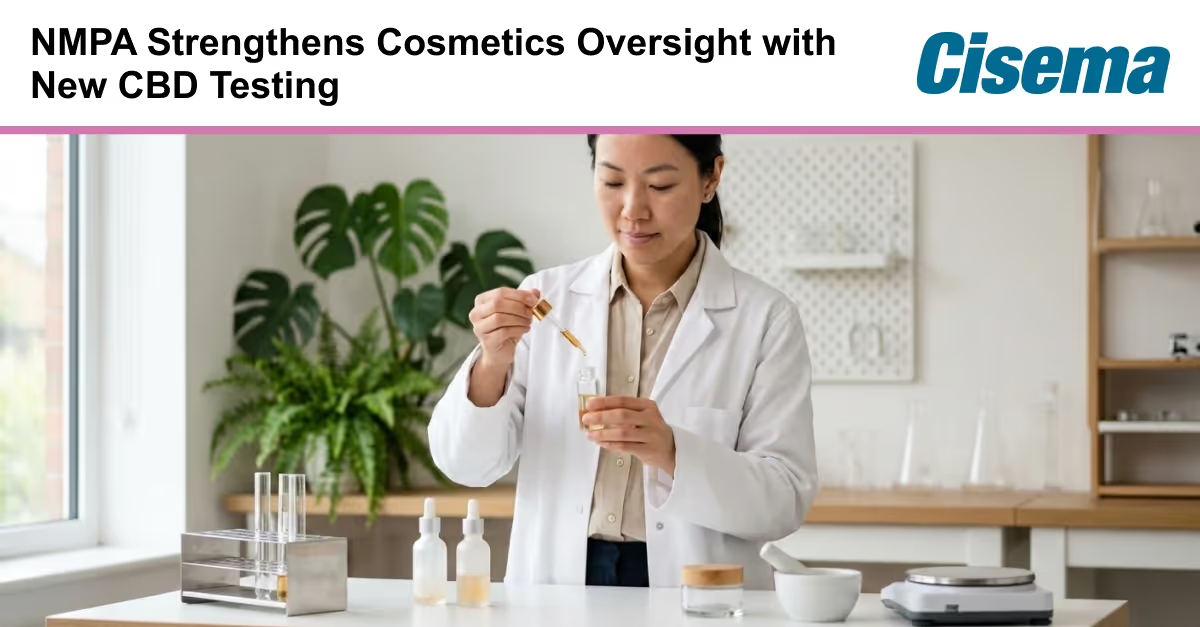
The NIFDC released 7 technical draft proposals for detecting chemical agents and the evaluation of efficacy claims in cosmetic products in China.

The NMPA announced various updates regarding soap, toothpaste, hair removal, hair growth, breast beauty, body slimming and deodorizing products.

The SAMR addressed the basic requirements for registration and filing management of cosmetics and new cosmetic ingredients in China to begin on May 1, 2021.

China RF Therapy Device classification clarification has been published by the NMPA. This notice is subject to medical device legislation.

From July 1, 2025, international cosmetic manufacturers must comply with five new testing methods in China under updated NMPA regulations.

In 2025, National Medical Products Administration (NMPA) issued the "Several Provisions on Supporting Innovation in Cosmetic Ingredients...

On 05.02.2018, the NIFDC (National Institutes for Food and Drug Control) – a unit under the NMPA (China Food and Drug Administration) – published a draft on two alternatives to animal testing: One for skin and one for eye irritation. The draft was open for public comment until 15.02.2018 and clearly indicates a major step towards the improvement of China’s technical cosmetics regulations and the replacement of animal testing in the future.

Before November 2018, foreign manufacturers had to the choose between NMPA Registration in Beijing or Filing in the 11 Pilot New Trade Zones

On 22.11.2019, China's NMPA (National Medical Products Administration) announced a draft regulation concerning overseas inspection for cosmetic products, and launched the public consultation to receive feedback.According to the proposed regulation, it aims to introduce, standardize and optimize the inspection process. Once adopted, inspections on foreign manufacturers are required to be conducted by Chinese authorities from NMPA, which includes on-site inspections for any overseas facilities involved with the manufacturing process of cosmetic products that are intended to be sold in the China market.China NMPA will continue to solicit public opinions until 22.12.2019.

On 06.11.2019, the China NDRC (National Development and Reform Commission) announced (No.20-2019) the prohibition of daily chemical articles containing plastic microbeads for production after December 31, 2020, and for sale after December 31, 2022.Microbeads are small plastic particles, mostly included in cosmetic and cleaning products, and are known to cause water pollution to the marine and freshwater environments. Currently, 14 states have already taken action towards the ban on microbeads. Although the details of the ban for production and sales in China is still subject to further refinement, brands and manufacturers are expected to reformulate their products containing microbeads, while some have already replaced microbeads with natural abrasives as an alternative in daily chemical articles.The announcement (No.20-2019) is based on the Industrial Structure Adjustment Guidance Catalogue (2019 Edition) that was approved at the 2nd committee meeting on 27.08.2019, and has replaced the 2011 version since 01.01.2020.

On June 29, 2020, China’s State Council announced the implementation of the new regulation for CSAR (Cosmetics Supervision and Administration), which will become effective on January 1, 2021.
Major changes
Background

The definition of cosmetics

Classification of Cosmetics

Note: Registered products with functions for hair growing, depilatories, breast enhancement, body slimming, and deodorants will no longer be classified as special cosmetics after a 5-year transition period.
Classification of Cosmetic Ingredients

Note: After the registration / filing of new ingredients, the registrant / filer should report the current status of consumer use and safety to the NMPA annually for 3 consecutive years. If any safety issues should occur during these three years, the registration / filing will be cancelled, otherwise, the new ingredient will be included in the list of used ingredients (IECIC, also known as Inventory of Existing Cosmetic Ingredients in China).
Toothpaste management

Note: According to the China Oral Care Industry Association’s announcement on July 2, 2020, toothpaste products are not considered as cosmetics. Further information will be disclosed by the NMPA.
Soap management

Requirements for registrants and filers

Penalties for violations

By Jacky Li. Contact Cisema if you would like to learn more.

The NIFDC has released new guidelines for cosmetic packaging compatibility testing. Other guidelines were released together on July 8, 2024.
And discover how we can support you in getting your products certified for China.