
Published on
Last updated on
China Overhauls CCC Standards for Toys & Children's Vehicles with Strict Chemical & Physical Requirements
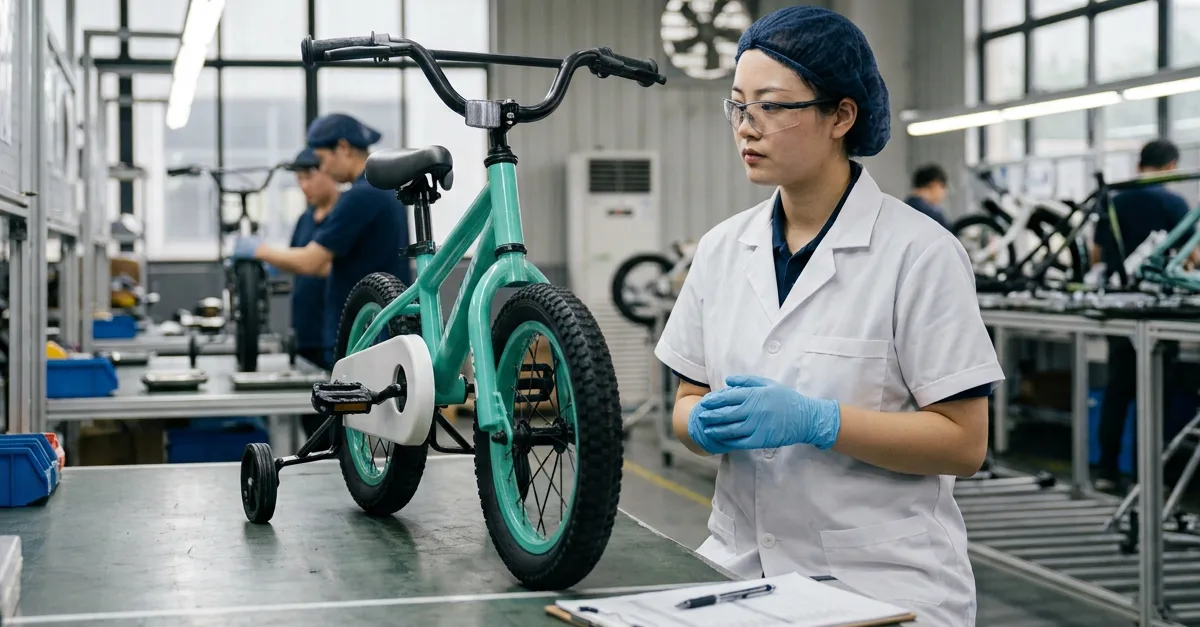
On July 7, 2026, the Technical Expert Group of the Certification and Accreditation Administration of China (CNCA) issued the "Technical Resolution on the Revision of Standards Used for Mandatory Product Certification of Children's Products and Related Certification Implementation" (TC21-2026-02), significantly updating the technical standards underpinning China's Mandatory Product Certification (CCC) framework for toys, children's bicycles, tricycles, strollers, and baby walkers.
Key changes include:
- Expanded chemical restrictions, introducing new limits for hazardous substances across toys and children's vehicles.
- Enhanced mechanical and physical safety requirements, aligned more closely with international standards.
- Strengthened labeling and documentation obligations, requiring updated warnings, instructions, and product information.
These changes will be phased in over a 13-month transition period ending November 30, 2027. For products manufactured or imported in accordance with the superseded standards prior to this date, compliance with the new standards shall be mandatory beginning December 1, 2027.
This resolution follows the joint publication of the 2025 editions of the GB 6675 Toy Safety Standards by SAMR and SAC, alongside revised standards for children's ride-on and child-care products under CNCA Announcement No. 8 of 2026.
Revised Standards and Implementation Rules
Eight standards have been revised simultaneously, covering both toy safety and children's vehicles. These revised standards and implementation rules take effect on November 1, 2026, and all new CCC certification applications must be processed in accordance with the revised rules and standards. Between the publication date of the updated implementation rules and their effective date, applicants may voluntarily choose to apply for certification based on either the new or the current versions of the rules.
The revised standards for the updated CCC implementation rules for Toy & Children’s Vehicle Products include:
Toy Safety
- GB 6675.1–2025 — Basic Requirements
- GB 6675.2–2025 — Mechanical and Physical Properties
- GB 6675.3–2025 — Flammability
- GB 6675.4–2025 — Migration of Certain Elements
Children’s Vehicles
- GB/T 14746–2025 — Bicycles
- GB/T 14747–2025 — Tricycles
- GB/T 14748–2025 — Strollers
- GB/T 14749–2025 — Baby Walkers
Note: Although the children's vehicle standards have been redesignated as recommended national standards (GB/T), compliance with their technical requirements remains mandatory for CCC certification under the trial implementation rules CNCA-C22-01:2026 and CNCA-C22-02:2026.
Key Deadlines & Compliance
- Certificate Updates: Existing certificates issued under superseded standards must be updated by the deadline specified in document TC21-2026-02. Non-compliant certificates will be suspended or revoked per regulatory guidelines.
- Market Grace Period: Products manufactured or imported before November 1, 2026, may remain on the market until November 30, 2027. Beginning December 1, 2027, all products available on the market must fully conform to the new standards.
Significant Expansion of Chemical Safety Requirements
While previous regulations primarily focused on eight migratable elements and six phthalate plasticizers, the revised standards expand existing limits:
- Migratable elements: Boron is added, increasing the total from 8 to 9.
- Plasticizers: The list of restricted phthalates is expanded from 6 to 10, with revised scopes of application.
Additionally, several new substances are now regulated:
- Formaldehyde and Total Volatile Organic Compounds (TVOCs)
- Cleavable hazardous aromatic amine dyes
- Polycyclic Aromatic Hydrocarbons (PAHs)
- N-nitrosamines
- Short-Chain Chlorinated Paraffins (SCCPs)
- Sensitizing fragrances
- Formamide (in foamed materials)
This expansion is particularly impactful for children's bicycles, strollers, tricycles, and baby walkers, which previously faced comparatively limited chemical requirements and must now comply with a broad spectrum of new substance restrictions.
Enhanced Mechanical, Physical, and Labeling Mandates
The revised standards also modernize mechanical and physical safety requirements, bringing them closer to internationally recognized standards such as EN 71-1:2014 and ISO 8124-1:2022.
Key updates include:
Toy Design and Physical Safety
Updated requirements for toy gun markings, moving away from subjective imitation firearm definitions and enforcing strict structural rules.
GB 6675.1-2025 removes the 2014 edition’s requirements prohibiting black, grey-black, and metallic-look finishes and mandating that bright colors cover at least 50% of the surface area. It replaces them with a flexible compliance criterion: toy firearms must now meet either the requirement for a structure clearly distinguishable from real firearms, or the requirement to utilize bright colors for identification and/or manufacturing), alongside expanded safety requirements for projectile and flying toys.
New Hazard-Specific Requirements
Additional provisions addressing yo-yos, chin entrapment hazards, inflatable toys, food-contact toys, sound level limits, cord lengths, expanding materials, plastic films, and assembly instructions.
Enhanced Labeling and User Information
Mandatory ingredient disclosures for toy cosmetics, additional warning statements for products packaged alongside food, and expanded user instructions across multiple product categories.
Recommended Actions for Manufacturers and Importers
With the transition clock ticking, brands must move quickly to evaluate compliance gaps and prevent costly logistical bottlenecks.
Recommended actions include:
Obtain and Review Standards
Procure official editions of GB 6675.1–6675.4:2025 and GB/T 14746–14749:2025 immediately. Task your quality, compliance, and R&D teams with executing a comprehensive, clause-by-clause gap analysis against legacy versions to isolate every modified technical parameter. Partnering with compliance specialists like Cisema can help fast-track this gap analysis for your specific product portfolio
Identify Testing Requirements
Cross-reference the Technical Resolution's specific mandates against current product designs to isolate where mandatory supplementary testing is triggered. Draft prioritized, category-specific testing protocols that target high-risk modifications first.
Verify Supply Chain Inputs
Manufacturers should conduct a detailed review of their bills of materials (BOMs) to identify potential sources of newly restricted substances. This includes obtaining declarations of conformity, reviewing supplier test reports, and arranging pre-compliance testing with accredited laboratories where necessary.
Early supplier engagement will be critical to prevent disruptions caused by non-compliant materials or components.
Schedule Priority Testing
Companies should reserve testing capacity with designated CCC certification bodies as early as possible. A phased testing and submission plan can help avoid potential bottlenecks and ensure existing CCC certificates are updated before the November 30, 2027, transition deadline.
Update Documentation & Labels
Manufacturers must update all regulatory and customer-facing materials, including packaging, user manuals, e-commerce content, and warning labels, to reflect the revised Chinese-language safety information, labeling requirements, and technical specifications.
Final Thoughts
The simultaneous overhaul of eight national standards for toys and children's products marks a decisive shift in China's regulatory landscape. By raising domestic requirements to match international safety benchmarks, authorities are stepping up consumer protection while demanding much higher technical rigor from global suppliers.
The primary challenge lies in managing complex chemical screening and extensive mechanical re-testing across existing product portfolios within tight transitional timeframes. To ensure a seamless transition and protect your market access, consider consulting with regulatory experts like Cisema to evaluate your compliance strategy and manage your CCC updates. With end-to-end regulatory support, Cisema helps international manufacturers navigate these mandatory certification changes and successfully adapt to evolving Chinese requirements.
Don't wait until the deadline is looming. If your products are affected by these new requirements, contact Cisema today to discuss your compliance strategy and build a CCC update plan.
Further Information
- Explore Cisema’s services for CCC.
- China Issues Trial CCC Implementation Rules for Electric Bicycles, Stroller Products, & Toys
References
Connect with Cisema
With more than 20 years of experience and a team of over 100 specialists, Cisema helps global companies achieve compliance across Asia Pacific with confidence and accelerate market entry.
Stay Informed with Monthly News and Analysis
Stay informed with the latest regulatory changes, expert insights, and market opportunities across APAC, delivered straight to your inbox.
Related News

Hong Kong Requires MDACS Listing for Injectable Dermal Fillers by March 1, 2027
New requirements could affect how injectable devices, including dermal fillers, are supplied in Hong Kong’s private healthcare sector.

China Enacts First Healthcare Security Law: Impact on Global Medtech
China’s new Healthcare Security Law affects medical device reimbursement, health economic evidence, payment models, and digital traceability from 2027.
Indonesia Mandates Pre-Shipment Halal Verification for Imported Products
BPJPH Regulation No. 4 of 2026 introduces pre-shipment halal verification and LPPH reports for imported goods starting September 2026.