
Published on
Last updated on
China Issues Clinical Trial Guidance for Implantable Brain-Computer Interface Systems
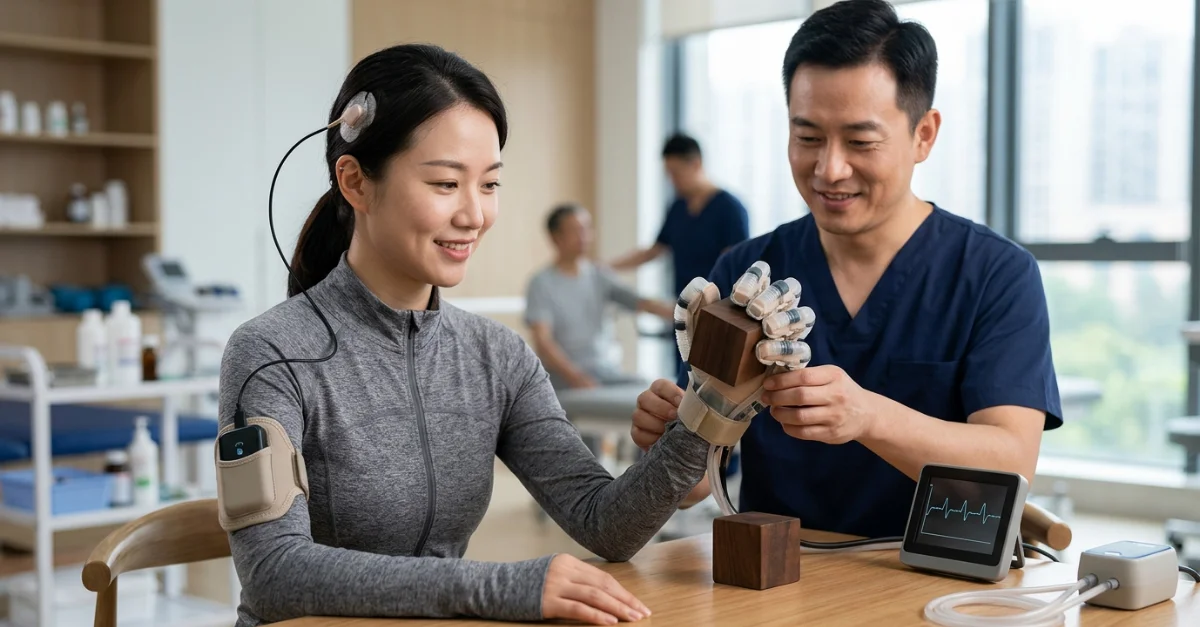
On October 22, 2026, China's Center for Medical Device Evaluation (CMDE) issued the Technical Review Guidance for Clinical Trials of Implantable Brain-Computer Interface Systems for Hand Motor Function Compensation (Announcement No. 29 of 2026).
This milestone document establishes a dedicated clinical evaluation framework for implantable brain-computer interface (BCI) medical devices intended to compensate for impaired hand function in patients with quadriplegia resulting from cervical spinal cord injuries.
At a Glance
- Targeted Scope: Covers Class III epidural LFP systems (<64 channels) for restoring hand grasp in adults (18–60) with chronic C2–C6 cervical spinal cord injuries.
- Two-Stage Clinical Design: Recommends a 4+ patient feasibility study followed by a confirmatory trial (≥32 patients for a single-arm target-value design).
- Defined Primary Endpoint: Evaluates ARAT grasping score improvements at 6 months post-implantation, requiring an MCID of at least 2 points.
- Long-Term Monitoring: Mandates a 2-year post-market follow-up to track signal stability, safety, and functional independence for registration renewal.
- Overseas Data Pathway: Accepts international clinical evidence, provided it meets NMPA standards, GCP rules, and Chinese eligibility criteria.
Connect with Cisema's CRO experts to evaluate your clinical strategy and accelerate your BCI system's path to NMPA approval.
Scope and Classification of Implantable BCI Medical Devices
The guidance applies to a specific category of implantable BCI systems and defines the technical configurations and clinical claims covered by its framework.
Classification and BCI Device Configuration
Devices within scope fall under Classification Code 12-00 of China's Medical Device Classification Catalogue and are categorized as Class III medical devices.
The reference configuration includes:
- Sensing & Signal: Epidurally implanted electrodes capturing local field potential (LFP) signals from the motor cortex's hand region.
- Channel Density: Systems utilizing relatively low channel counts (fewer than 64 channels).
- Mechanism: Algorithmic translation of LFP signals to drive an external pneumatic glove for object grasping.
Excluded Configurations and Claims
The guidance explicitly excludes:
- Non-invasive BCI systems
- Deeper implantation approaches, including subdural, intracortical, deep-brain, or intracerebral vascular implantation
- Other target brain regions outside the hand area of the motor cortex
- Systems controlling other external devices, including full-arm exoskeletons, wheelchairs, or computer cursors
- Additional clinical claims, such as promoting neurological recovery
- Other patient populations outside the specified cervical spinal cord injury group
Functional Claims: System configuration dictates allowed claims. An epidural LFP system (<64 channels) supports claims for gross grasping movements via a pneumatic glove, but not fine finger movements (e.g., opposition). Intracortical or higher-channel LFP systems require additional clinical evidence to substantiate broader claims.
Clinical Trial Requirements for Implantable BCI Devices
The guidance addresses clinical evaluation in recognition of the risks associated with implantable BCI systems and the limitations of non-clinical testing. Manufacturers should plan clinical trials in accordance with China's medical device Good Clinical Practice (GCP) requirements.
Clinical Development and Trial Design
The guidance generally recommends a two-stage clinical development pathway:
- Feasibility Study: An initial study to evaluate device performance and clinical feasibility. A feasibility study involving the same indication and clinical function should generally include at least four patients.
- Confirmatory Trial: A subsequent study to establish clinical efficacy and safety in the intended patient population.
For patients without effective treatment alternatives, a single-arm trial using a target-value design may be considered, provided the device does not claim to promote neurological recovery.
Patient Eligibility Criteria
Clinical evaluation must focus strictly on adults aged 18–60 with chronic C2–C6 cervical spinal cord injuries (AIS grades A–C), subject to the following criteria:
- Injury Profile & Severity Mix: Patients with complete injuries (AIS grade A) must comprise at least 50% of trial participants.
- Chronicity & Stability: Diagnosed for >12months, clinically stable for ≥ 6 months post-standardized treatment, lacking independent basic grasping ability, yet retaining sufficient upper-limb function to operate the system.
- Functional Inclusion Baseline: Finger flexor strength < grade 3 (ISNCSCI); baseline ARAT scores ≥ 2(hand-to-mouth) ≥ 1 (hand-to-head/back), and ≤ 1 (ball grasping/cup pouring); intact cognitive function.
Key exclusion criteria include:
- Syringomyelia; severe neuropathic pain, spasticity, or contractures.
- Life-support dependency (e.g., ventilators).
- High-dose baclofen or recent upper-limb botulinum toxin injections.
- Existing central nervous system electrical stimulation implants.
- Significant unstable medical, psychiatric, or cognitive conditions.
- Other neurological conditions (stroke, MS, TBI, refractory epilepsy) or peripheral nerve disorders.
Clinical trial protocols should also account for participants' previous treatment and rehabilitation, including neurosurgery, range-of-motion and strength exercises, hand-function training, activities of daily living, transfers and positioning, respiratory training, assistive-device training, and psychological support
Use of Overseas Clinical Trial Data
International manufacturers with existing clinical evidence may be able to use overseas clinical trial data to support China registration, subject to the NMPA's "Technical Guideline for Accepting Overseas Clinical Trial Data for Medical Devices."
To be considered, overseas clinical data must:
- Comply with applicable Chinese medical device registration requirements
- Meet relevant ethical, legal, and scientific standards
- Be scientifically sound, complete, and sufficient to support the intended claims
Manufacturers should assess whether existing studies adequately reflect the patient population, clinical indication, device configuration, endpoints, and intended clinical benefits specified in the Chinese guidance. Where differences affect the applicability of overseas evidence, supplementary clinical data or additional investigation may be necessary.
Learn more about the acceptance of overseas clinical trial data in our article: When Is a Clinical Trial Required for China NMPA Medical Device Registration?
Clinical Efficacy and Safety Endpoints
The primary endpoint may be the ARAT grasping response rate six months after implantation with BCI assistance. A response is defined as an improvement in the assisted ARAT grasping score of at least the minimum clinically important difference (MCID), compared with baseline performance without device assistance.
Relevant ARAT tasks include:
- Pouring water from a cup
- Grasping and releasing wooden blocks of different sizes
- Handling a wooden ball
- Picking up metal tubes
The guidance states that the MCID for hand-grasping compensation should generally be at least two points. Products claiming additional functions should establish separate clinically meaningful thresholds for each function.
Secondary endpoints may include changes in ISNCSCI and BCI-assisted ARAT scores, investigator and participant assessments of overall device performance, device impedance, average monthly usage, quality of life, patient satisfaction, cognitive workload, psychological effects, and investigator satisfaction with device operation.
Safety assessments should cover surgical and device-related adverse events, including:
- Pain, infection, and bleeding
- Subcutaneous or subdural fluid accumulation
- Cerebrospinal fluid leakage
- Seizures and stroke
- Electrode displacement and foreign-body sensations
- Tissue proliferation or immune reactions
- Device failures and potential cognitive or psychological effects
Sample Size and Follow-Up Duration
Sample size calculations should reflect the clinical trial design, primary endpoint, statistical assumptions, and available clinical evidence, while accounting for anticipated participant dropout.
The guidance provides the following illustrative calculation for a single-arm trial:
- Target response rate: 50%
- Expected response rate: 75%
- One-sided significance level: 0.025
- Statistical power: 80%
- Anticipated dropout rate: 10%
- Resulting sample size: At least 32 patients
The resulting sample size is illustrative and based on the specified assumptions, rather than establishing a universal minimum.
Clinical follow-up is generally recommended for at least six months after implantation. The appropriate duration should also reflect electrode materials, decoding algorithms, preclinical findings, and the time needed to assess sustained device performance and potential risks.
Post-Market Clinical Follow-Up Requirements
The guidance extends regulatory oversight beyond initial approval, establishing mandatory post-market commitments due to the novel, high-risk nature of implantable BCI technology.
Manufacturers are expected to conduct a post-market clinical study that continues to monitor participants from the pre-market trial for at least two years post-implantation.
This long-term follow-up must evaluate:
- Unassisted hand-grasping ability over time;
- Patient quality of life and functional independence;
- Long-term neural signal stability and algorithm decoding accuracy; and
- Delayed adverse events or long-term tissue responses.
The post-market clinical study report must be formally submitted as part of the device's subsequent registration renewal application in China.
Instructions for Use and Labeling Requirements
The product IFU must provide comprehensive transparency regarding clinical performance, operational limits, and safety warnings.
Key documentation requirements include:
- Clinical Trial Summaries: Detailed results, eligibility criteria, study endpoints, follow-up durations, and relevant subgroup analyses.
- Surgical and Placement Guidelines: Clear specifications for target implantation sites, electrode placement protocols, and post-operative confirmation methods (such as intraoperative neurophysiology or MRI).
- Calibration and Retraining Procedures: Standardized tasks for motor imagery training, initial data collection, and explicit performance criteria for when algorithm retraining is required.
- Risk and Safety Warnings: Documented clinical complications, long-term risks (e.g., subdural fluid accumulation, electrode degradation), MR safety status, and environmental operating limits (such as noise, vibration, or patient fatigue factors).
Implications for International Medical Device Manufacturers
By establishing defined parameters for clinical trial design, hardware scoping, and post-market tracking, this guidance provides international developers with a clear roadmap for NMPA approval.
Translating these technical provisions into an effective market entry strategy requires addressing three critical operational areas:
1. Align Device Configuration with Intended Claims
Manufacturers should establish early whether their electrode placement, signal acquisition technology, channel count, and functional outputs fall within the guidance's scope. Intended claims must be supported by the corresponding clinical evidence, particularly where manufacturers seek to demonstrate functions beyond gross grasping.
2. Evaluate Global Clinical Evidence Early
Manufacturers with existing overseas studies should assess their applicability against Chinese patient eligibility criteria, device specifications, and clinical endpoints. This assessment can help determine whether existing evidence is sufficient or whether supplementary clinical investigation in China is needed.
3. Plan for Long-Term Clinical and Documentation Requirements
Clinical development planning should account for the recommended feasibility and confirmatory studies, as well as the additional resources required for at least two years of post-market clinical follow-up. Technical documentation and IFUs must also address implantation, calibration, algorithm retraining, and long-term safety.
For international manufacturers, addressing these requirements early can reduce evidence gaps and avoid unnecessary changes to clinical or registration strategies later in development.
Final Thoughts
China’s new BCI guidance opens an exciting doorway into one of the world's largest medical markets, but crossing the threshold requires precision. Success hinges on seamlessly aligning cutting-edge neural tech, global clinical data, and long-term safety tracking with strict local NMPA expectations.
Bridging this gap requires deep local expertise. As a specialized medical device CRO and regulatory consulting partner, Cisema supports global innovators through every stage of clinical development and medical device registration to ensure a smooth pathway to market success:
- Regulatory & Clinical Strategy: Mapping optimal NMPA approval pathways and reviewing technical guidance, classifications, and GCP requirements.
- Trial Protocol & Execution: Managing protocol development, PI alignment, and end-to-end trial execution via dedicated project teams.
- Overseas Data Assessment: Evaluating existing international clinical evidence to identify and bridge regulatory gaps early.
- NMPA Submission & Review: Preparing technical documentation and managing data collection to support clients through the NMPA review process.
To accelerate your BCI system’s pathway to approval in China, consult with Cisema’s expert today.
Further Information
- Explore Cisema’s China Medical Device Registration Services.
- Learn more about our Medical Device Clinical Trial and CRO Services in China.
- Use our interactive assessment tool to determine whether your medical device may require a clinical trial in China.
- Read more about medical device clinical trials in China:
Reference
Announcement from the Organ Review Center of the National Medical Products Administration on the Technical Review Points for Clinical Trials of Implantable Brain-Computer Interface Hand Motor Function Compensation Systems (2026 No. 29) 国家药监局器审中心关于发布植入式脑机接口手部运动功能代偿系统临床试验技术审评要点的通告(2026年第29号)
Announcement of the China Food and Drug Administration on Issuing Technical Guidelines for Accepting Overseas Clinical Trial Data for Medical Devices (2018 No. 13) 食品药品监管总局关于发布接受医疗器械境外临床试验数据技术指导原则的通告(2018年第13号)
Connect with Cisema
With more than 20 years of experience and a team of over 100 specialists, Cisema helps global companies achieve compliance across Asia Pacific with confidence and accelerate market entry.
Stay Informed with Monthly News and Analysis
Stay informed with the latest regulatory changes, expert insights, and market opportunities across APAC, delivered straight to your inbox.
Related News
China Issues Clinical Trial Guidance for Implantable Brain-Computer Interface Systems
China's CMDE guidance defines clinical trial and registration considerations for implantable BCI devices, including patient selection, endpoints, and post-market follow-up.

NMPA Releases Draft Measures on Market Exclusivity for Pediatric & Orphan Drugs
Learn how China’s proposed measures could affect market exclusivity for pediatric and rare disease drugs, including eligibility, filing timelines, and supply obligations.

Indonesia Updates IVD Medical Device Classification & Risk Classes
Indonesia has updated the categories, product types and risk classes used for IVD medical devices. Learn what this means for new and existing authorizations.