
Published on
Last updated on
China NMPA Highlights Revised Medical Device GMP and Key Regulatory Reforms at 29th IMDRF Session
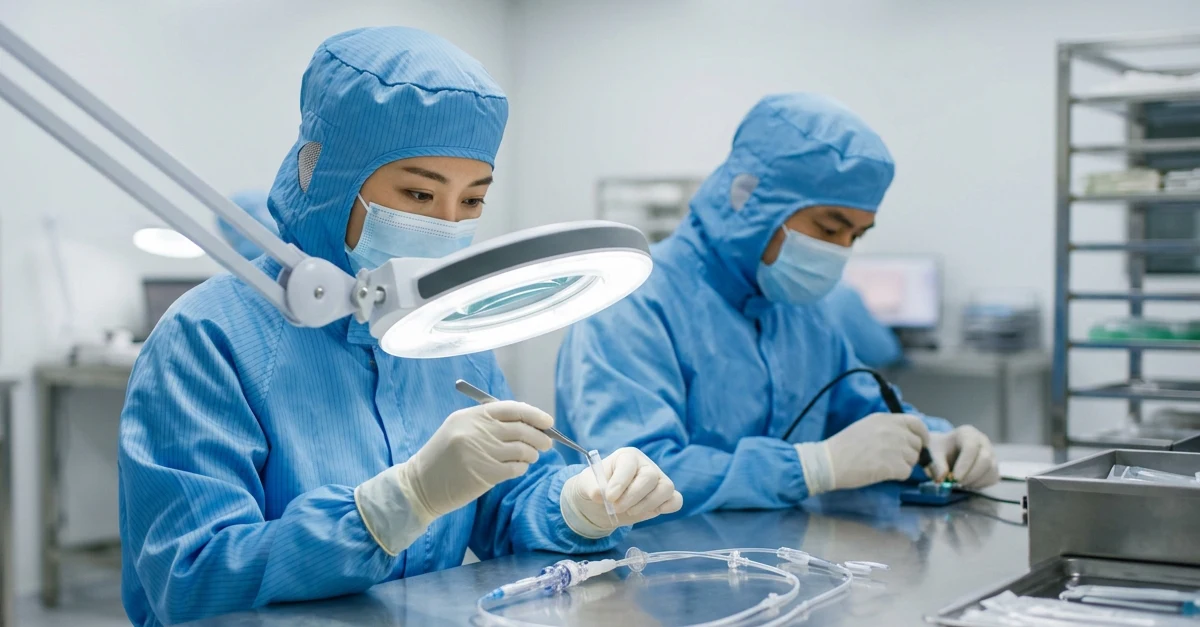
At the 29th International Medical Device Regulators Forum (IMDRF) Management Committee Meeting in Singapore, Yijie Li, Director of Division I within the Department of Medical Device Supervision at China’s National Medical Products Administration (NMPA), outlined recent reforms to China’s medical device regulatory framework.
The presentation covered five areas:
- Revision of the “Good Manufacturing Practice for Medical Devices (2025 Edition)” — Learn more in this article.
- Dynamic adjustment of the “Classification Catalog of Medical Devices”
- Progress on industrial standards for brain-computer interface (BCI) medical devices
- Revision of export sales certificate management
- New on-site inspection guidance for online medical device sales
Together, these initiatives reflect how the NMPA is adapting its oversight to accommodate a rapidly expanding and technologically diverse market. The agency is shifting toward stronger risk-based supervision, broader digital quality management, and tighter control over emerging technologies and evolving business models.
Rapid Market Expansion Triggers Regulatory Modernization
NMPA’s regulatory updates come against the backdrop of continued expansion in China’s medical device manufacturing sector. The number of domestic medical device manufacturers increased from 18,100 in 2019 to 33,300 in 2025, with growth across all three device classes.
Note: Category sums exceed the total entity count because individual facilities may hold production licenses across multiple device classes.
To keep pace with this trajectory, the NMPA is expanding and refining its regulatory architecture to cover modern manufacturing models, advanced digital tools, novel device categories, and increasingly complex distribution networks.
Revised China Medical Device GMP Expands Quality and Digital Requirements
The centerpiece of the NMPA’s presentation was the revised “Good Manufacturing Practice for Medical Devices (2025 Edition).”
The revision process began with research in 2021, followed by formal revision work in January 2023. After a 30-day public consultation in January 2025 that generated more than 3,000 comments, NMPA published the revised GMP in November 2025. Full enforcement will begin in November 2026.
Expanding the GMP Framework
The revised standard expands from 8 chapters and 84 articles to 15 chapters and 132 articles. It introduces three dedicated chapters to address long-standing regulatory gaps in modern operations:
- Quality assurance
- Validation and verification
- Contract manufacturing
These additions establish formal oversight for automated and smart manufacturing systems, outsourced activities, and contract manufacturing relationships.
Strengthening Digital Transformation and Data Integrity
The revised GMP marks the first time NMPA has explicitly encouraged digital transformation as a core regulatory principle, while establishing clear statutory requirements for production data management.
Key requirements include:
- Mandated ALCOA+ principles: Enterprise electronic records must comply with ALCOA+ principles (Attributable, Legible, Contemporaneous, Original, and Accurate) throughout their lifecycle.
- Recognition of digital technologies: The revised framework formally recognizes the compliant use of digital technologies in medical device manufacturing, including smart monitoring and electronic batch records.
- Stronger data controls: Manufacturers must establish controls covering data access, audit trails, and data backup, creating clearer requirements for the integrity and traceability of electronic production data.
- Lifecycle compliance: The requirements extend across the full lifecycle of electronic records, strengthening accountability for how production data is generated, managed, maintained, and retained.
The changes also bring China’s medical device manufacturing requirements into closer alignment with international digital regulatory practices. This alignment could help reduce the compliance burden associated with maintaining separate digital quality and data-management systems for China.
For a detailed analysis of the revised requirements and their implications for manufacturers, read our article: China NMPA Issues New GMP (Good Manufacturing Practice) for Medical Devices
Emerging Technologies and New Business Models Are Also Coming Into Focus
Beyond manufacturing standards, the remaining reforms highlighted in Singapore illustrate an agency expanding its reach across the entire product lifecycle:
- Dynamic device classification: The medical device classification catalog is moving toward a more dynamic adjustment mechanism, with NMPA planning one to two adjustment rounds each year to keep classifications aligned with technological developments.
- Brain-computer interfaces: Continued development of standards for emerging BCI technologies.
- Export sales certificates: Revised procedures intended to update and streamline certificate issuance for China-based manufacturers.
- Online medical device sales: New inspection guidance strengthening regulatory oversight of online sales and associated business activities.
These changes indicate that NMPA’s regulatory focus is expanding alongside the industry itself — from manufacturing and product classification to emerging technologies, digital processes, export activity, and online distribution.
Key Takeaways for Medical Device Enterprises
The common thread running through these updates is aregulatory environment that is becoming more structured, digitally integrated, and agile.
For foreign device makers, reviewing the revised GMP ahead of the November 2026 enforcement deadline is an immediate priority. Beyond short-term compliance, companies must establish ongoing monitoring mechanisms to adjust their product strategies as classification rules and emerging technology standards evolve.
Navigating these shifts requires a proactive compliancestrategy that links international operations with local regulatoryexpectations. With over 20 years of on-the-ground experience in China, Cisemahelps medical device companies navigate every stage of this transition, offeringspecialized support in NMPA registration, GMP compliance gap assessments, localagent representation, and product testing.
To evaluate how China’s evolving regulatory requirement simpact your operations, contact Cisema today.
Further Information
- Explore Cisema’s full range of services for medical device registration in China.
- Read our comprehensive guide on the New NMPA GMP for Medical Devices (2025 Edition) and key changes from the 2014 version.
- Evaluate your operational readiness with our article, China Medical Device GMP Readiness: A Checklist for Overseas Manufacturers.
Further Information
- View the official NMPA presentation slides on China Medical Device Regulatory Updates from the 29th IMDRF Session in Singapore.
- Read the official text of the NMPA Announcement on the Issuance of Good ManufacturingPractice Standards for Medical Devices (2025 No. 107) (国家药监局关于发布医疗器械生产质量管理规范的公告).
Connect with Cisema
With more than 20 years of experience and a team of over 100 specialists, Cisema helps global companies achieve compliance across Asia Pacific with confidence and accelerate market entry.
Stay Informed with Monthly News and Analysis
Stay informed with the latest regulatory changes, expert insights, and market opportunities across APAC, delivered straight to your inbox.
Related News

Hong Kong Requires MDACS Listing for Injectable Dermal Fillers by March 1, 2027
New requirements could affect how injectable devices, including dermal fillers, are supplied in Hong Kong’s private healthcare sector.

China Enacts First Healthcare Security Law: Impact on Global Medtech
China’s new Healthcare Security Law affects medical device reimbursement, health economic evidence, payment models, and digital traceability from 2027.

Indonesia Mandates Pre-Shipment Halal Verification for Imported Products
BPJPH Regulation No. 4 of 2026 introduces pre-shipment halal verification and LPPH reports for imported goods starting September 2026.