
News

China has carried out a series of measures to support the CSAR (Cosmetic Supervision and Administration Regulation) and the cosmetics regulatory framework.
The NMPA released an introductory video about the online UDI database, soon to be implemented for the first batch of medical devices on October 1, 2020.

The China's State Council announced the regulatory framework for AI, and the plan to implement standards for AI developments in the healthcare industry.
Guidelines covering technical review / clinical trials / clinical evaluation for the registration of medical devices in China

2 medical devices were passed for the fast-track approval, whilst the NMPA accepted the applications for the fast track approval of 8 medical devices.
NMPA Issues 2019 Annual Report, Strengthening Scheme and Updates on Medical Device Mandatory Standards in China

In July 2020, the SAMR announced two drafts concerning health food products and launched the public consultation to solicit comments
In July 2020, the NMPA (National Medical Products Administration) announced three drafts and launched a public consultation to solicit comments
In July 2020, the CMDE issued a notice requesting domestic and overseas manufacturers‘ assistance to draft the technical review guidelines for 15 medical...

The CMDE asks for the input from medical device manufacturers in the field of tissue regeneration for support in their research and technology development.
The Beijing MPA has announced the implementation of a grading system for medical device violations in Beijing.
The “Artificial Intelligent Medical Device Innovation and Cooperation Platform” announced their recent developments concerning AI medical devices
From October 1, 2020 onwards, the registered applicant/registrant of medical devices listed in the first batch must submit the product identification (DI)

On July 29, 2020 the CMDE (Center for Medical Device Evaluation) of NMPA (National Medical Products Administration) released a draft of the proposed amendment to the list of medical devices and IVDs to be exempted from clinical trials:
The draft proposes to add 53 medical devices (Class II: 34; Class III: 19) and 15 IVDs (Class II: 13; Class III: 2) to the clinical trial exemption list. Also, the names and descriptions of 11 medical devices (Class II: 9; Class III: 2) are proposed for revision, while there are 2 medical devices being combined with other products.
Here are the links to:
Proposed amendment for the list of medical devices to be exempted from clinical trials
Proposed amendment for the list of IVDs to be exempted from clinical trials
The CMDE is currently soliciting for public comments, and the public consultation ends on August 31, 2020.
By Jacky Li. Contact Cisema if you would like to learn more.

On July 31, 2020, the Beijing MPA (Medical Products Administration) made an announcement to implement stricter supervision on medical cosmetology products.

Organizer: BioM Biotech Cluster Development GmbH
Date: July 30, 2020
Time: 10:00 - 12:00 pm (CET)
Venue: Online
Register here on organizer's website
Contact: Dr. Andreas Berghammer , Tel.: +49 (0) 89-899679-17
Anja Weber, Tel.: +49 (0) 89-899679-35

Organizer: SPECTARIS GmbH
Date: October 14, 2020
Time: 10:00 am - 11:30 am (CET)
Venue: Online
Register here on organizer's website
Contact: Ms. Peggy Zimmermann, Tel.: 030 414021-15

Organizer: FORUM • Institut für Management GmbH
Date: Part I + II on August 25 - 26, 2020 | Part III on September 1, 2020
Time: 9:00 - 11:00 am (CET)
Venue: Online
Language: English
Register here on organizer's website
Contact: Ms. Ute Akunzius-Jehn, Tel.: +49 6221 500-685

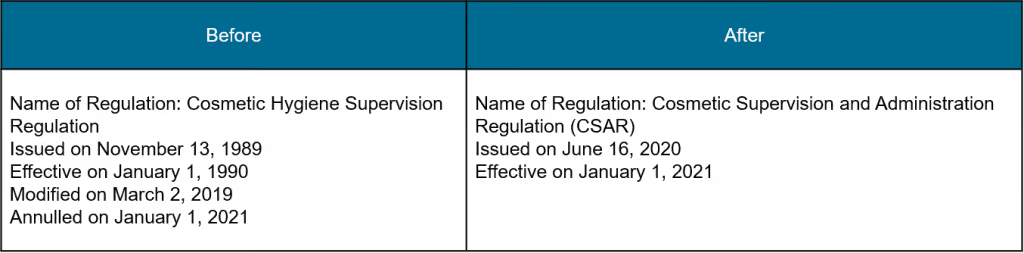
On June 29, 2020, China’s State Council announced the implementation of the new regulation for CSAR (Cosmetics Supervision and Administration), which will become effective on January 1, 2021.
Major changes
Background
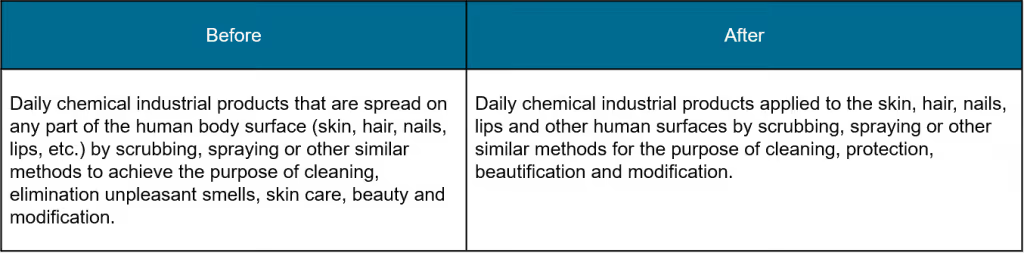
The definition of cosmetics
Classification of Cosmetics
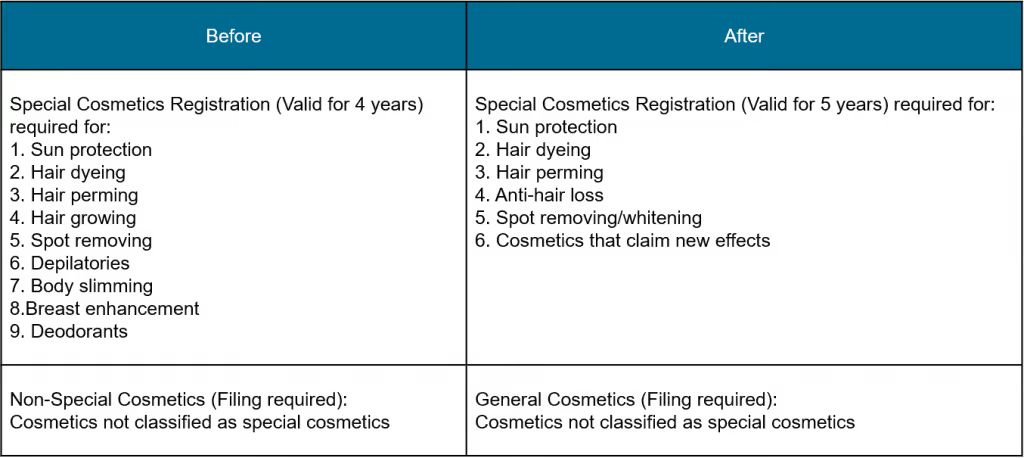
Note: Registered products with functions for hair growing, depilatories, breast enhancement, body slimming, and deodorants will no longer be classified as special cosmetics after a 5-year transition period.
Classification of Cosmetic Ingredients
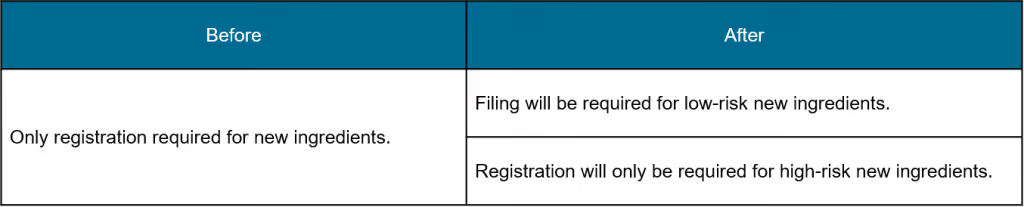
Note: After the registration / filing of new ingredients, the registrant / filer should report the current status of consumer use and safety to the NMPA annually for 3 consecutive years. If any safety issues should occur during these three years, the registration / filing will be cancelled, otherwise, the new ingredient will be included in the list of used ingredients (IECIC, also known as Inventory of Existing Cosmetic Ingredients in China).
Toothpaste management

Note: According to the China Oral Care Industry Association’s announcement on July 2, 2020, toothpaste products are not considered as cosmetics. Further information will be disclosed by the NMPA.
Soap management

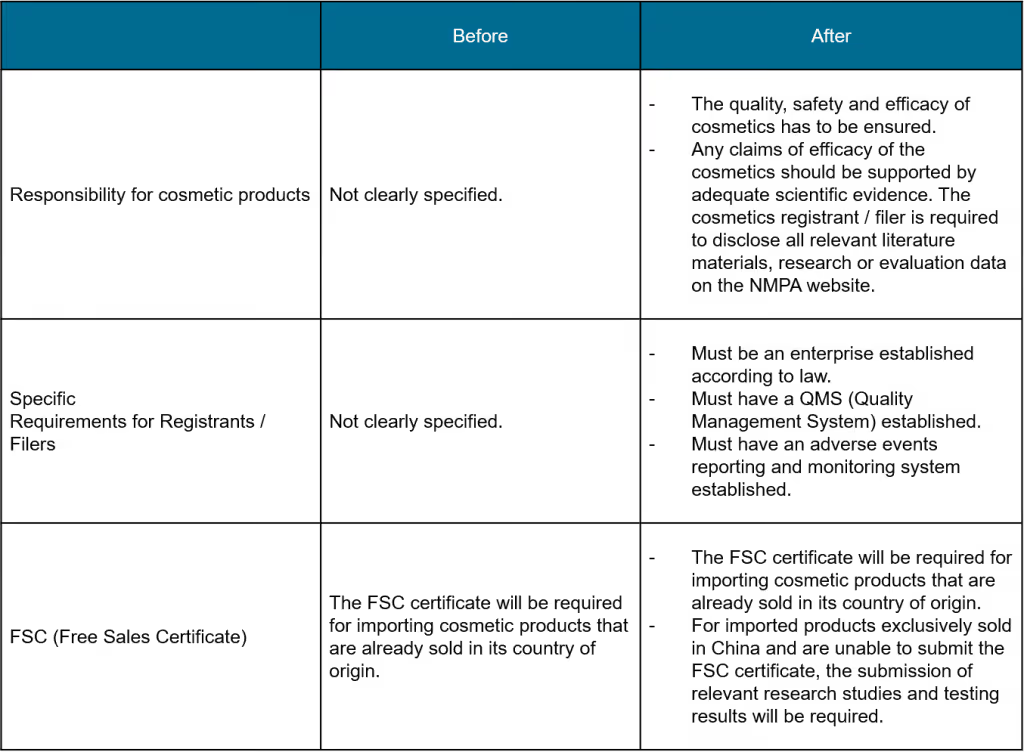
Requirements for registrants and filers
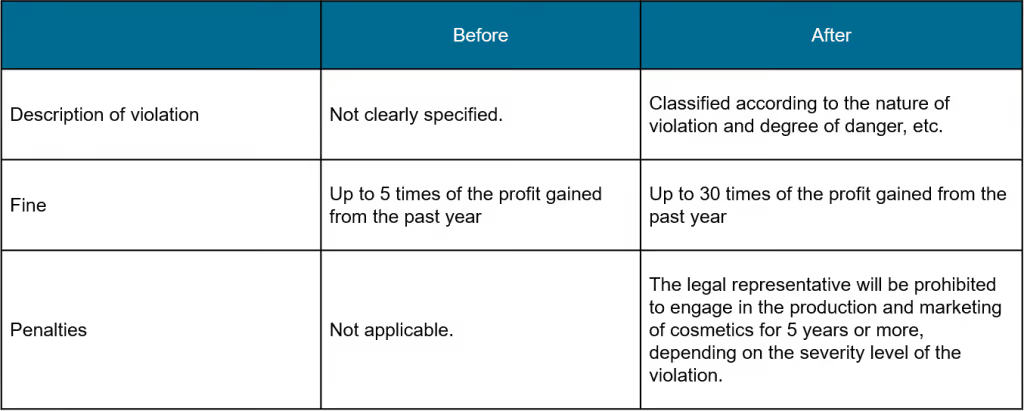
Penalties for violations
By Jacky Li. Contact Cisema if you would like to learn more.
On July 2, the NMPA (National Medical Products Administration) released the updated guidance document for preparing the periodic risk evaluation report for medical devices addressing the timescale and data collection scope for preparing and submitting the initial report:
- For medical devices in their first registration / filing cycle, the registrant should complete and submit the periodic risk evaluation report within 60 days after each full year.
- The periodic risk evaluation report of Class II and Class III medical devices should be submitted online via the NMPA adverse event reporting system
- The period risk evaluation report of Class I medical devices should be prepared annually for the first five years, and should only be submitted when required. The preparation of annual reports can be omitted after 5 years.
- For medical devices whose specifications were registered in different certificates (e.g. different specifications of disposable sterile syringes) or medical devices that must be used together with other devices under a different registration certificate (e.g. hip systems which include acetabular cups, femoral stems, etc.), the risk assessments can be incorporated into one report, but should be submitted before the earliest deadline. The registrant should include any related information of the medical devices upon the submission or archiving of the report. If the registrants intend to incorporate the risk assessments into one report for medical devices of the same kind, they should conduct a subgroup analysis based on the registration certificate number.
By Jacky Li. Contact Cisema to learn more.
Get in Touch with Our Consultants
And discover how we can support you.