
Published on
Last updated on
China Establishes Official Testing Methods for Diclofenac Sodium & Urotropine in Cosmetics
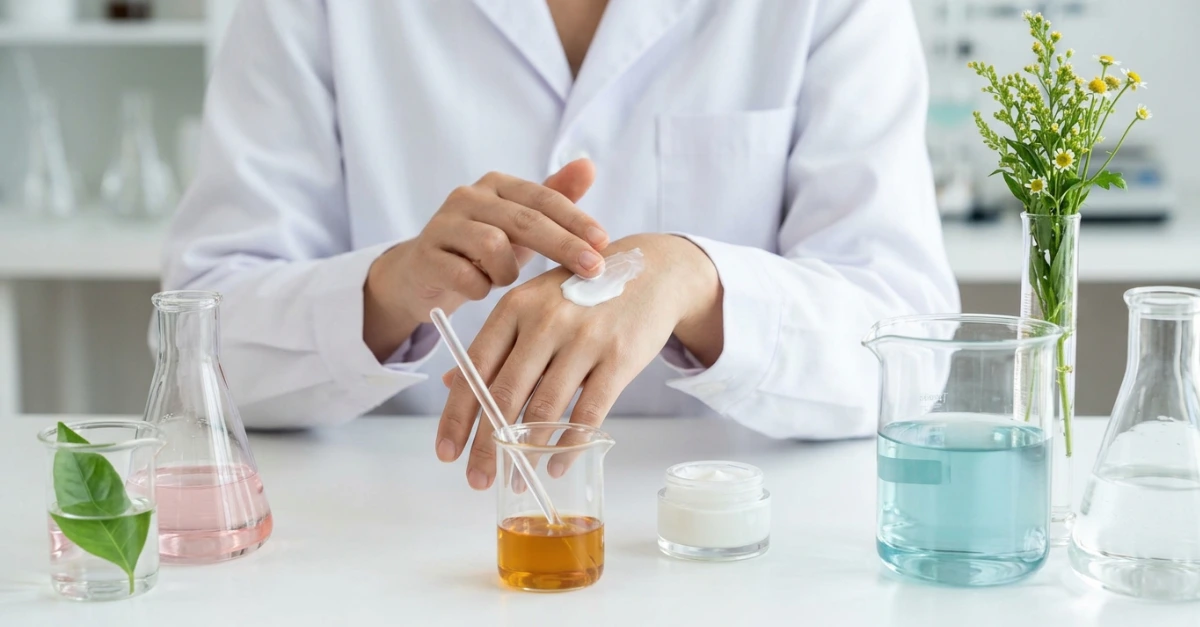
On August 3, 2026, China’s National Medical Products Administration (NMPA) officially published Announcement No. 72 of 2026. Approved on July 30, 2026, these protocols leverage high-performance liquid chromatography coupled with triple quadrupole mass spectrometry (HPLC-MS/MS) to establish standardized, nanogram-level detection procedures for regulatory inspections and quality investigations.
For international brands and overseas manufacturers, the new methods make robust formulation, raw material, and supplier controls increasingly important.
The Two New Testing Methods
Operating under the Regulations on the Supervision and Administration of Cosmetics and the associated work procedures, the NMPA is authorized to establish official supplementary testing protocols whenever existing national standards lack specific analytical items.
To address these technical gaps, the announcement targets a pharmaceutical agent and a prohibited chemical using high-performance liquid chromatography coupled with triple quadrupole mass spectrometry (HPLC-MS/MS), achieving sensitive detection at nanogram levels. Because these methods detect minute quantities, even trace-level findings can trigger formal enforcement.
While the protocols do not establish permissible threshold limits, they provide a standardized mechanism for identifying these substances. Regulatory authorities utilize these procedures during routine sampling inspections and safety investigations to establish a consistent, legally binding basis for laboratory testing, where a positive detection can prompt distribution halts, product recalls, corrective actions, and administrative penalties.
BJH 202601: Diclofenac Sodium
Diclofenac sodium is a non-steroidal anti-inflammatory drug (NSAID) that is strictly prohibited as a cosmetic ingredient in China. Because it has anti-inflammatory properties, it may be illegally added to products marketed for soothing the skin or addressing acne. Its presence in a cosmetic product may therefore indicate the illegal addition of a pharmaceutical substance.
The method applies to:
- Water-based and oil-based liquid cosmetics
- Creams
- Emulsions
- Gels
Using a 0.5 g sample, the method can detect concentrations as low as 0.020 μg/g.
BJH 202602: Urotropine
Urotropine, also known as hexamethylenetetramine, is listed as Prohibited Ingredient No. 1282 under China’s Safety and Technical Standards for Cosmetics. It is prohibited because it can release formaldehyde under certain conditions and may cause skin irritation or allergic reactions.
The method applies to:
- Creams
- Emulsions
- Sheet masks
- Spray cosmetics
The HPLC-MS/MS method is designed to detect trace amounts of urotropine with high sensitivity.
Key Actions for Overseas Brands
To mitigate compliance risks, overseas brands should transition away from relying solely on general supplier declarations and instead implement rigorous, evidence-based raw material verifications.
Because contamination can stem from complex supply chains, brands must account for potential cross-contamination during raw material production, shared manufacturing machinery, contract packaging, or sub-tier chemical sourcing.
Recommended actions include:
- Formulation Screening: Systematically audit product portfolios to evaluate any risk of the accidental presence or deliberate inclusion of diclofenac sodium and urotropine.
- Supply Chain Verification: Request and thoroughly review updated certificates of analysis, alongside robust supporting quality documentation, for all chemical inputs.
- Laboratory Alignment: Benchmark internal testing protocols against the NMPA's HPLC-MS/MS standards to ensure internal quality-control programs can replicate or anticipate official findings.
- Proactive Investigation: Establish clear protocols to investigate any positive analytical results immediately, tracing the root cause and implementing corrective actions before products reach Chinese ports.
Looking Ahead
The establishment of these methods reflects the NMPA’s continued expansion of its analytical capabilities for cosmetic safety oversight. The ability to detect substances at very low concentrations means that manufacturers need greater visibility into what enters their formulations and how raw materials are produced and handled.
The absence of fixed permissible limits also makes it particularly important for companies to understand the regulatory status of substances that may be detected. Rather than treating compliance as a final quality-control checkpoint, brands should incorporate prohibited-substance risk management throughout formulation development, sourcing, manufacturing, and pre-market verification.
For overseas manufacturers, adapting quality and compliance programs to China’s evolving regulatory requirements can be challenging. With expertise in NMPA cosmetics filing and registration, Responsible Person representation, and China-specific compliance, Cisema helps brands address these requirements with confidence.
To strengthen your cosmetics compliance strategy and help ensure your products are prepared for China’s increasingly rigorous regulatory testing, contact Cisema today.
Further Information
- Read about other NMPA cosmetics testing methods taking effect in 2026.
- Explore Cisema’s China cosmetics filing, registration, and testing services.
- Learn more about our Cisema's services for cosmetic quality control and compliance in China.
References
- NMPA Announcement No. 72 of 2026 on two supplementary cosmetics testing methods (Chinese)
- NMPA Work Procedures for the Administration of Supplementary Testing Methods for Cosmetics (Chinese)
- Regulations on the Supervision and Administration of Cosmetics (Chinese)
Connect with Cisema
With more than 20 years of experience and a team of over 100 specialists, Cisema helps global companies achieve compliance across Asia Pacific with confidence and accelerate market entry.
Stay Informed with Monthly News and Analysis
Stay informed with the latest regulatory changes, expert insights, and market opportunities across APAC, delivered straight to your inbox.
Related News
China Establishes Official Testing Methods for Diclofenac Sodium & Urotropine in Cosmetics
China's NMPA has established two supplementary testing methods to detect prohibited substances in cosmetics with high-sensitivity liquid chromatography.

China Issues First Ethical Guidelines for Artificial Intelligence Medical Imaging Research
China’s Science Ministry issued ethical guidelines establishing strict standards for AI medical imaging data, algorithm validation, and ethics reviews.
China Approves NMN, Bakuchiol, & Two Other Ingredients for Existing Cosmetic Use
China’s latest regulatory change removes the NCI registration hurdle for these ingredients, with new limits and compliance requirements now applying to finished cosmetic products.